Spaces that allow free-flowing conversations about mortality, known as death salons or death cafes, are becoming increasingly popular across the United States.
These gatherings are growing more common nationwide, with practitioners specifically addressing the unique end-of-life concerns of marginalized populations, including queer, trans, and Black or brown individuals.
Creating Safe Spaces for Open Dialogue
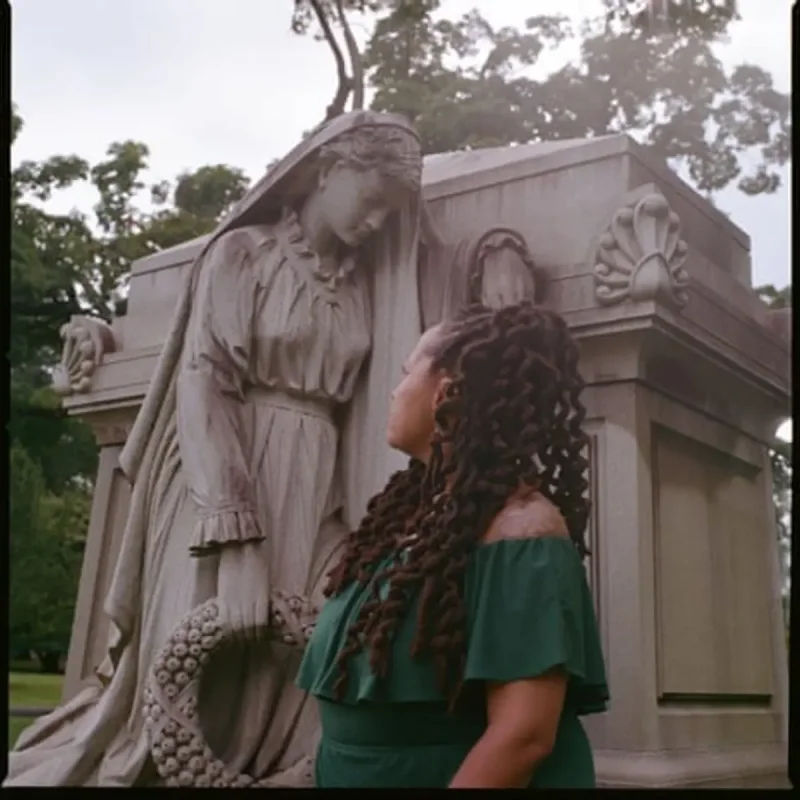
Nefertiti Moor, a 39-year-old death doula, hosted a session in a small room at a cemetery in Philadelphia, Pennsylvania.
She invited attendees to talk freely about cultural associations with dying and grief. “It’s not death counseling or a debate,” said Moor.
Tasha Johnson, an attendee working in behavioral health, shared that she felt desensitized after the recent deaths of several acquaintances.
She grappled with the reality that death can happen to anyone at any point.
Moor provides emotional and practical support to dying individuals and their loved ones, noting that she mostly works with Black and brown people because she understands the cultural stigmas regarding end-of-life planning.
“I see cultural norms where death isn’t openly discussed until there’s a crisis, and that can leave families scrambling to make decisions during some of the hardest parts of their lives,” Moor said.
“I often see financial barriers when it comes to funeral planning or end-of-life prep. I see mistrust of the healthcare systems.”
To assist families, Moor shares information about cheaper and eco-friendly alternatives like green burials, where bodies are buried in shrouds without embalming or hardwood caskets.
“We deserve to be seen,” Moor said. “Death isn’t just a medical or a legal event.
It’s cultural, spiritual or familial. It’s human.
The way someone wants to be cared for at the end of life is deeply connected to who they are, where they come from and what they believe in.”
Moor traces her lineage to the Caribbean, referencing Trinidadian practices where a deceased person’s body is brought home for a nine-day celebration.
Mirrors are removed, and furniture is rearranged to allow the soul to move freely. “This is the OG work,” Moor said.
Social media platforms like Instagram and TikTok, particularly the DeathTok community, have also helped younger generations discuss mortality and find practical advice on end-of-life care.
“It helps people realize,” Moore said, “that ‘I’m not alone, or I’m not morbid or I’m not wild for thinking about death.’”
LGBTQ+ Death Salons Offer Specialized Support
Meanwhile, LGBTQ+ death salons offer specialized support that acknowledges gender diversity and sexual orientation.
They address specific fears such as being misgendered after death or experiencing isolation after losing a partner.
Kyra Overmier, a 43-year-old queer death doula, hosted a salon at Laurel Hill cemetery in March, noting that disproportionately higher rates of violent deaths among trans individuals inform how they walk through life.
Overmier and her colleagues Taylor Bell, 44, and Lacy Buynak run a business called The Art of Dying to provide nationwide end-of-life companionship and education.
Bell hosted a queer death cafe at Finn’s Place, a trans and gender-diverse community center in Fort Worth, Texas, in May 2026.
Participants discussed navigating their identities with aging family members.
“The benefit of telling them, the possible repercussions and also the repercussions of not telling them and then they die,” Bell said.
“How might they feel if they never shared that with them?”
Bell was inspired to pursue the profession after witnessing her mother, Vicki, curate her own comfortable death experience at home under hospice care in 2013.
“She just really did the thing,” said Bell. “This isn’t a death march; this is a final hurrah.
I was like: ‘Oh! This is what it could be like.’”
Overmier was similarly inspired by her father's solitary passing without an end-of-life plan, leaving her retail management job to offer death doula services in Conshohocken, Pennsylvania, including sitting vigil with individuals.
“Not everybody wants someone by them when they die,” she said, “but there’s a good chunk of people who do, and sometimes they don’t have anybody.
I feel like it’s an honor to be able to do that.”
According to Overmier, affinity groups provide a unique sense of belonging and safety for marginalized people to discuss these topics openly.
“If you’re in a group that isn’t just your community, then you’re thinking about whether what you’re saying is going to land right, or if the person next to you is side-eyeing you in a dangerous way.”
“In affinity groups like this where we can come together … it just allows for this freedom.”