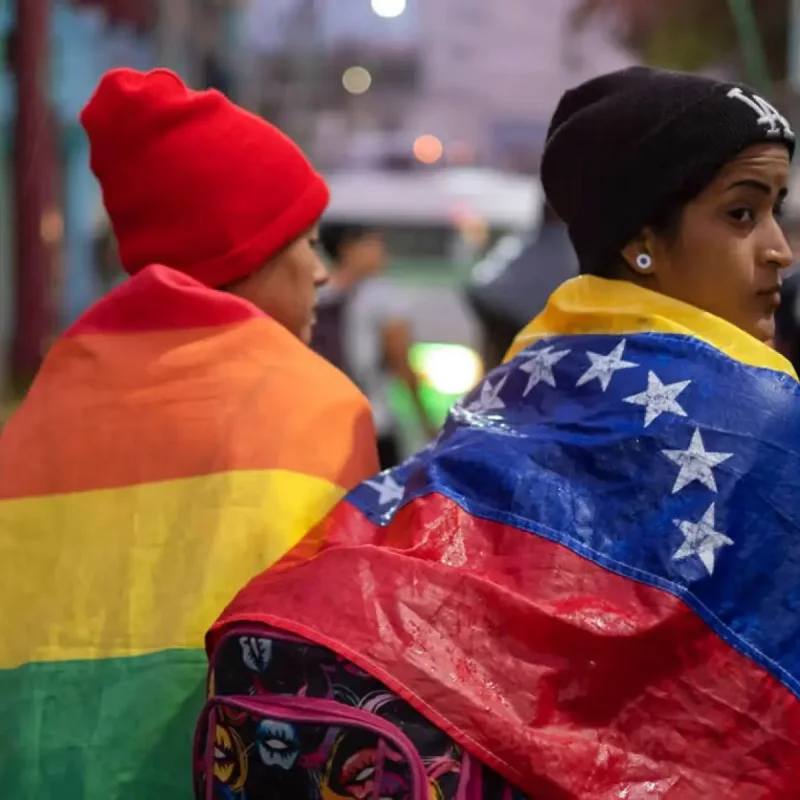
The US Supreme Court has ended a temporary judicial protection for Venezuelans who lost Temporary Protected Status, leaving those without another immigration safeguard exposed to possible removal proceedings.
The ruling overturned a lower-court decision that had allowed some beneficiaries to keep temporary protections and sent the case back for further review under the Supreme Court's new standard.
About 5,000 Venezuelans were the last group still covered by TPS before their protection expired on October 2.
They had received protection under the 2023 designation and obtained related documents, including work permits, before February 5, 2025.
Armando Olmedo, an immigration attorney for N+ Univision, said the end of the judicial protection leaves affected Venezuelans without TPS vulnerable if they lack another legal safeguard.
"Now a Venezuelan can be subject to removal from the country," Olmedo said.
Olmedo said the ruling does not mean every affected Venezuelan will be deported immediately.
Instead, those without TPS or another form of protection may face removal proceedings.
Many affected Venezuelans have pending asylum applications, but Olmedo said a pending asylum case does not itself create immigration status.
"Many people and Venezuelans can be detained at any time because pending asylum does not provide status," Olmedo said.
Olmedo also said immigration enforcement activity has already affected the Venezuelan community in Doral, Florida, where many Venezuelans live and work.
"They have already started doing it in Doral," Olmedo said.
He said some Venezuelans are already in removal proceedings and that the situation has affected daily activity in the community, including businesses and people's willingness to go outside.
Work authorization is another immediate concern.
Olmedo said people whose employment authorization depended solely on TPS cannot assume that an expiration date printed on a work permit means they remain legally authorized to work.
"If TPS is lost, employment is lost," Olmedo said.
According to Olmedo, employers also must comply with immigration and employment requirements and cannot continue employing someone who no longer has valid authorization to work.
Telemundo 51 reported that the final 5,000 Venezuelan TPS beneficiaries had documents showing an October 2, 2026, expiration date.
A federal court decision in 2025 had allowed holders of those documents to maintain protection until that date.
Olmedo said a new TPS designation for Venezuelans currently appears unlikely, citing previous decisions involving Haiti and El Salvador and the government's refusal to grant a new TPS protection for Venezuela.
"The moment came and went," Olmedo said.
He said Venezuela had also experienced circumstances associated with natural disasters but did not receive a new TPS designation.
"The government did not want to grant TPS to Venezuelans," Olmedo said.
The case now returns to the lower court for reconsideration under the Supreme Court's new legal standard, while Venezuelans who relied exclusively on TPS face uncertainty over their remaining immigration options.