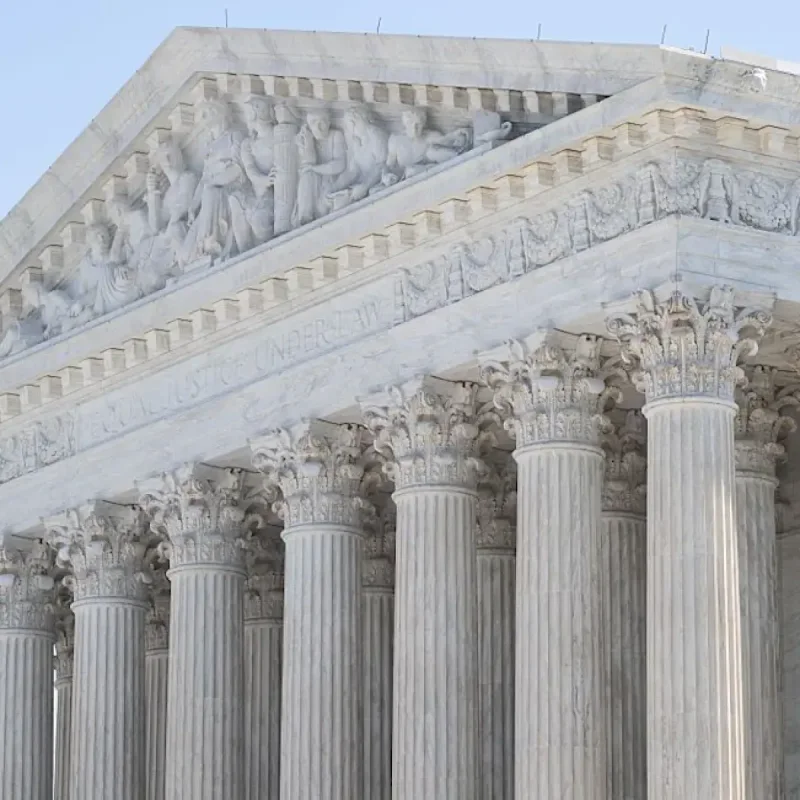
The Trump administration filed an emergency application with the Supreme Court on September 28, 2026, seeking permission for federal prison officials to deny gender-transition surgeries, hormone therapies, and social accommodations to transgender inmates nationwide.
The request asks the justices to freeze an injunction from Senior U. S.
District Judge Royce Lamberth that required the Federal Bureau of Prisons to keep providing medical treatment to inmates diagnosed with gender dysphoria while litigation continues.
The dispute traces back to a Bureau of Prisons policy first adopted in early 2025 after an executive order by President Donald Trump, then revised in February 2026.
Under the contested policy, federal facilities allow mental health services such as psychotherapy and psychiatry, but bar surgeries, hormone therapy, and social accommodations including wigs, chest binders, breast padding, or makeup.
Lower courts have repeatedly rejected the policy changes
A divided panel of the U. S.
Court of Appeals for the District of Columbia Circuit recently declined to stay Lamberth's August order.
The panel concluded the administration likely acted in an arbitrary and capricious manner by failing to adequately consider its prior operational experience providing gender-affirming care.
Department of Justice officials argued in their filing that public interests strongly support enforcing the agency's revised medical rules while the legal battle continues.
"The public interest substantially outweighs any irreparable harm to respondents," the Justice Department stated in its emergency appeal.
"The 2026 policy provides appropriate, individualized treatment for gender dysphoria, while disallowing only interventions that are medically unnecessary."
Justice Department attorneys maintained that federal correctional administrators need latitude to operate secure facilities without judicial overreach.
Solicitor General D. John Sauer accused the district court of "substituting its own policy judgment for that of the agency."
Government filings noted that prison officials formulated the healthcare policy based on updated internal assessments regarding facility safety and institutional order.
The Bureau of Prisons determined its policy on medical treatments for transgender inmates was "necessary to maintain institutional security," Sauer stated.
He warned that the lower court order "nullifies" that agency judgment.
Federal attorneys warned that restricting administrative discretion compromises nationwide operations.
The lower court order "prevents the application of the Executive's chosen policy" on a broad basis, Sauer stated.
The administration asserted that judicial intervention directly undermines specialized management inside federal detention facilities.
In blocking the policy, the district court "substitute[d] its own policy judgment for that of the" Bureau of Prisons, "rel[ied] on evidence outside the administrative record, and fault[ed] the agency for following presidential directions," Sauer stated.
Sauer further emphasized that judicial interference creates long-term structural issues for prison authorities.
The judge "also denied prison administrators the substantial deference they are due," he stated.
Government counsel concluded that failure to pause the injunction causes ongoing harm to federal authority.
The district court order "interferes with" prison "administrators' 'expert judgment' on how best to operate federal correctional facilities across the Nation," Sauer stated.
The Supreme Court is expected to issue a decision on the administration's emergency application within the coming weeks.