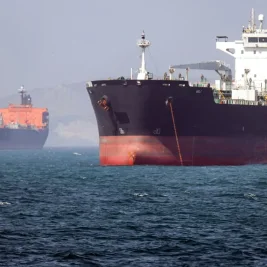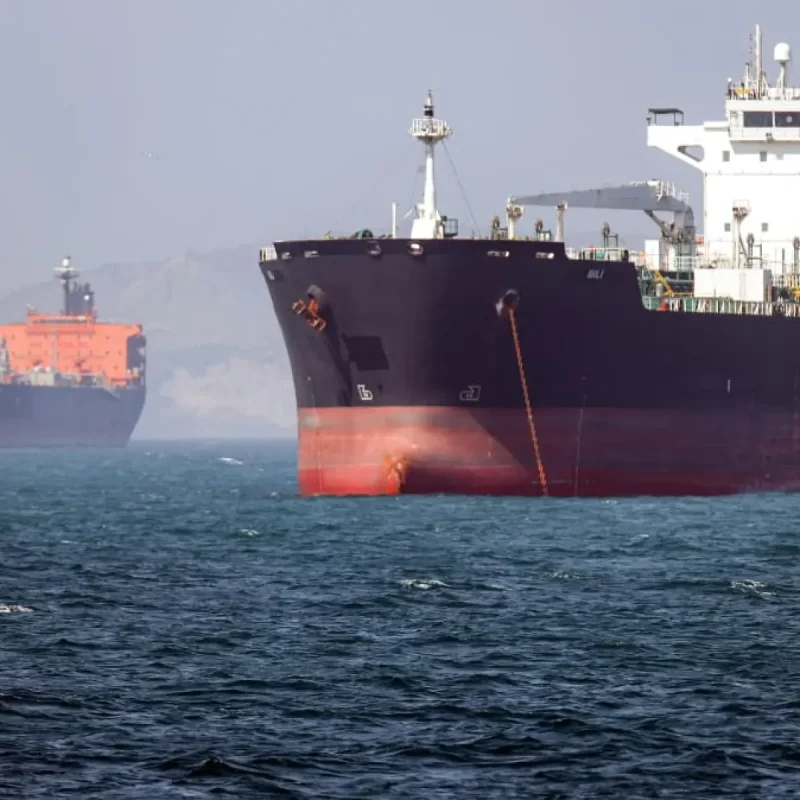
A tanker was struck by multiple projectiles in the Gulf north of Qatar on October 8, 2026, with casualties reported, according to the United Kingdom Maritime Trade Operations agency.
The incident occurred 51 nautical miles (94 kilometers) from Madinat al-Shamal, amid continuing attacks on vessels linked to the Iran war.
Maritime intelligence firm Vanguard identified the vessel as Acers, an oil and chemical tanker flying the flag of Antigua and Barbuda.
The tanker had previously been reported sailing toward the Strait of Hormuz, a strategic waterway connecting the Gulf to the Gulf of Oman.
Martin Kelly, head of advisory at EOS Risk Group, said it was the first reported attack on a ship this far west of the Strait of Hormuz since September 9.
Casualties and Wider Maritime Toll
The United Nations' International Maritime Organization reported that at least 24 seafarers had been killed in 93 confirmed incidents involving commercial vessels since the war between the United States, Israel and Iran began in February 2026.
The last previously reported incident involving casualties occurred on September 9, when two sailors died in an attack on the Panama-flagged tanker El Gaia in the Strait of Hormuz, north of Oman's Musandam peninsula.
Separate developments on October 8 involved an earlier report of a possible tanker fire in the Gulf of Oman.
Vanguard revised its initial assessment concerning the Marshall Islands-flagged Dhalkut, located about 40 kilometers east of Fujairah in the United Arab Emirates, stating that there were no indications a fire had occurred aboard the vessel.
The broader maritime crisis has disrupted traffic through the Strait of Hormuz, a passage that ordinarily handles about one-fifth of global oil and gas shipments.
The waterway was effectively closed after the war began because of Iranian missile and drone attacks on commercial vessels and a United States naval blockade of Iranian ports.
A preliminary agreement between Washington and Tehran to end the conflict and reopen the strait was reached in June 2026 but collapsed within weeks.
Iranian attacks on shipping resumed, and the United States reinstated its blockade.
Iran maintained that it would retain some degree of control over the waterway and targeted vessels using a southern route through Omani waters that bypasses its preferred passage through Iranian waters.
The United States military has also provided protection for tankers transporting oil through the strait to help Gulf Arab states maintain exports.
Despite the disruption, crude oil exports through the waterway have partially recovered.
Analysts from shipping data company Kpler estimated that average crude exports over the two weeks preceding the October 8 report reached 12 million barrels per day, approximately 80% of pre-war levels.
Meanwhile, the regional security situation remained volatile.
In a separate development reported by Al Jazeera on October 9, Saudi Arabia's Civil Aviation Authority said King Khalid International Airport, north of Riyadh, had been subjected to two attacks on Thursday that killed three Saudi citizens.
Al Jazeera also reported that a political deputy of the Islamic Revolutionary Guard Corps Navy said Iranian forces were conducting nightly operations in the Strait of Hormuz against vessels Tehran considers to be violating its rules.
The statement underscored the continuing dispute over control of maritime traffic through the strategic passage.