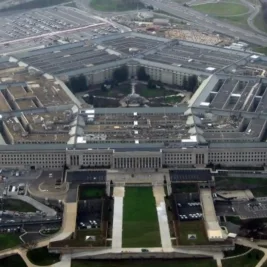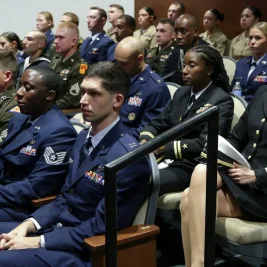
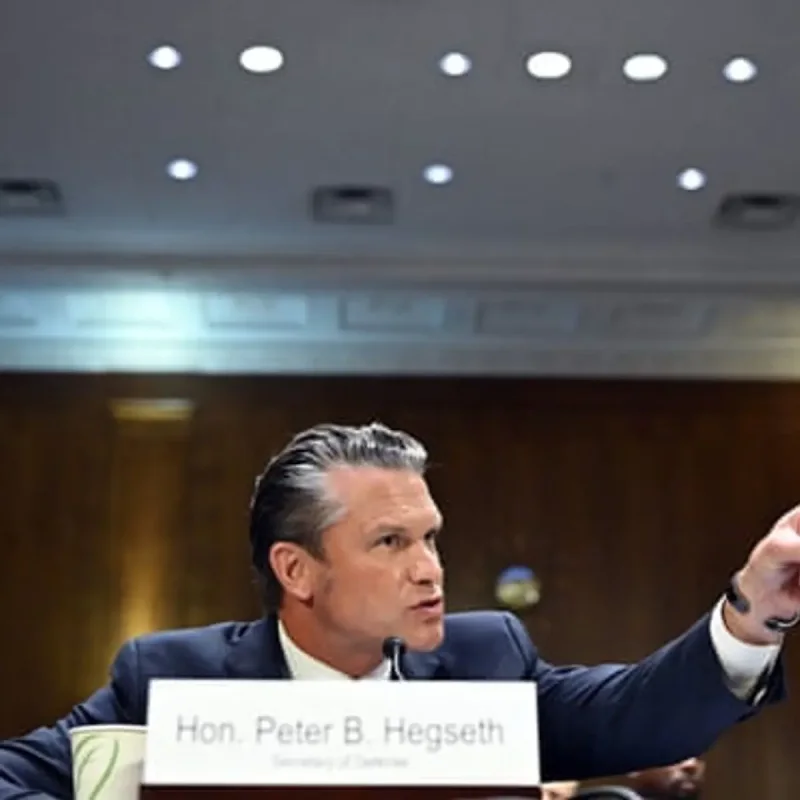
Downing Street has pushed back against US Defense Secretary Pete Hegseth's assessment of NATO allies' military contributions in Afghanistan.
The UK government said his remarks unfairly diminished the role of British and allied forces in supporting the United States and responding to the September 11, 2001, attacks against an ally.
According to figures cited in the report, nearly 2,500 US service members died in Afghanistan, accounting for roughly two-thirds of the total military death toll.
Personnel from more than 30 other countries also died while serving there, including 457 British military personnel.
Hegseth Questions Coalition Combat Role
Hegseth made the remarks during a speech on Saturday, October 17, 2026.
He recalled seeing flags representing 50 countries at the coalition headquarters in Kabul but questioned how many participating nations had engaged in combat operations by the later stages of the conflict.
The official spokesperson for Andy Burnham's office emphasized the scale of the British contribution and the consequences for military families.
"Frankly, the facts speak for themselves when it comes to the UK's and NATO's contribution to Afghanistan," the spokesperson said.
The spokesperson pointed to the thousands of British and allied families affected by the war and the more than 450 British personnel who never returned.
"Thousands of British and allied families made huge sacrifices to play their significant part in that war and uphold our values, and more than 450 British personnel never returned," the spokesperson said.
The government said their service supported collective security and followed an attack on an ally.
"Their sacrifice and that of other NATO forces was made in the service of collective security and in response to an attack on our ally," the spokesperson said.
"We are incredibly proud of our armed forces, and their service and sacrifice will never be forgotten. And it is wrong to diminish their role."
The dispute follows an earlier confrontation between British Prime Minister Keir Starmer and US President Donald Trump.
In January, Starmer urged Trump to apologize for remarks suggesting NATO troops had remained away from the front lines during the Afghanistan war.
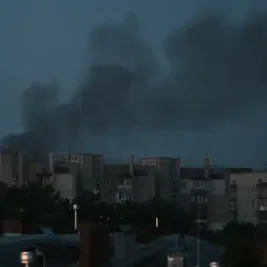
Beyond Afghanistan, Downing Street also reiterated Britain's support for Ukraine as the Trump administration adjusts its approach to Russia.
The report cited Trump's renewed criticism of Ukrainian President Volodymyr Zelenskyy, the easing of sanctions on Russia and restrictions on intelligence-sharing that helps Ukraine defend against Russian missile and drone attacks.
Asked about reports that Trump wanted a peace summit involving the United States, Russia and China without Ukraine, the Downing Street spokesperson did not directly address the proposed format.
Instead, the spokesperson restated the British government's position on the war and the conditions for ending it.
"Our position on Ukraine has been consistent since the conflict broke out, and that is that we want Ukraine to secure a just and lasting peace," the spokesperson said.
The spokesperson said any discussions involving the three countries would be a matter for those governments and emphasized Ukraine's right to represent itself.
"Well, obviously that's a matter for those countries, and obviously for Ukraine to speak for itself," the spokesperson said.
The spokesperson linked the government's position to Starmer's recent meeting with Zelenskyy, reiterating that British support for Ukraine remained unchanged.
"Our support for Ukraine is unwavering, and I think you saw that in the prime minister's meeting with President Zelenskyy last week," the spokesperson said.