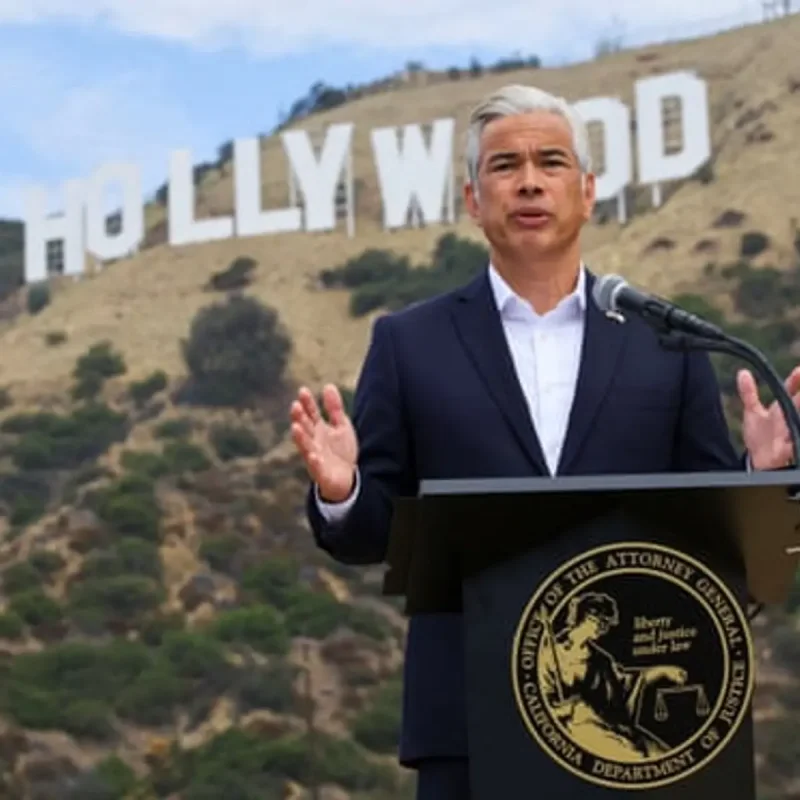
That's irrelevant to us," said Brown.
Brown asserted that the primary focus of the attorneys general remains the legal violations and public harm.
"What's most relevant is the harm that is being done and the laws that were broken, and that's why we take on this fight," said Brown.
Responding to suggestions that the lawsuit might only delay the merger, Brown clarified that the coalition aims for a complete halt.
"We want it to be blocked and that's what we're asking for," said Brown.
He explained that the states are not looking for a mere tactical delay in the corporate timeline.
"And I think we're in the early stages of what possible remedies that there could be, but we don't simply want to just delay it.
We want to stop it," said Brown.
New Jersey Attorney General Jennifer Davenport highlighted consumer costs and market competition as the state's primary concerns, especially given recent local studio investments.
Netflix and Lionsgate have committed to major production facilities in New Jersey, while Paramount is slated as the anchor tenant for the 58-acre 1888 Studios.
"We just knew that it was bad for New Jerseyans," said Davenport.
Davenport emphasized the necessity of fighting for industry competition amid rising nationwide living costs.
"This is more important than ever that we fight for the competition in the industry, because we are seeing it as just another component of rising costs in our state," said Davenport.
She noted that while New Jersey has a historical and growing film industry, the merger threatens local artists and storytellers.
"Yes, we do have a burgeoning film industry, and yes, we were the birthplace of the American film industry," said Davenport.
Davenport concluded that the resulting lack of competition would ultimately harm both consumers and the next generation of industry workers.
"But ultimately, when we think about what the harm is to New Jersey, we see rising costs – not just for consumers, but we also see that lack of competition that could happen here.
And that's bad for the industry as well, for artists, for storytellers and the next generation of people who are going to work in this business," said Davenport.