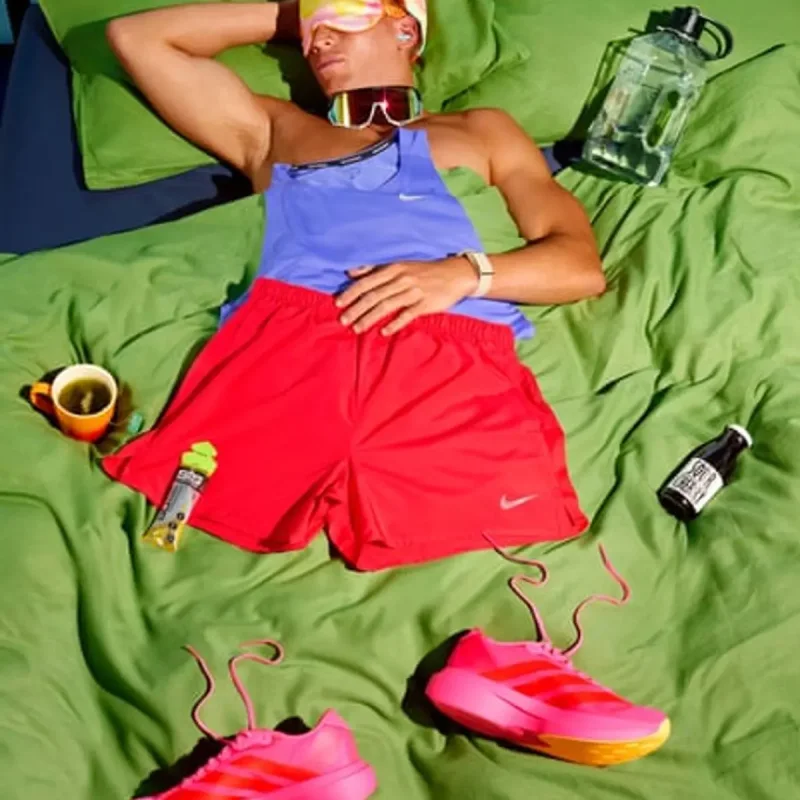
He winds down by turning off his phone 30 minutes before bed to read a book, and drinks homemade mint tea from his personal herb garden.
International cricketer Amy Jones points out that late-finishing T20 matches force players to stay awake into the early hours, prompting some to use sleep meditation apps or sour cherry juice sachets.
Jones notes that hotel environments during the summer tournament season are often loud, making earplugs essential.
British tennis player Harriet Dart, 29, shifts her sleep schedule forward if she faces a late-evening match, using a silk eye mask for a pitch-black environment.
She uses Epsom salt baths as a primary de-stresser, manages jet lag with short 20-minute naps, and wears compression socks during long flights.
Triple Olympic gold medalist swimmer Tom Dean maintains a strict rule against daytime napping during the first three days after landing in a new time zone to force rapid circadian adjustment.
He consumes a 600-calorie snack of Greek yoghurt, fruit, granola, and peanut butter right before bed to prevent waking up hungry.
Olympic champion triathlete Alex Yee, 28, restricts his fluid intake during the final 90 minutes before bed to protect his sleep cycle from nighttime disruptions.
Yee listens to podcasts or audiobooks nightly to settle racing thoughts, emphasizing that athletes must remain adaptable when unexpected factors alter their schedules.
During the Paris Olympics, competitors had to wake up at 3 a. m.
to check if water pollution levels in the Seine would permit their triathlon event.
“So, over that period, you just had to try to stay as relaxed as possible, understand that everyone was in a similar position, and that it’s all about how you respond to having too little sleep,” Yee stated.