Scientists are working to recreate the biological processes that allow animals to survive for months without food or water, aiming to make long-term space travel possible.
Prolonged space flight poses severe hazards to human health, including dangerous radiation exposure, organ damage from microgravity, and psychological strain.
Hibernation, a 250-million-year-old survival mechanism used by mammals, birds, and fish, may be the key to overcoming these challenges.
Hibernation shields animals against many spaceflight hazards, such as radiation damage, bone depletion, and muscle loss.
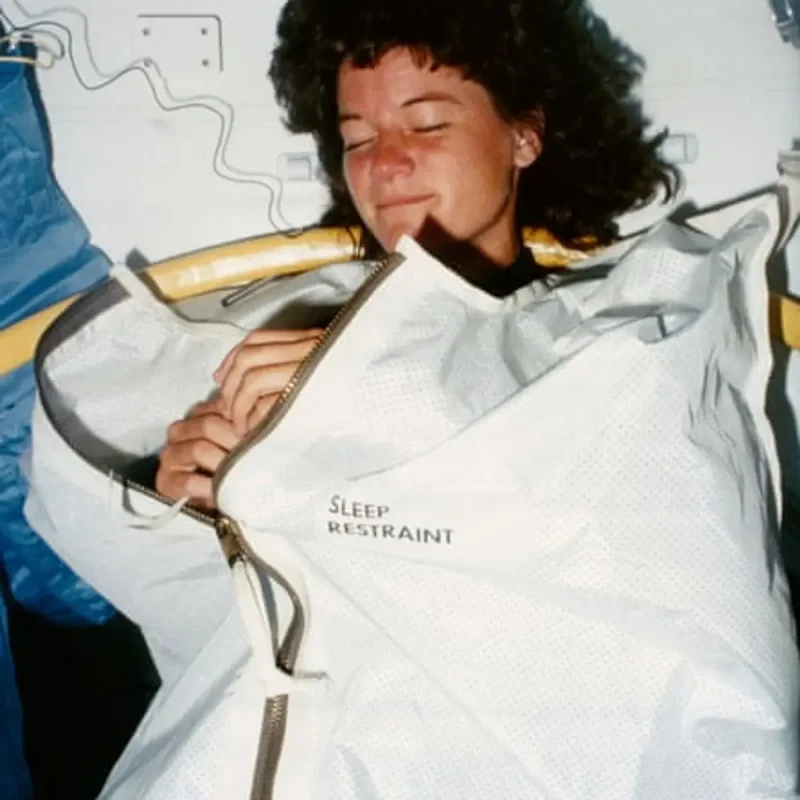
Putting travelers into a long-term unconscious state reduces psychological toll and decreases the payload of food and water needed for the journey.
Humans are not natural hibernators, so researchers funded by the European Space Agency (ESA) and NASA are studying how hibernating animals safely switch their bodily functions off and on.
Unlocking the Mechanisms of Torpor
During hibernation, animals lower their metabolic rate, consume less oxygen, and pack their DNA strands tightly, naturally shielding them from radiation particles.
"This is a very promising area," says Christiane Hahn, who oversees space biology research at ESA. "It could absolutely transform the future of space travel."
Yale University physiologist Elena Gracheva monitors 13-lined ground squirrels in a specially designed facility called a hibernaculum.
"These animals are like us during the summer, but in winter they become completely different organisms," she says.
"Their heart rate drops to one beat every several minutes, and their body temperature goes to 4C [39F], which is the temperature in a refrigerator.
Yet they’re still alive."
Gracheva identified the subfornical organ (SFO) in the brain as a regulator for thirst survival, noting that this brain area also exists in humans.
Developing Synthetic Torpor for Humans
Scientists are experimenting with drugs, ultrasound, and noninvasive techniques to induce synthetic torpor in non-hibernating species.
Biochemist Kelly Drew from the University of Alaska has spent over two decades studying arctic ground squirrels, focusing on how they protect vital organs at sub-freezing temperatures.
"It is definitely feasible," says Drew.
Researchers like Matteo Cerri of the University of Bologna and Siniša Hrvatin of MIT have successfully triggered torpor in animals by targeting specific brain regions.
Since 2023, noninvasive ultrasound has been used to trigger synthetic torpor in animals, and human trials using this method are expected to begin soon.
In a study published last year, University of Pittsburgh researcher Clifton Callaway used the sedative dexmedetomidine on healthy humans, achieving a 20% metabolic reduction.
"A trip to Mars is going to require something like 300kg of food per astronaut, there and back," he says.
"If you can reduce that by a quarter or more, that can add up."
Applications in Earth Medicine
The medical potential of synthetic torpor extends to treating illnesses on Earth, including cancer, Alzheimer's disease, and cardiac emergencies.
Researchers from the University of Groningen isolated a molecule called SUL-138 from Syrian hamsters, which has entered a small human trial for Parkinson's disease.
"The sky is the limit," Henning says. "When I talk to my medical colleagues, I always say: ‘What is your problem?
I’ll solve it with hibernation.’"
Synthetic torpor could also improve emergency medicine for heart attacks and strokes, offering a safer alternative to therapeutic hypothermia without inducing shivering.
While experts like Matteo Cerri believe human applications could happen in 10 to 15 years, others like Christiane Hahn expect it to take several decades.
"Inducing torpor is fairly well understood," she says.