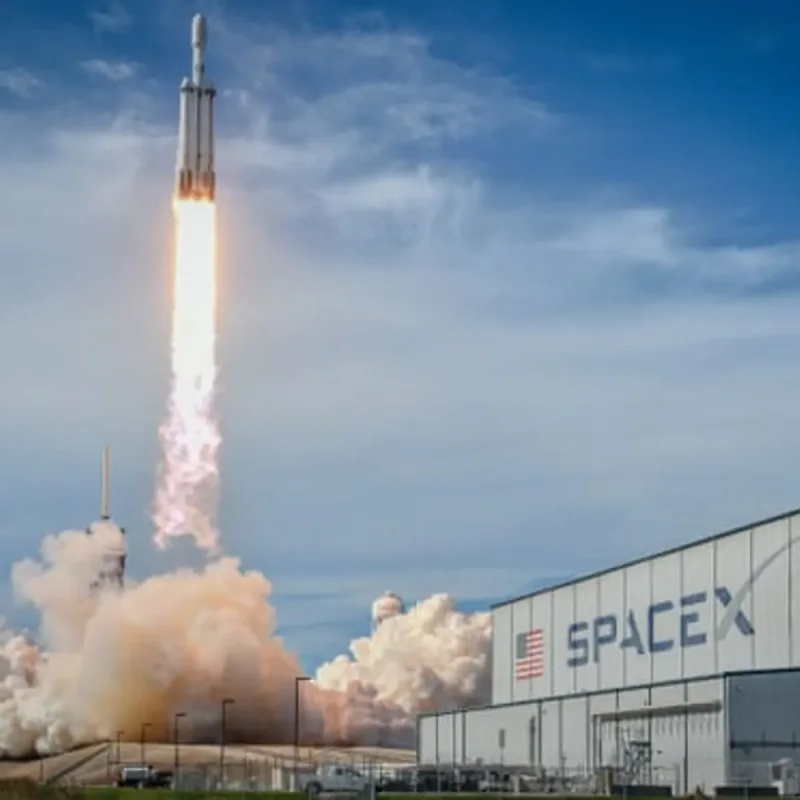
SpaceX shares dropped below their initial public offering price on Wednesday for the first time, just over a month after completing the largest IPO in history.
The decline reduced the market valuation of the rocket-and-AI company led by Elon Musk to $1.75 trillion, down from last month's peak of over $2.6 trillion, as reported by The Guardian.
The stock fell 1.5% to close at $134, sliding under the initial $135 IPO price.
The retreat represents a paper loss for investors who bought shares at the initial offering, reversing gains that had previously pushed the firm's valuation past tech giants Microsoft and Amazon.
This downturn comes amid growing market concerns over high tech valuations, potential Federal Reserve interest rate hikes, and debt-funded artificial intelligence infrastructure.
SpaceX recently raised $25 billion in the bond market to fund its capital-intensive expansion projects.
Market Analysts Weigh In
Daniela Hathorn, senior market analyst at Capital. com, noted that multiple factors contributed to the downward pressure on the stock.
"It seems to be a combination of profit-taking, valuation reassessment and the unwinding of extremely bullish positioning following one of the most anticipated listings in recent years," said Hathorn.
Market analysts highlighted that the decline reflects a temporary lack of fresh positive developments to sustain investor excitement.
"There hasn't been anything lately to remind people of some of the catalysts for why they bought SpaceX," said Steve Sosnick, chief market analyst at Interactive Brokers.
While the price drop is relatively small, Sosnick emphasized that the stock holds a disproportionate influence on broader market sentiment.
"The fact that a stock has fallen a couple of dollars below its IPO price in itself is not a tragedy, but SpaceX is heavily watched and has an important role in investor psyche," said Sosnick.
The inclusion of SpaceX into indexes like the Nasdaq 100 failed to stop the slide, with shares losing 13% since joining.
Investors are now awaiting the company's first post-listing financial results in early August, which will be followed by the expiration of the first IPO lock-up period.
Additionally, the upcoming 13th Starship test flight remains a key milestone for reducing launch costs.
Analysts emphasize that the stock is still in its infancy on public markets, meaning short-term movements may not reflect long-term potential.
"We're really on maybe 30 days or so into this experiment, still so very early," said Parmar.
Parmar added that the capital raised during the listing provides the company with a substantial runway to execute its long-term strategy.
"The big thing is Elon got his $85bn to take SpaceX to the next level of growth, which will take many years to see how that plays out.
Not 30 days of trading," said Parmar.