
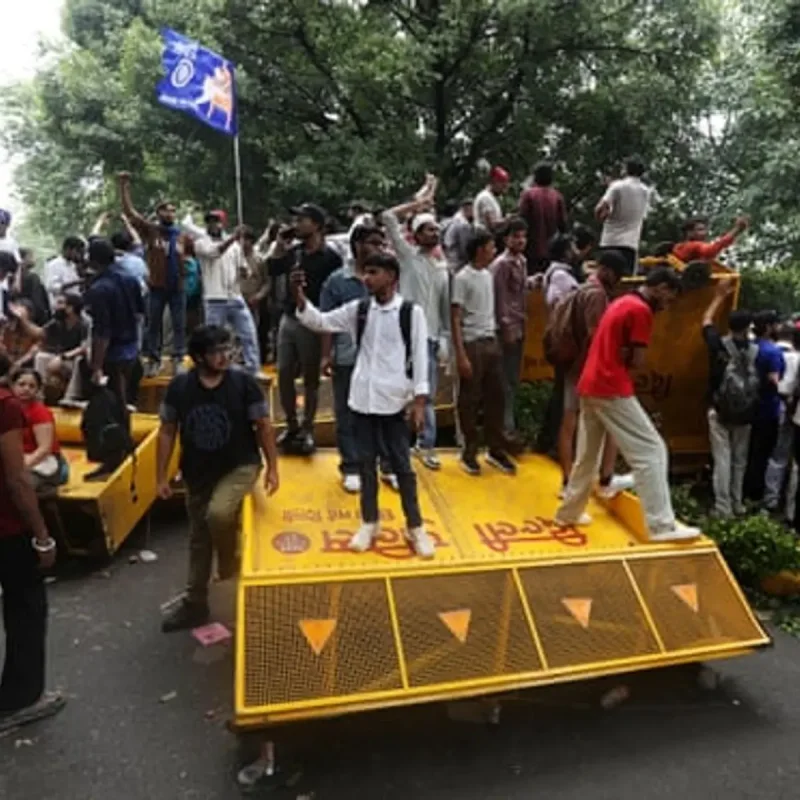
The Cockroach Janta party (CJP) began as an online joke but has quickly become one of the most unexpected challenges to Narendra Modi's rightwing government, driven by millions of discontented young people in India.
Abhijeet Dipke, 30, a recent US university graduate, founded the CJP in May after hearing India's chief justice compare unemployed youth to "parasites" and "cockroaches" during a Supreme Court hearing.
Dipke jokingly posted on social media: "What if all cockroaches came together?"
The response was overwhelming.
Dipke created a website and social media accounts for the satirical party, complete with a biting manifesto and a tagline: "A political party for the people the system forgot to count."
From Satire to Mass Movement
Within two weeks, the CJP's Instagram page amassed over 22 million followers, surpassing the BJP.
The Modi government, known for its intolerance of criticism, tried to block the accounts on national security grounds but failed.
Dipke focused the movement on a critical issue: leaks of medical entrance exams, which have been repeatedly sold to the highest bidder.
Over 2 million students compete for just 130,000 places, and many families spend life savings on coaching for the gruelling NEET exams.
A string of exam leaks has forced millions into re-takes and been linked to dozens of suicides.
The Modi government has been accused of failing to take responsibility, and the CJP called for Education Minister Dharmendra Pradhan to resign.
For many Gen Z and millennials, the CJP has voiced frustrations over a failing education system and a job market that leaves almost 40% of graduates under 25 unemployed.
Protests and Government Response
The first offline protest took place in Delhi in early June, with Dipke returning from the US to lead it.
Later that month, supporters held a second protest, pledging to stay until Pradhan resigned.
They were joined by engineer and education activist Sonam Wangchuk, who began a Gandhian hunger strike.
As Wangchuk's condition worsened after 20 days, Delhi police forcibly removed him to a hospital, sparking national outrage.
From his hospital bed, he called for supporters to march on parliament.
On Monday, thousands of protesters, mostly students and parents affected by leaks, gathered in central Delhi.
Police blocked roads, shut down the internet, and used baton charges and teargas as crowds tried to push toward parliament.
Clashes left protesters and police injured.
The Modi government offered a brief meeting but made no commitments. Dipke vowed they would not move until Pradhan resigned.