A team of oceanographers has discovered a thriving deep-water coral reef off the coast of Benin, overturning a 60-year-old scientific belief that the ecosystem was dead.
Led by Gérard Zinzindohoué, the researchers mapped a mesophotic coral ecosystem located 54 meters below the surface in the Gulf of Guinea.
Surveys conducted between April and December 2025 identified two patches of rocky seafloor habitat spanning roughly seven kilometers.
Using side-scan sonar and underwater cameras, the team captured footage revealing a complex garden hosting at least six soft octocoral forms, two black coral types, and eight fish species.
Among the fish observed were golden African snappers, blackbar soldierfish, Guinean angelfish, West African goatfish, Monrovia doctorfish, three-banded butterflyfish, and two damselfish species.
Challenging Historical Assumptions
Historical fishing surveys from the 1960s had originally detected the deep-water formation, but researchers at the time concluded the site was devoid of life.
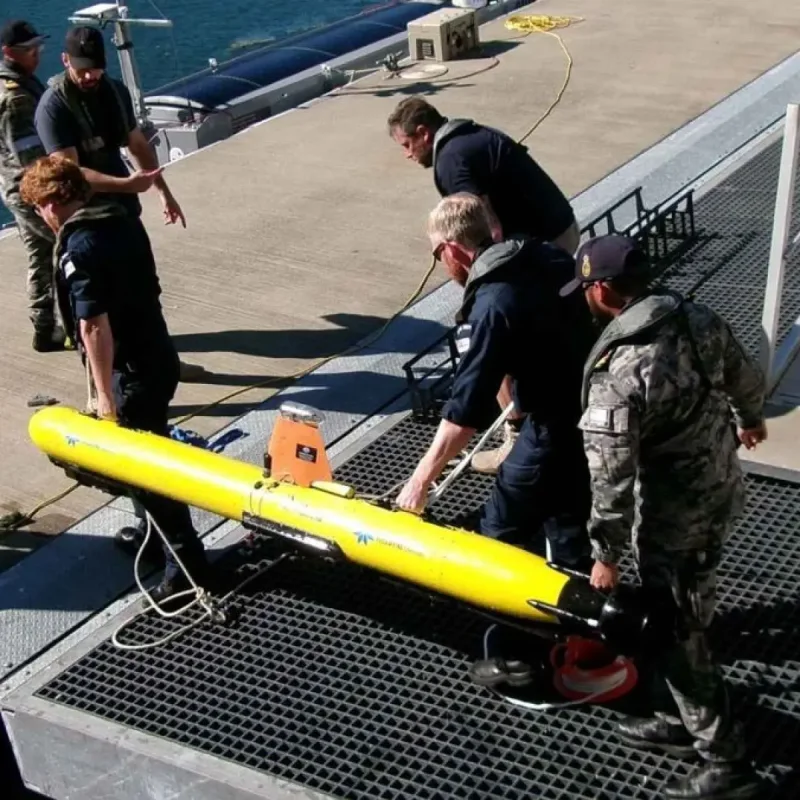
Armed with a $20,000 National Geographic Explorers grant, Zinzindohoué's team partnered with local fishermen to deploy high-resolution underwater drones and deep-sea cameras across the site 14 miles offshore.
Zinzindohoué, an oceanographer at the Institut de Recherches Halieutiques et Océanologiques du Bénin, described the grueling fieldwork behind the discovery.
"It was not an easy field campaign," he said. "It was a mix of long days at sea, technical problems, and a lot of uncertainty.
But then we saw structures on the sonar that looked like they could be reef signatures, which gave us hope that we were close."
The deployment of camera equipment allowed the researchers to visually inspect the seafloor for the first time in six decades.
"That was a big moment for us, because suddenly we could actually see the seafloor," Zinzindohoué said. "I still remember seeing those first images.
It was a mix of excitement and disbelief, because after all this time thinking about this reef, suddenly there was something real in front of us."
Zinzindohoué emphasized that finding the living ecosystem challenges existing assumptions regarding West African marine biodiversity.
"I think what we found is probably not an exception," he said.
"It is more likely a reflection of how little we still know about coastal regions in West Africa and elsewhere.
If we were able to find this reef again after 60 years, how many others are still undocumented or simply forgotten?"
He noted that the current discovery represents only an initial step in understanding the broader Gulf of Guinea region.
"This is still an initial exploration," Zinzindohoué said.
"The historical reports suggested that this could be a continuous coral reef barrier extending roughly 40 kilometers parallel to the coast.
We only surveyed a small section of this area and we had a limited number of visual transects."
Zinzindohoué added that the site serves as a vital historical record for oceanographic research.
"For me, the most exciting part is about understanding the reef's history, and what it can tell us about how the ocean in this region has changed over time.
It feels like we have only just started to read an archive that has been there for a very long time," he said.
He reflected on the personal optimism that drove the search despite years of grant rejections and technical delays.
"I was guided by hope.
A hope that sometimes there are species or ecosystems which kind of defeat time, or are trying to resist it," Zinzindohoué said.
He underscored the necessity of local scientific leadership in exploring domestic waters.
"Since it's an undisturbed marine ecosystem, it can help through carbon dating or paleoclimatic study to tell us which kind of climate system has occurred here in the past," he said.
"It's better to know the past to help explain the present, and help know which kind of direction we can take in the future."
Research team member Houangninan Midinoudewa highlighted the immediate significance of the findings for local coastal communities.
"I said, 'Bro, 60 years later we are now discovering exactly what we have in our water,'" said Midinoudewa, an oceanographic researcher at the Benin Marine Conservation Club.
"We found it still alive, producing more fish for communities and supporting livelihoods. I was really joyful and really overwhelmed."
Midinoudewa stated that conservationists plan to use the visual evidence to establish formal environmental protections.
"We will be advocating for its full protection, perhaps by setting up a marine protected area around it," he said.
He emphasized the urgent need for expanded regional marine studies across the Gulf of Guinea.
"I hope the Gulf of Guinea will be a hub for research because we know our resources are being exploited and people [need to] know exactly what we have and why we should care," Midinoudewa said.
The research team plans to return to the site for physical coral sampling and diving operations to confirm specific species classifications and evaluate whether adjacent seabed formations support further living coral communities.