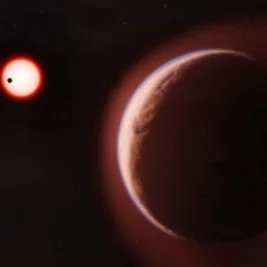
Planets orbiting orange K-dwarf stars may provide better conditions for life than Earth, according to astrobiological research.
The findings point to these stars as promising targets in the search for extraterrestrial life.
Iva Vilović, an astrobiologist at the Leibniz Institute for Astrophysics in Potsdam, Germany, observed garden cress growing under simulated K-dwarf starlight in a Berlin laboratory.
The plants grew faster and taller than those exposed to simulated sunlight, indicating that photosynthesis could function on planets orbiting K-dwarf stars.
K-dwarf stars are cooler and burn their fuel more slowly than the Sun, potentially allowing life to persist over extended periods.
"K-dwarf light is a very, very interesting light source, and it should be considered, if not prioritized, for any type of search for extraterrestrial life, in my opinion," Vilović said.
Superhabitable Worlds
Scientists use the term superhabitable worlds to describe hypothetical planets that could support carbon-based life for longer periods and foster greater biological complexity and diversity than Earth.
Researchers consider super-Earths orbiting K-dwarf stars as promising candidates for such environments.
In the proposed model, a superhabitable planet would be approximately 20 to 30 percent wider than Earth and have twice its mass.
It would also orbit at a distance from its star that allows liquid water to remain on the surface, a key condition for the type of life considered in these studies.
The greater mass of such a planet would produce stronger gravity, helping it retain atmospheric molecules more effectively than Earth.
According to the scientific model, this could create a thicker atmosphere and contribute to a warmer, more stable climate, potentially supporting the development of plants, animals, or analogous forms of life.
A larger iron core could also generate a stronger magnetic field, providing additional protection against cosmic radiation.
These characteristics are among the proposed reasons that some super-Earths might offer more favorable conditions for life than our planet.
Planetary gravity could also shape the surface of a superhabitable world.
Stronger gravitational forces would tend to reduce large differences in surface elevation by eroding continental shelves and filling deep trenches.
Under this hypothetical model, the result could be a smoother planetary surface with water distributed across shallow lakes and seas.
Scientists describe these features as possible characteristics of worlds that could sustain life under conditions different from those found on Earth.