India's revision of its electoral rolls has removed an estimated 130 million names since the process began in June last year, raising concerns about voting rights and access to public assistance.
In New Delhi, residents of a low-income settlement said hundreds of adults lost their voter registration, while activists and election experts questioned how authorities determined eligibility.
The electoral rolls previously contained 980 million names, according to the account of the revision.
Yogendra Yadav, an election specialist and prominent critic of Prime Minister Narendra Modi's ruling Bharatiya Janata Party (BJP), estimated that about 130 million names had been deleted.
The BJP has cited that estimate in defending the process.
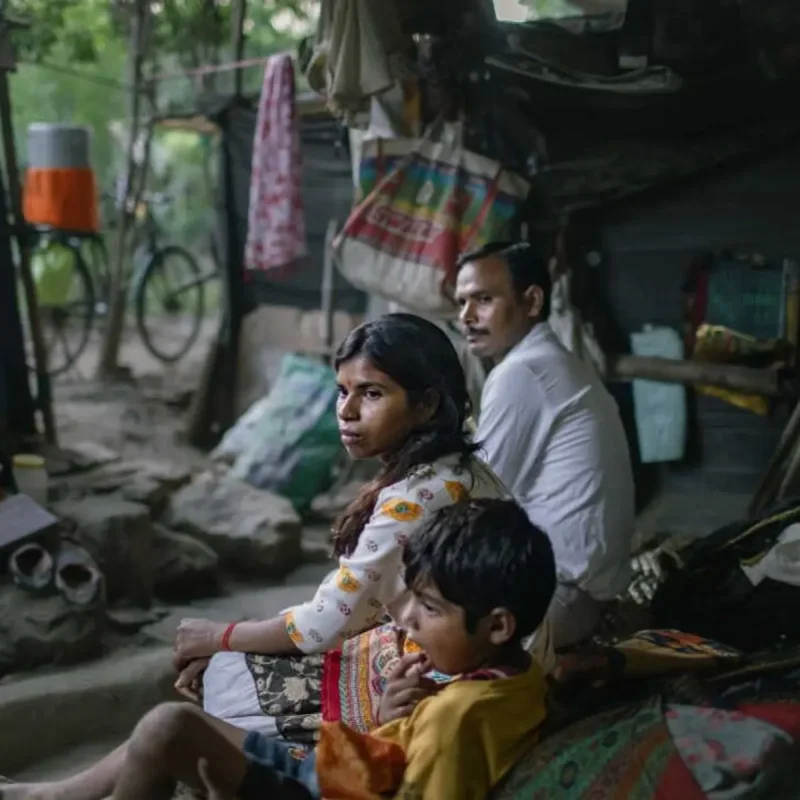
Kanchan, a 27-year-old resident of Bela Slum, said about 500 adults in her community were removed from the rolls.
Residents learned of the deletions through a neighbor authorized to inspect electoral lists as a political party representative.
Kanchan said her community's experience had undermined confidence in the revision process. "It's important, because it shows we are citizens," she said.
She said an election official had visited her home and asked her to complete paperwork, but her registration was subsequently removed on the grounds that she had relocated.
Kanchan, who raises her 6-year-old son alone, earns money through teaching and receives a monthly government stipend equivalent to $25, along with free monthly supplies of rice, wheat and sugar.
She fears losing those benefits because of questions about her citizenship status.
"The government is choosing the people that support them," Kanchan said, accusing the BJP of using the revision to remove voters from communities opposed to the party.
Her concerns echo criticism from former chief election commissioner SY Quraishi, who held the post from 2010 to 2012.
Critics have questioned whether the Election Commission of India, which oversees the process, has acted independently under Chief Election Commissioner Gyanesh Kumar.
Quraishi said the revision had reversed the usual relationship between voters and elected leaders. "Normally voters choose the government, here the government was choosing the voters," he said.
The BJP defended the deletions in a video posted to its YouTube channel in early October.
The party said the removed entries belonged to people who had died, appeared more than once on the rolls, moved elsewhere or were otherwise absent.
However, activists helping people restore their registration said some voters had struggled to meet new documentation demands.
These included requests to establish whether their parents or grandparents had voted more than two decades earlier, as well as demands to resolve discrepancies in the spelling of names.
In the New Delhi neighborhood of Mustafabad, community activist Nasir Malik received a notice questioning his registration because of a name discrepancy.
He said such inconsistencies had not previously prevented him from voting.
"This makes no sense," Malik said. "If this was a problem, how did I vote in elections before this?"
Experts said spelling differences were common in India and had not generally been treated as disqualifying during earlier voter roll revisions when local election officials believed the records referred to the same person.
Lawyer Kaustubh Chaturvedi, who has filed multiple petitions challenging the revision, said the process placed an unusually heavy burden on citizens to establish their eligibility.
He described the scale of the deletions as unprecedented.
"It's an unconscionable process.
What you've really done is you've purged the right to the vote from almost all of those who need it most," Chaturvedi said.
Historian Carole Anderson, who has written extensively about voter suppression targeting Black communities in the United States, said the Indian deletions were the largest disenfranchisement exercise by absolute numbers.
She noted that Jim Crow laws disenfranchised a higher proportion of the population in the United States.
Concerns about the consequences extend beyond voting.
In some states governed by the BJP, officials have threatened to remove people from assistance programs if their names have been deleted from electoral rolls, intensifying fears among affected residents.
Those concerns are particularly acute among Muslims, amid statements by Home Minister Amit Shah linking the revision to efforts to identify, remove and deport alleged infiltrators.
Shah has also portrayed opponents of the revision as defending infiltrators, a characterization that critics say can target Muslims from neighboring Bangladesh.
Malika, a Muslim resident of Mustafabad who uses one name, fears that losing her voter registration could lead authorities to accuse her of being an undocumented migrant.
She said her voter identification card was one of the few documents available to establish her identity.
After public outcry over the deletions in September, the Election Commission said it had conducted the revision with "complete integrity" and that officials would assist people whose names had been removed in getting reinstated.
Sunil Kumar, a senior election official in Kanchan's constituency of Chandi Chowk, told NPR that his department was working to restore the affected residents to the electoral rolls.