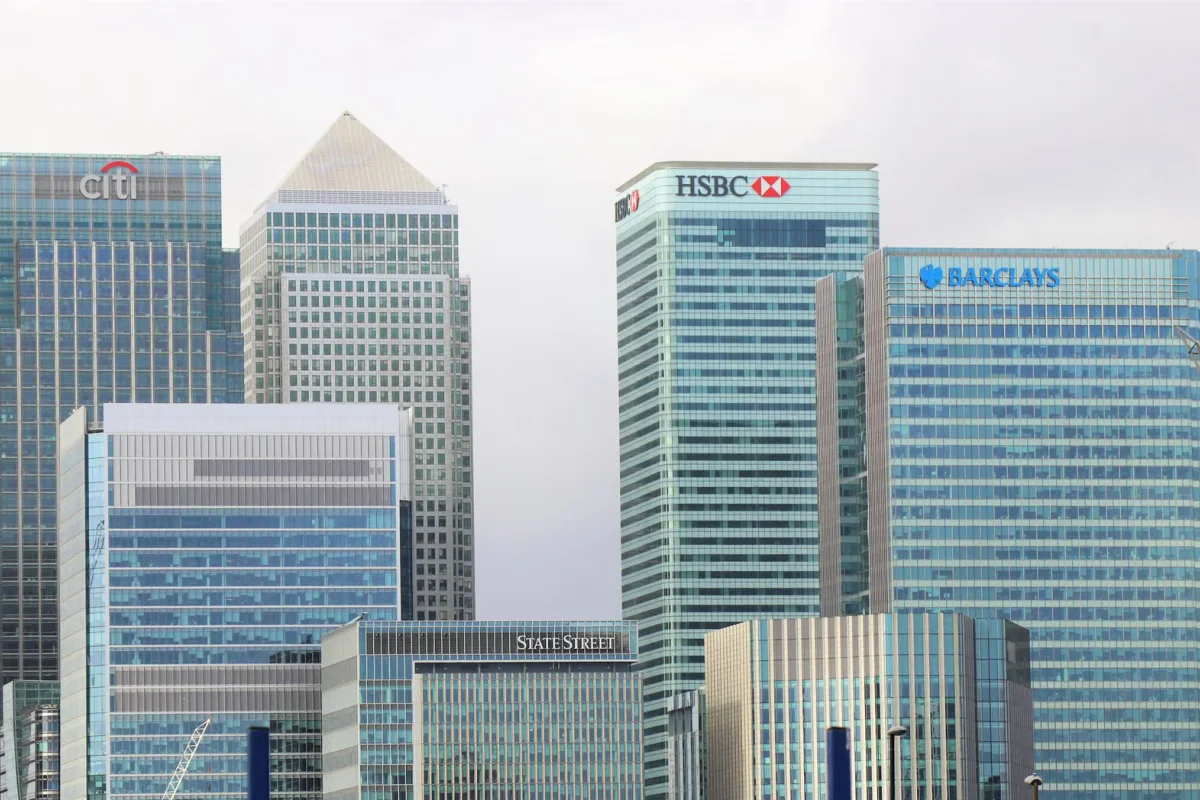
Barclays has moved capital out of its macro interest rate trading business and into hedge fund financing, as demand for leveraged exposure to Asian artificial intelligence stocks strained its internal limits.
The London-based bank hit its financing ceiling during the earlier surge in AI-related equities and used an internal auction to shift balance sheet capacity to its prime brokerage unit, according to Bloomberg reports published in October 2026.
The maneuver points to widening constraints across Wall Street, where major banks are chasing lucrative hedge fund financing business while working with limited balance sheet resources.
Capacity Pressure Spreads Across Wall Street
Barclays had reached its financing limit for Asian hedge fund clients during the summer, prompting executives in its global markets division, led by Adeel Khan, to steer resources toward activities offering higher returns.
The approach lets the bank serve additional client demand without expanding its overall balance sheet by the same amount.
Barclays said it allocates its investment banking balance sheet dynamically to pursue client opportunities while keeping controls over risk and returns.
Goldman Sachs and UBS have also acknowledged pressure on their capacity to support equity financing clients, according to their public statements and Bloomberg reporting.
Goldman Sachs Chief Financial Officer Denis Coleman said earlier in October that the bank could deploy resources selectively, reflecting the importance of managing scarce financing capacity.
UBS Chief Financial Officer Todd Tuckner said in July that the bank was becoming more restrained in its use of equity financing capacity for prime brokerage.
The risks tied to concentrated AI positions surfaced in July, when several hedge funds suffered substantial losses during a decline in AI stocks.
Barclays had previously declined to take on Situational Awareness as a client over concerns about sector concentration, according to Bloomberg.
The fund, founded by Leopold Aschenbrenner, later faced margin calls and liquidated its public portfolio during the July downturn.
Goldman Sachs has also encouraged some hedge fund clients to increase short positions, according to people familiar with the matter.
Short-sale proceeds can help finance long positions within prime brokerage accounts, lowering the net financing requirement attributed to individual clients without necessarily reducing their overall market exposure.
Data from Goldman Sachs' prime brokerage showed net leverage among US long-short hedge funds fell 3.2 percentage points to 43.7% in the week ending October 18, a five-year low.
The decline largely reflected a rise in short positions rather than a substantial cut in long exposure.
Since July 31, long leverage had slipped just 0.5 percentage points to 128.8%, while short leverage climbed 8.0 percentage points to 85.1%, its highest level in five years.
Overall gross leverage stayed around 214%, indicating that aggregate exposure had not fallen alongside net leverage.
Market strategist Simon White warned in June that rising demand for total return swaps and futures financing was putting pressure on dealer balance sheets.
Bloomberg reported that stock inventories had reached $223 billion, adding to concerns about financing capacity constrained by regulatory requirements.
Despite these pressures, Barclays' equities division was expected to report third-quarter revenue of £865 million ($1.2 billion), according to analyst estimates compiled by Bloomberg.
That would mark its strongest third-quarter performance since at least 2009, underscoring the revenue opportunities banks see in financing hedge fund trading activity.