New York City is moving closer to ending its horse-drawn carriage industry by June 2028, with the City Council considering legislation on October 22, 2026.
The proposed ban follows years of animal welfare concerns and a fatal carriage accident, and would end a tourist tradition spanning more than 160 years.
The bill, backed by Mayor Zohran Mamdani, would require his administration to develop a workforce transition plan by April 2027.
According to reports from CNN, BBC, and ABC7 New York, the plan includes employment referrals, career counseling, training opportunities, and consideration of financial compensation for affected workers.
ABC7 New York reported that the bill was expected to receive support from at least 29 of the City Council's 51 members.
A Finance Committee meeting was scheduled for 10:30 a. m.
, followed by a full Council vote at 1:30 p. m.
Carriage operators and Transport Workers Union Local 100 planned to rally outside City Hall before the vote.
Drivers Fear for Their Livelihoods and Horses
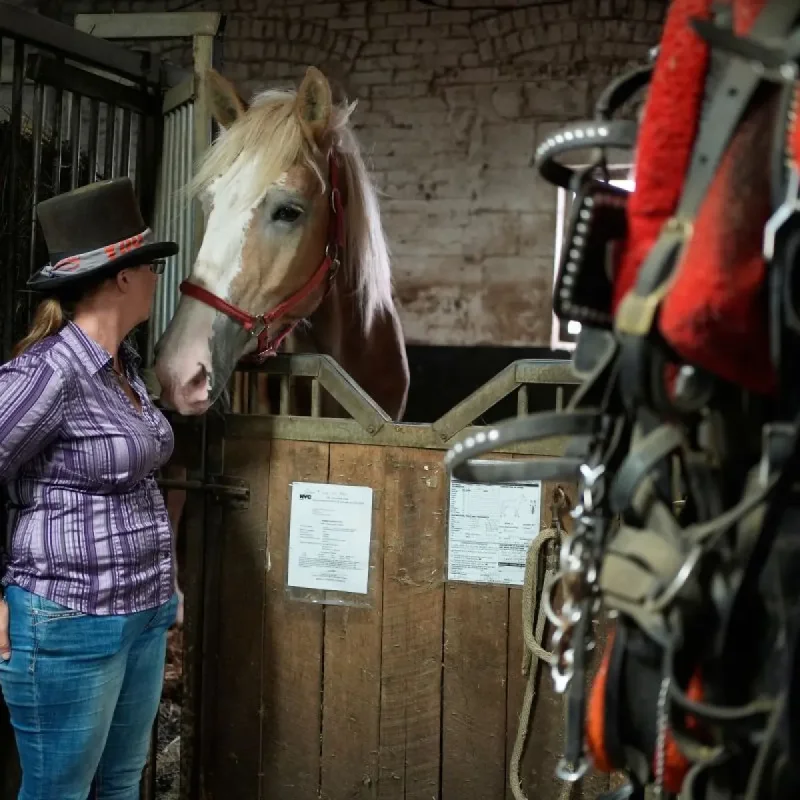
Alexus Lawson, a 28-year-old driver from Queens who owns six horses, said she was worried about caring for her seven-year-old horse, Starlight, if the industry disappeared.
"No one can come up with an appropriate answer because there is none," Lawson said, as reported by CNN.
She questioned how she would continue supporting the animals that depend on her income.
"Without a job, how can I take care of my horses?" Lawson asked.
Lawson also challenged the reasoning behind the proposed restrictions, arguing that working with horses was not inherently harmful to the animals.
"They look at an animal in harness and they see a trap," Lawson said of officials supporting the ban, according to the BBC.
She continued her defense of the industry by emphasizing the role of horses as working animals.
"They see a job as something that's terrible. Horses are working animals," Lawson said.
Medet Fidan, a carriage driver who previously worked as a taxi driver, said the proposal threatened his livelihood and business.
CNN reported that he had driven carriages for 15 years, while the BBC described him as having spent 12 years in the industry.
"I think the city is leaving us a big mess," Fidan said, according to CNN.
He warned that the proposed phaseout could eliminate his source of income.
"We're going to lose our businesses, we're going to lose our jobs, we're going to lose our livelihoods," Fidan said.
Fidan also rejected accusations that carriage operators mistreat their horses, describing his relationship with them as central to his life.
"I spend more time with my horses than my wife and my kids," Fidan said, according to the BBC.
He disputed allegations of abuse and criticized officials for advancing the proposal.
"They're telling me I'm abusing my horse? No way," Fidan said.
Fidan also questioned the decision-making process, arguing that officials had not adequately consulted industry workers before moving toward a ban.
"If you don't listen to me, how can you come and kill my business, destroy my family's, my livelihood?"
he asked.
Christina Hansen, a longtime carriage driver and industry spokesperson, said the proposed transition measures did not adequately protect workers facing unemployment.
"It does nothing for alternate employment, for the continuation of our businesses," Hansen said, according to CNN.
She questioned how drivers would meet their expenses while searching for other work.
"Who's going to pay my rent while I'm looking for a job?" Hansen asked.
According to ABC7 New York, opponents also warned that the measure could eliminate hundreds of jobs, threaten dozens of businesses, and affect 68 carriage medallions, many associated with immigrant-owned family businesses.
Industry representatives said carriage rides generated more than 100,000 trips annually and contributed to tourism.
Joann Ariola withdrew her support for the proposal earlier in the week, arguing that the proposed employment report did not provide sufficient protection for workers.
"I can no longer support a carriage horse ban that fails to give the same level of consideration to the hardworking carriage drivers whose livelihoods are at stake," Ariola said in a statement.
She also criticized the proposed timeline and the absence of stronger employment guarantees.
"Simply not enough to justify implementing a ban in 2028," Ariola said, referring to the proposed report on future employment opportunities.
Vito Fossella also opposed the measure, describing carriage rides as a longstanding attraction whose safety problems could be addressed through additional regulations.
"Beloved tradition," Fossella called the carriage industry, according to ABC7 New York.
Fatal Accident Renews Calls for Ban
The fatal accident involving 18-year-old Indian tourist Romanch Mahajan in June helped renew calls for a ban.
Mahajan died after falling from a carriage when its horse bolted in Central Park.
His father, Deepak Mahajan, told lawmakers that his son had jumped from the carriage to help his mother after she was thrown from her seat.
Animal welfare advocates have cited other incidents involving horses and passengers.
According to the Manhattan Borough President's office, 40 horses working in Central Park had died since 1982, with overheating and collisions among the issues identified.
The Central Park Conservancy also reported seven horse-related incidents over the preceding 13 months.
The proposed legislation, referred to as Romanch's Law, also follows the death of a carriage horse named Deniz after it ate a toxic plant in Central Park.
Supporters argue that eliminating the industry would reduce risks to passengers, pedestrians, and horses.
Some residents have supported the restrictions, citing previous incidents involving horses in the park.
"There were a few cases of horses dying in the middle of the park.
You can clearly see that they're not taken care of," New York resident Ron Tsur said, according to the BBC.
Lawson described Mahajan's death as deeply distressing but argued that the delayed implementation of the ban did not address immediate safety concerns.
"Extremely tragic," Lawson said of the incident, according to the BBC.
Other opponents have questioned whether horses should continue working in the park's busy urban environment.
A German tourist interviewed by the BBC said horses should not be required to pull passengers through the noisy park.
"To stand the whole day," the tourist said in a statement that was cut off in the source report.
Mayor Mamdani's office said it was developing a detailed transition plan and had begun discussions about potential compensation.
The legislation would also prohibit selling horses for slaughter or similar work, although the drivers' union has raised concerns about funding and the availability of suitable placements for the animals.
The Transport Workers Union has threatened legal action if the legislation passes, arguing that it could strip operators of licenses, medallions, and businesses built over many years.
CNN reported that the union intended to challenge the measure as soon as it became law.
"The minute the ink dries," the union said in its description of when it would file a legal challenge, according to CNN.
City Council Speaker Julie Menin's office said she would remain involved in the transition process.
The vote would determine whether the city proceeds with the planned phaseout by June 2028, while questions about compensation, alternative employment, and the future care of the horses remain unresolved.