The island nation of Cabo Verde faces a complex internal debate over its African identity and colonial legacy following its historic advancement to the World Cup knockout stages as debutants.
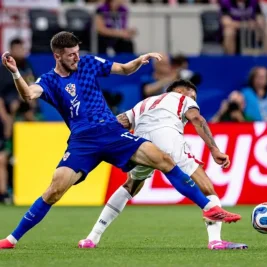
As the smallest country to reach this stage, the squad competed intensely against defending champions Argentina before being defeated deep into extra time.
"We represent our island, but we also represent Africa," said Bubista, the 56-year-old coach of Cabo Verde, during a pre-match press conference.
"It's a source of immense pride."
While this milestone generated continental solidarity among Africans globally, local perspectives within the island reveal deep-rooted complexities shaped by more than 500 years of Portuguese colonial rule.
Colonial Legacy and Identity
"Some Cabo Verdeans identify as Portuguese and not African, presenting their skin colour and that the islands were uninhabited before Europeans came as proof of their origin," said António Tavares, a veteran choreographer and director of the cultural centre in Mindelo.
Sociologists point out that the colonial administration created a strict hierarchy based on skin color and labor roles, which continues to influence societal mentalities today.
"Our mentality is very Luso-Tropicalism," said Nardi Sousa, a professor of sociology at the University of Santiago, referencing a philosophy that claimed Portuguese colonizers were more humane due to climate-driven race-mixing.
The historical impact is evident at Cidade Velha, a Unesco world heritage site where captured mainland Africans were baptized to increase their value in the transatlantic slave trade.
"Cidade Velha has a very bad memory because it's here that the African starts to be dehumanised and to lose its identity.
If my name was Balde, when I come to Cabo Verde, Portuguese give me a name like Manuel or Jose," said Sousa.
"Cabo Verde was a laboratory for the Latinisation of Africans, for losing your identity."
Local cultural figures emphasize that this systemic eradication of identity still lingers in modern nomenclature and societal structures.
"Why am I Antonio? Why do I have only Portuguese name?"
asked Tavares.
The historical trauma extended beyond slavery into the 20th century under dictator Salazar, who established a concentration camp in Tarrafal to hold political prisoners from various colonies.
"I'm not here to cure, but to sign death certificates," once quipped the camp's doctor, reflecting the inhumane conditions endured by inmates.
As global discussions around colonial reparations intensify, the African Union has indicated it may use diplomatic pressure or international courts, a stance the local government supports.
"The past of slavery is something that we've been dealing with for more than 500 years … we are trying to dialogue with all the countries involved in this slave trade and especially with Portugal that was our coloniser," said Augusto Jorge de Albuquerque Veiga, the culture minister.
"[And in] my personal view, I am in favour of reparations for what was taken and stolen from the African continent."
Critics note that European political shifts have stalled progress, though Portugal and Cabo Verde agreed to a twelve-million-euro debt-for-climate swap in 2023, which some view as a subtle form of reparations.
"The Portuguese created many problems by creating this system … we need to decolonise our soul," said Tavares.
"The best way to decolonise is to start educating people on our history … there's a need for us to recover forgotten memories, stolen memories."
Current education curricula face criticism for teaching a tailored version of European history, while reports of profiling against Black Africans at local airports persist, complicating regional pan-African relations.