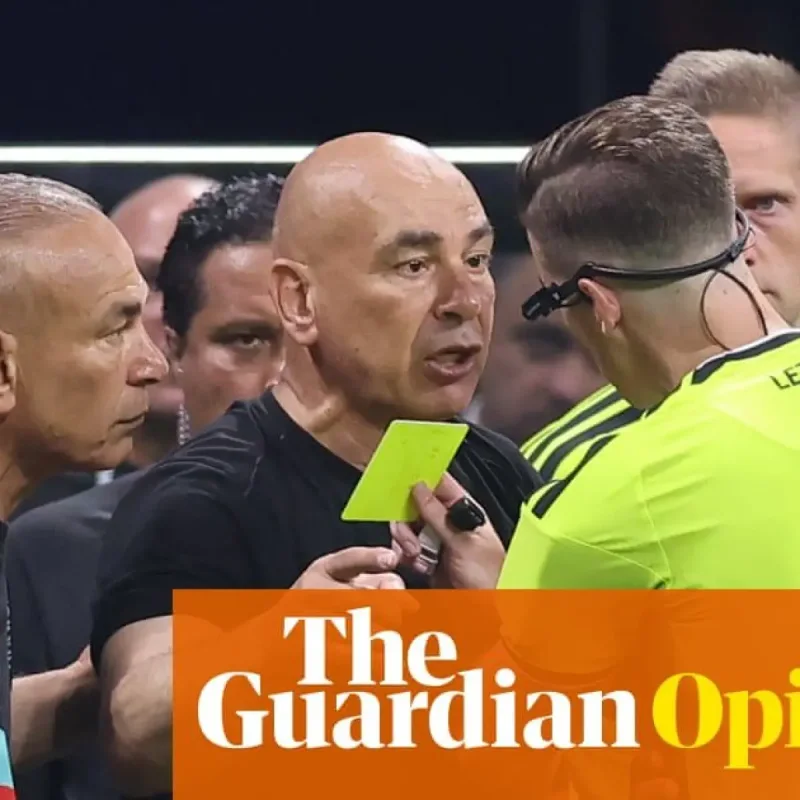
Life is unfair.
That was the first thing Egypt coach Hossam Hassan told the media after his team's 3-2 loss to Argentina in the last 16.
The Pharaohs were minutes away from a historic upset, leading 2-0 before Argentina scored three goals in 13 minutes.
For Egyptians, the match was an emotional rollercoaster that ended in outrage over refereeing decisions.
Hassan made a crossed 'X' gesture during the match, FIFA's anti-discrimination symbol, and later accused the governing body of wanting Argentina to win.
He claimed Egypt was wrongly denied a second goal after a VAR check for a foul 100 yards away, and that a penalty should have been awarded before Argentina's third goal.
"Perhaps they wanted to keep the world champions in the competition?" Hassan told beIN Sports.
Conspiracy Theories and Disinformation
Hassan's remarks sparked a firestorm of conspiracy theories.
French referee François Letexier faced intense scrutiny; his Wikipedia page was vandalized to falsely identify him as Jewish, fueling claims of a Zionist conspiracy tied to Hassan's support for Palestine.
As Argentina progressed, theories followed. The Argentinian federation faced an FBI investigation for alleged money laundering.
A controversial VAR decision led to Switzerland's top striker being sent off in the quarter-final. Social media posts claimed the World Cup was "rigged for Messi."
VAR technology has been at the center of nearly every major controversy. Critics argue it is applied inconsistently.
The most controversial episode came when US striker Folarin Balogun received a red card, later overturned by FIFA after intervention from Donald Trump.
FIFA's sudden change of heart shattered the illusion of integrity. UEFA called the decision "unprecedented, incomprehensible and unjustifiable."
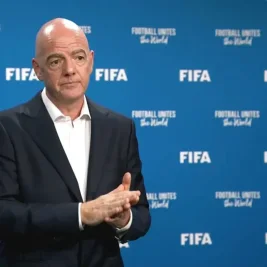
The International Olympic Committee is being asked to investigate whether FIFA president Gianni Infantino breached political neutrality rules.
This is not without precedent.
In November 2025, FIFA suspended part of Cristiano Ronaldo's ban for a red card in a qualifier, clearing him for group-stage matches.
Such clemency underscores FIFA's willingness to indulge big attractions, especially with dynamic pricing schemes.
Disinformation has also spread through AI-generated images and videos.
One manipulated image showed a man resembling Adolf Hitler celebrating a German goal; another showed British PM Keir Starmer in a Croatia jersey.
These prey on emotions, blurring reality and fiction.
Infantino fawned over Trump despite the US president's handling of the Iran war and immigration crackdown. He even invented a peace prize to appease Trump.
For Infantino, the US is the crown jewel of football's new era, ignoring FIFA's own ethics code.
Iran's team had to shuttle between Mexico and the US due to visa restrictions, describing their experience as a "disaster."
When Iran failed to reach the knockout stage while one host nation bombed the country, many saw it as a profound injustice.
More Than Just a Game
The Egypt-Argentina game cannot be considered without the context of what Egypt stood for. The team became a source of collective joy for the Arab world and Africa.
Hassan raised a Palestinian flag after their last-32 win, saying anyone lacking empathy for Palestinians had lost their humanity.
The Egyptian Committee for the Reconstruction of Gaza organized watch parties for displaced families. Its director was killed in an Israeli strike hours before Egypt played Argentina.
For a few weeks, Egypt's run carried the hopes of oppressed people.
When Egypt squandered their lead against Argentina amid controversial decisions, the pain ran deeper than the result.
For those accustomed to injustice, it felt like another reminder that the rules are not the same for everyone.
The Egyptian Football Association released a statement saying it "cannot remain silent" after refereeing decisions that "left profound questions about consistency and fairness."
Accusations of corruption reached a crescendo, with hackers sending emails from the Argentinian federation admitting to "corrupt refereeing decisions."
Conspiracy theories spread asserting the fix was in, and Argentina emerged as a villain. The World Cup does not exist in a vacuum.
Football is a reflection of society, for better or worse. The conspiracy theories are symptoms of broader forces: social media, economic insecurity, and political division.
Look no further than the QAnon movement, anti-vaccine conspiracies, and rising antisemitism and Islamophobia. The World Cup amplifies these tensions, showcasing them on the world's biggest stages.
In doing so, football becomes a mirror of the world that watches it.