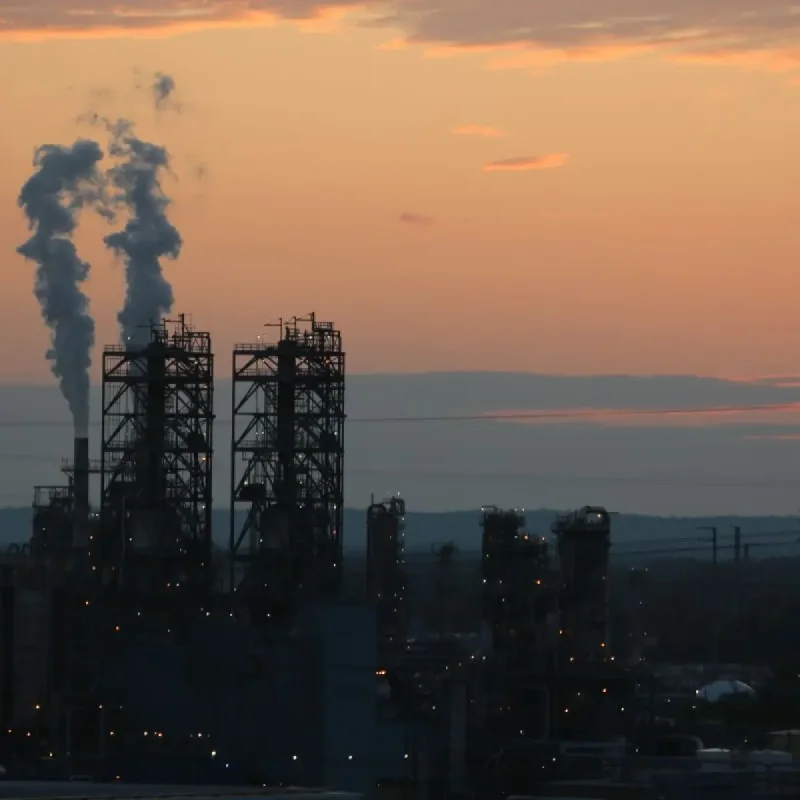
President Donald Trump is considering restricting or banning United States diesel exports as spiking fuel prices create intense political pressure weeks before the upcoming midterm elections.
Average domestic diesel prices hit $6.51 a gallon on Thursday, September 24, 2026, a sharp increase from $3.69 per gallon a year prior, according to AAA data.
The surge stems from geopolitical conflicts, including U. S.
and Israeli military strikes against Iran that began seven months ago, alongside Ukrainian military actions targeting Russian oil refineries.
Political Pressure and Industry Pushback
Proponents of the proposed ban, including Republican Senator Chuck Grassley, argue that limiting foreign shipments will preserve domestic supplies and lower operational costs for truckers, farmers, and heavy industry.
Energy market analysts and industry leaders contend that the restriction could backfire by prompting domestic refineries to scale down overall fuel processing.
The policy proposal marks a notable shift from Trump's early-term actions, where he overturned Biden administration restrictions on liquefied natural gas exports to expand American energy distribution globally.
Economic experts have voiced strong skepticism regarding the market intervention strategy, pointing out the divergence from traditional conservative energy stances.
"The hypocrisy here is stunning," said Joe Brusuelas, chief economist at RSM US.
"Due to the upcoming election, individuals who are otherwise free-market purists have all of a sudden found socialism."
"This is a classic lose-lose proposition," said Joe Brusuelas, chief economist at RSM US.
"And this is what populism looks like, whether it's the current right-wing flavor of the month or the left-wing version building up."
Industry representatives have similarly aligned against the proposed trade limits, drawing parallels to previous energy debates under the prior administration.
"Bad policy doesn't become good policy just because the administration changes," said Mike Sommers, president and CEO of the American Petroleum Institute.
"Restricting US LNG exports was bad policy under President Biden, and it would be bad policy on diesel under President Trump," said Mike Sommers, president and CEO of the American Petroleum Institute.
"Changing the product doesn't change the economics."
Former administration officials noted that the sudden policy shift is creating uncertainty within the domestic energy sector.
"It's one of those ideas that sounds good on the surface, but when you dig into it, it makes very little economic sense," said Dan Brouillette, former energy secretary during the end of Trump's first term.
Market analysts highlighted that high fuel costs coincide with crucial agricultural activities and tight congressional races.
"Oftentimes in politics, where you stand is based on where you sit," said Ed Mills, Washington policy analyst at financial firm Raymond James.
"We would not be having this conversation if diesel prices weren't at all-time highs with the midterms a month away and states like Iowa potentially deciding the majority of the next Senate."
Legal Authority and Market Consequences
Legal scholars confirm the president holds broad emergency authority to restrict crude oil and fuel exports during sustained domestic shortages or national security crises.
"It is not clear whether he could enact a complete export ban on his own," said Jason Bordoff, founding director of the Center on Global Energy Policy at Columbia University.
Financial analysts project that an export halt would yield brief local relief before forcing refineries to curtail runs due to storage capacity limits.
"Since a refinery can't simply stop making diesel while continuing to produce the same amount of gasoline, crude runs eventually would have to fall," wrote Natasha Kaneva, head of global commodities strategy at JPMorgan, in a client report on Thursday.
"At this point, some of the initial price relief would begin to reverse – the opposite of what policymakers want," wrote Natasha Kaneva, head of global commodities strategy at JPMorgan.
"This is an extraordinary strategic asset," wrote Natasha Kaneva, head of global commodities strategy at JPMorgan.
An industry source reported that U. S.
Energy Secretary Chris Wright contacted domestic refiners on Thursday to evaluate voluntary export reductions, while White House officials confirmed that all options to reduce pump prices remain under active consideration.