Donald Trump's decision to bar several media outlets from White House grounds has triggered an unusual display of unity among news organizations.
The move disrupted presidential coverage and exposed vulnerabilities in Trump's political standing.
After CNN, Politico, and MS NOW were banned, the press pool suspended its rolling coverage in solidarity.
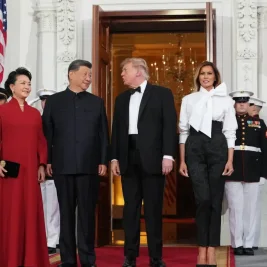
As a result, no televised coverage aired of Chinese President Xi Jinping's arrival at the White House.
Trump publicly criticized the media for what he called a boycott meant to deny him credit.
He said they only write badly about a man who won the election in a giant landslide, winning all seven swing states, the popular vote, and 86 percent of the counties.
He added that his popularity has grown because of what he described as unprecedented success at home and on the world stage.
Trump also lamented that major networks refused to cover Xi Jinping's arrival with his wife, calling the event magnificent and made for television.
The pool's suspension of coverage to protest the ban highlights the power of collective action against presidential restrictions on press access.
A temporary judge's order to restore credentials has not fully resolved the disruption caused by the boycott.
Political Support Weakens in Key Districts
Meanwhile, Trump's political support appears to be waning in key congressional districts he previously won by wide margins.
The Cook Political Report recently shifted 15 House races in favor of Democrats.
Notably, North Carolina's 11th district and Texas's 15th district moved from Lean Republican to Toss Up.
Trump carried the North Carolina district by nearly 10 points and the Texas district by nearly 18 points in the previous election cycle.
Recent Democratic polling indicates his approval is sinking, especially in districts he won decisively.
Trump's own Super PAC is investing heavily to protect these vulnerable seats.
Additional shifts include Florida's 27th district moving from Likely Republican to Lean Republican.
GOP Representative Maria Elvira Salazar, who represents this district, publicly criticized Trump for what she called a betrayal of Latino voters who supported him.
Observers note that the media's united stand against Trump's exclusion of select outlets may have been unlikely had his approval ratings remained higher throughout his term.
Early capitulation by other elite institutions was driven by fears of backlash, but recent events demonstrate that collective resistance can effectively counteract Trump's tactics.
As Michelle Goldberg of The New York Times noted, institutions initially overestimated the cost of opposing Trump.
The media's defiant response to the press ban and Trump's angry reaction to it reveal a key weakness in his approach.