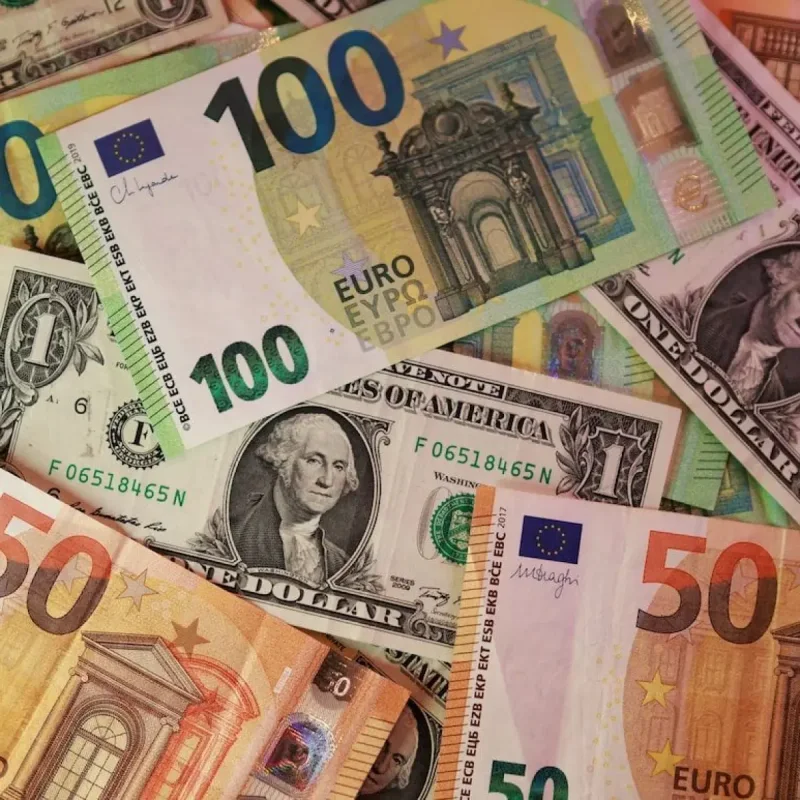
The euro dropped to a 17-month low of $1.1161 during Asian trading hours on Monday as political instability and debt concerns in France rippled through European financial markets.
By late session trading, the shared currency was down 0.68% at $1.1176.
It also fell 0.5% against the Swiss franc and declined 0.39% against the British pound as pressure on French government debt persisted.
Analysts warned that persistent budget issues could create broader contagion throughout the euro zone, driving capital away from regional assets.
"Don't stand in front of the train," said Chris Weston, head of research at Pepperstone.
Weston noted that the currency movement represented a continuation of existing fiscal problems, with "possibly a whiff of contagion creeping in."
Market participants highlighted that upcoming political changes in Paris are heightening market skepticism regarding fiscal discipline.
"It's not completely obvious what might fix things here as any budget promises made by the French government now are not super credible with a change of power coming soon," said Brent Donnelly, president of foreign exchange trading at analytics firm Spectra Markets.
Financial stress widened the gap between French and German borrowing costs.
The yield premium on French 10-year bonds over German equivalents expanded by 34 basis points to reach 140 basis points, marking its sharpest weekly rise in 17 years according to LSEG data.
Despite the market volatility, some investment strategists cautioned against viewing the downturn as a systemic structural crisis for the broader bloc.
"For now, I think it's more of a country story rather than the euro crisis," said Ninghui Liu, head of investment strategy and research for APAC at State Street Investment Management.
Liu noted that France's fiscal standing has grown increasingly unstable, but added that other member states would intervene if economic conditions worsened severely.
"Germany definitely will step in, because they are the ones who want to make sure that the EU can still hold," Liu said.
Safe-haven flows subsequently pushed the US dollar index up 0.47% to 102.37, while 10-year Treasury yields eased slightly to 5.260%.
"The dollar is the main winner in the current environment as not only is the rise in Treasury yields boosting the appeal of US assets, but the broad selloff in debt globally is fuelling safe-haven flows into the greenback," said Matthew Ryan, head of market strategy at Ebury.
U. S.
dollar gains were slightly tempered by softer domestic labor market figures for September, which led traders to price in a 78% probability of the Federal Reserve keeping benchmark interest rates unchanged at its October meeting.