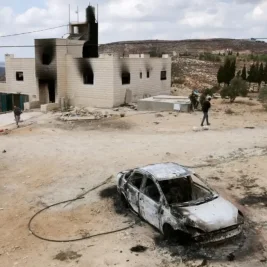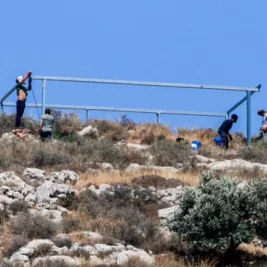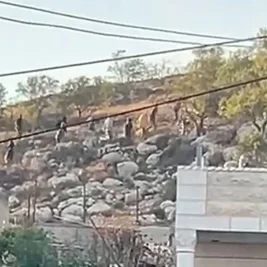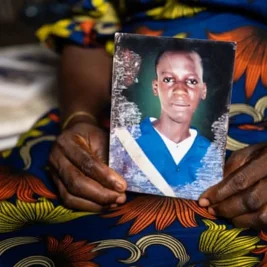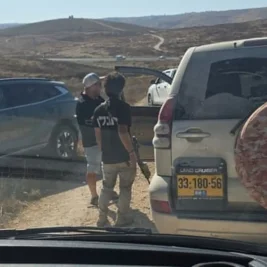
Israeli police have arrested at least 10 suspects following attacks on American photojournalist Heidi Levine and a group of European diplomats in the occupied West Bank.
The incidents took place during the annual Palestinian olive harvest and drew condemnation from US officials and Jerusalem's Christian leaders.
They also came as concerns over settler violence intensified ahead of Israel's election scheduled for October 27, 2026.
Levine Describes Assault in Abu Falah
Levine, a veteran Washington Post photojournalist, suffered four fractured vertebrae, two broken ribs and four puncture wounds in the attack on Friday, October 16, in Abu Falah, north of Ramallah.
She was covering Palestinian farmers harvesting olives when masked Israeli settlers assaulted her.
In an account published by The Guardian on October 21, Levine said Palestinian youths intervened to protect her while the attackers beat her with sticks.
She described their actions as crucial to her survival.
"I probably would have been dead, because for sure it doesn't take much to kill a person with blows to the head," Levine said shortly before leaving a hospital in Petah Tikva on Wednesday.
Levine said the assault began after masked settlers appeared near the harvesting group and Israeli forces arrived.
She recalled hearing gunfire and seeing tear gas before a group of attackers charged toward her.
According to witnesses, young Palestinian men used slingshots to drive the attackers back, allowing American journalist Jasper Nathaniel and other reporters to reach Levine and help her escape.
Nathaniel later said the young men had risked their lives to protect her.
Levine said she intended to resume reporting in the West Bank after recovering from her injuries.
She also criticized Prime Minister Benjamin Netanyahu's response after his office questioned accounts of the attack and referred to it as an alleged assault.
"They have bruised me, broken some bones, but they haven't cracked my spirit," Levine said.
Levine alleged that the attackers stole her American passport, credit card, camera equipment and documents.
She disputed Netanyahu's suggestion that footage showed an individual helping her to her feet, explaining that people had been trying to retrieve her belongings before the assault continued.
Suspects Released as US Presses for Action
Israeli police said officers and military personnel conducted searches across the affected area, arrested 10 suspects and seized vehicles and evidence connected to the incidents.
Police Superintendent Moshe Pinchi said investigators were gathering testimony and evidence to support possible prosecutions.
However, an Israeli court released four suspects connected to the attack on Levine on Wednesday and placed them under house arrest, citing insufficient evidence to keep them in custody, according to The Guardian.
US Ambassador to Israel Mike Huckabee condemned the assault and called for those responsible to face prosecution.
Secretary of State Marco Rubio said the Trump administration had repeatedly urged Israel to address settler violence and prevent further escalation in the West Bank.
"We've asked the Israelis and continue to ask them to crack down on that stuff," Rubio said on Saturday, according to CNN.
Meanwhile, the Jerusalem-based patriarchs and heads of Churches condemned the October 17 attack on Taybeh, a Palestinian Christian village where settlers targeted residents harvesting olives and visiting European diplomats.
Their statement described the incident as part of a broader pattern of violence affecting Palestinian communities during the harvest season.
The church leaders also rejected a recently published religious ruling permitting Jews to take Palestinian olives, calling it unfounded, dangerous and unacceptable.
They urged authorities to prosecute those responsible and strengthen protection for residents and visitors.
Human rights organization Yesh Din documented more than 530 incidents of settler violence since the olive harvest began in late September, according to CNN.
That represented an average of 27 violent incidents a day, with Israeli soldiers present during approximately one-quarter of the recorded attacks.
Nathaniel told The New Yorker that settler violence had grown in scale and organization.
He described Palestinian villages that had disappeared or been replaced by settlement outposts, new settlement neighborhoods or closed military zones.
Nathaniel also said some settler groups operated with growing confidence and resources, while Palestinians faced risks of being shot or detained when resisting attacks.