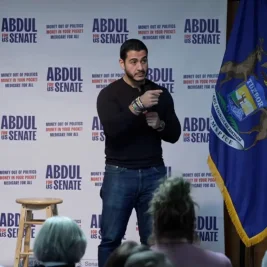
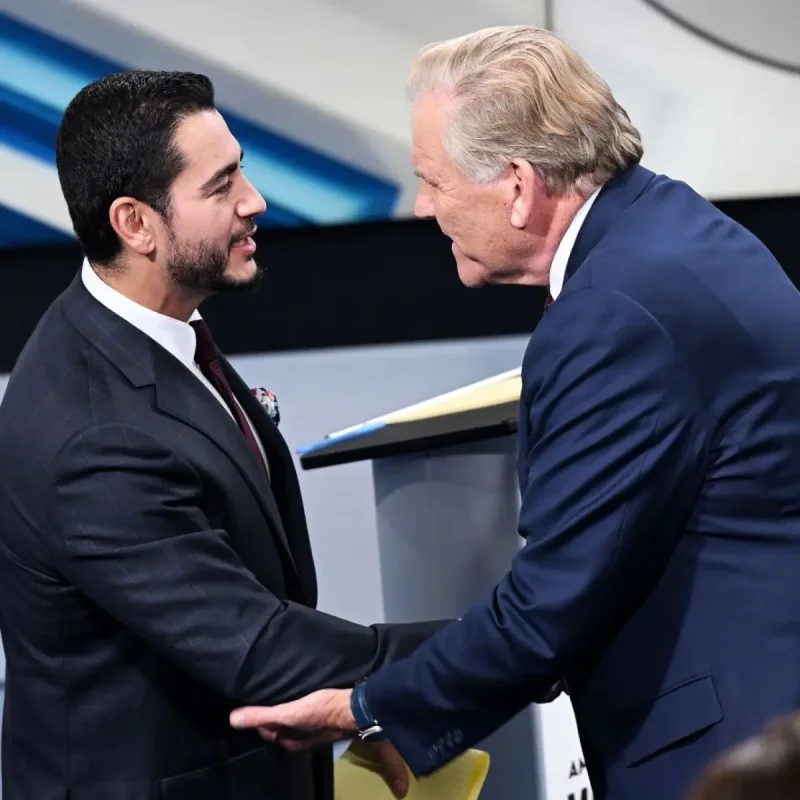
Democratic nominee Abdul El-Sayed and Republican Mike Rogers exchanged sharp accusations over economic hardship, President Donald Trump's leadership, and national loyalty during their final televised US Senate debate on Wednesday at WXYZ Channel 7 in Southfield, Michigan.
The contest could help determine control of the Senate, with both candidates courting voters divided over the administration and competing economic priorities.
According to CNN and The New York Times, the debate combined disputes over living costs, trade policy, immigration enforcement, and El-Sayed's political affiliations.
Rogers sought to portray his opponent as too progressive for Michigan, while El-Sayed argued the Republican would keep backing Trump's policies despite their economic consequences.
Rogers Presses Loyalty Questions as El-Sayed Rejects Accusations
Rogers, a former congressman, acknowledged that Michigan residents were struggling with job losses and high utility bills.
He argued Democratic control of the Senate would worsen affordability problems, while defending some of Trump's trade measures and criticizing others.
Rogers said certain tariffs were helping bring manufacturing jobs back from Mexico and China, but he opposed the administration's trade conflict with Canada, which carries significant economic implications for Michigan.
He has also called for an end to the Iran war and criticized Trump's approach to importing Russian diesel, according to The New York Times.
During the debate, Rogers challenged El-Sayed's commitment to the United States and raised allegations concerning the Muslim Brotherhood and donors he claimed supported extremist organizations.
El-Sayed, a former public health official who could become the first Muslim elected to the US Senate, rejected the accusations and defended his patriotism.
"If you are going to go to the United States Senate, we need to know: Are you for America or are you for these terrorist groups overseas?"
Rogers asked, according to CNN.
Rogers argued that questions about El-Sayed's associations raised national security concerns.
The Republican also repeatedly accused his opponent of dishonesty and tried to connect him with the Democratic Socialists of America, although El-Sayed describes himself as a capitalist and is not a member of the organization.
El-Sayed condemned the accusations as an attack on his constitutional commitments and religious freedom.
"To bring into question my commitment to the Constitution is really beneath you. I am proud of America.
I'm proud to be an American.
I'm proud of our Constitution that guarantees all of us the right to pray as we choose to pray," El-Sayed said, according to CNN.
Economy and Closing Appeals Dominate Final Stretch
El-Sayed challenged Rogers' economic record and his relationship with Trump, blaming the president's policies for rising household expenses.
He argued Michigan voters needed a senator willing to oppose the administration rather than follow its agenda.
"Yes, I am going to blame Donald Trump because this is Donald Trump's economy. We are living in it," El-Sayed said, according to CNN.
He cited higher gasoline and grocery costs and criticized the administration's handling of federal education funding.
El-Sayed also connected spending on the Iran war to domestic financial pressures, arguing government resources should prioritize American families.
Rogers countered that El-Sayed's progressive proposals would increase taxes and costs.
He targeted the Democrat's support for expanded government programs and sought to attract voters who backed former Democratic primary opponent Haley Stevens.
"Guess what?
You have a home with us," Rogers said in his closing appeal to Stevens supporters, according to CNN.
El-Sayed responded by portraying Rogers as an unreliable opponent of Trump's policies.
He repeatedly used the phrase "MAGA bingo" to criticize what he described as Republican talking points designed to distract voters from economic issues.
"When you are winning MAGA bingo, we are all losing," El-Sayed said, according to CNN.
The candidates also addressed public safety and gun regulation.
El-Sayed supported universal background checks for new gun purchases, while Rogers declined to take a definitive position, saying the issue depended on the circumstances, according to The New York Times.
The debate followed an earlier confrontation over allegations involving El-Sayed's family.
Republicans had cited old social media posts by his half-sister concerning their mother's alleged activism in the Muslim Brotherhood.
El-Sayed denied any connection to the organization and said he was unaware of family ties to it.
Rogers, who received Trump's endorsement in the Republican primary, faces the challenge of appealing to the president's supporters while distancing himself from unpopular administration policies in a state currently governed by Democrats.
El-Sayed has sought support from moderates and voters who backed Stevens, while continuing to criticize the administration's economic and foreign policies.
The Senate seat is being vacated by Democratic Sen. Gary Peters.
Recent polling cited by CNN and The New York Times indicated a competitive contest, making efforts to persuade undecided and cross-party voters particularly important ahead of Election Day.