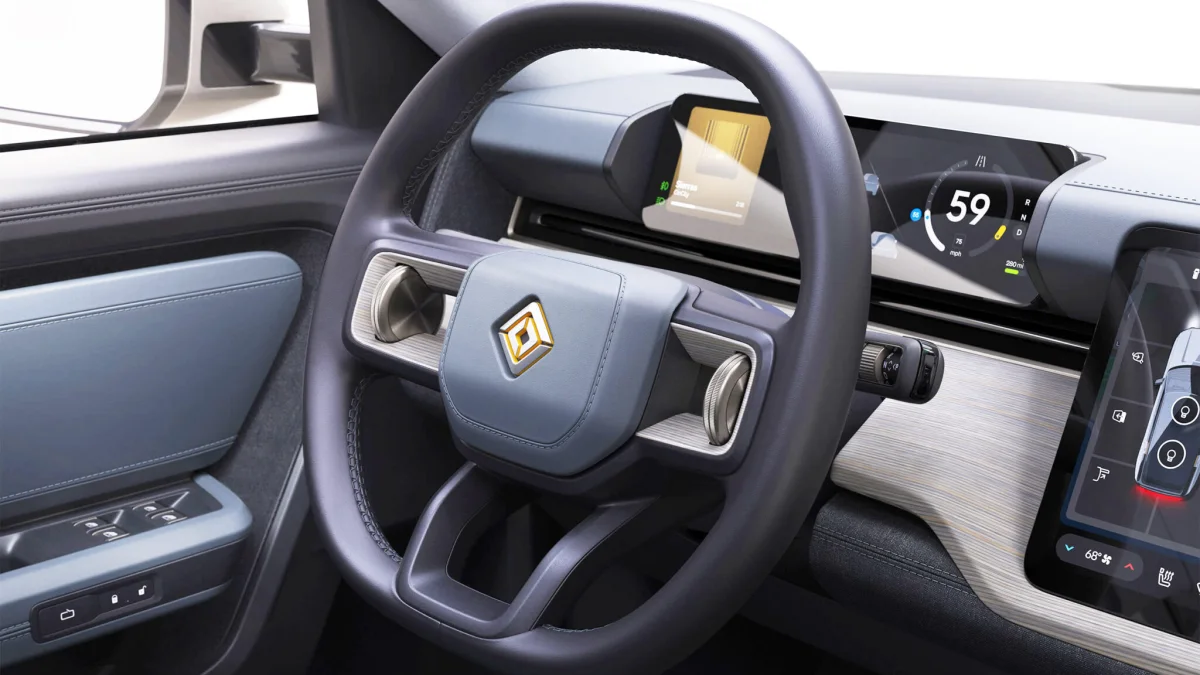
Rivian is making it clear that it has no plans to follow other automakers in bringing back physical buttons.
Instead, the EV maker is betting big on its advanced AI-powered voice assistant as the primary way to control vehicle functions.
In a recent interview with The Verge, Rivian's chief software officer and co-CEO of the Rivian-VW joint venture, Wassym Bensaid, explained the company's philosophy.
He stated that voice has the potential to be the primary interface in the car, offering more possibilities than buttons.
Rivian Assistant: A New Way to Interact
Rivian began rolling out its new AI-powered Assistant for existing R1 models in mid-May.
The system is built on a shared, multimodal AI foundation and can control core functions like HVAC.
According to Bensaid, buttons can exist but should not be the primary way to interact with the car.
He emphasized that voice allows users to perform multiple functions without fiddling with many controls.
In the upcoming R2 model, there are no traditional HVAC buttons. Instead, large scroll wheels on the steering wheel can adjust settings like fan speed on the fly.
Rivian argues that previous voice technology has been "broken," which is why drivers haven't adopted it.
The company's assistant uses its own Android-based infotainment system, without support for Android Auto or Apple CarPlay, ensuring seamless operation regardless of the screen displayed.
The system also offers a more conversational approach.
For example, instead of saying "Open the frunk," a driver can say "I have a bag in the front of the car," and the frunk will open automatically.
While Rivian's approach sounds promising, some still prefer physical buttons. The automaker, however, remains committed to its voice-first strategy.