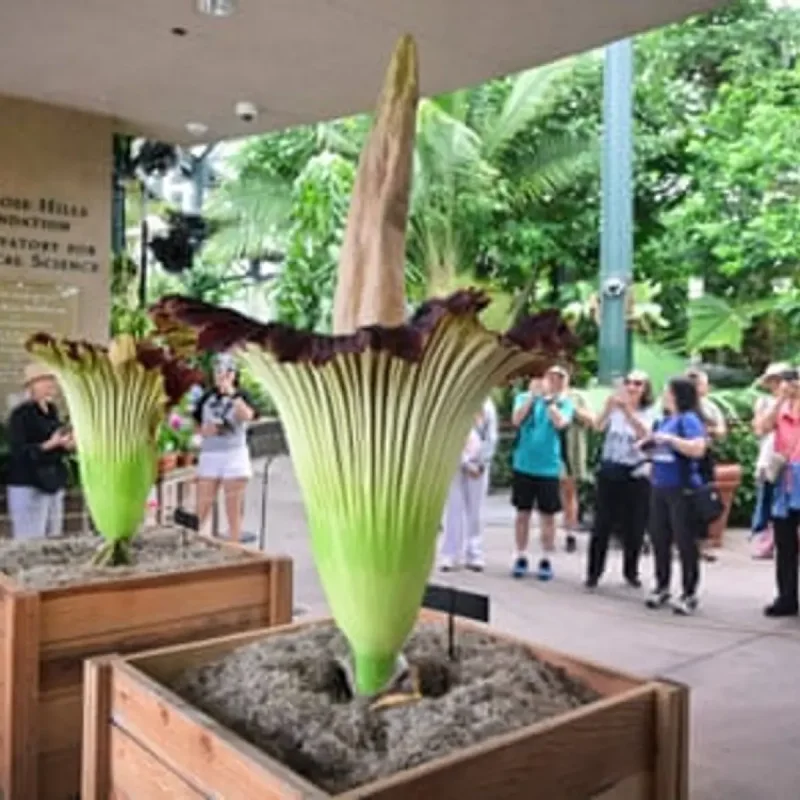
Two rare corpse flowers bloomed simultaneously over the weekend at the Huntington Library, Art Museum, and Botanical Gardens in San Marino, California, drawing thousands of eager visitors.
More than 7,000 people queued for hours on Monday to catch a glimpse of the fleeting and infamously foul-smelling botanical event.
The two titan arums, named Odorysseus and Odora, reached their peak bloom overnight before beginning to close.
Public Fascination with the Foul-Smelling Bloom
Brandon Tam, curator of the Huntington's orchid collection, noted the immense public interest in the rare double bloom, which only lasts between 24 and 48 hours.
"They were enchanted by it," said Tam.
"People who lined up for three hours in our line just to see the corpse flowers for just a few minutes."
Tam explained that the unique, foul scent of the Indonesian native plant, which mimics rotting meat to attract insect pollinators, acts as a major draw for the public.
"People were curious, people were inspired," Tam told the Guardian.
"People started to fall in love, if they haven't already been falling in love, with plants because of this poster child of a plant."
Conservation Efforts Behind the Bloom
The Huntington has cultivated the endangered titan arum for over 25 years and currently houses more than 43 mature specimens.
This population was largely built from a single successful breeding event more than two decades ago.
"In 2002, we pollinated a corpse flower, which produced hundreds of fruits and therefore hundreds of seeds that we would propagate," Tam said.
Seeds from that propagation have since been shared with other botanical institutions across the United States to assist in conserving the species.
Fewer than 1,000 remaining specimens are estimated to exist in the wild.