Turkiye has formally submitted a 10-year defense agreement with Pakistan and Saudi Arabia to its parliament for ratification, according to a draft document reviewed by Reuters.
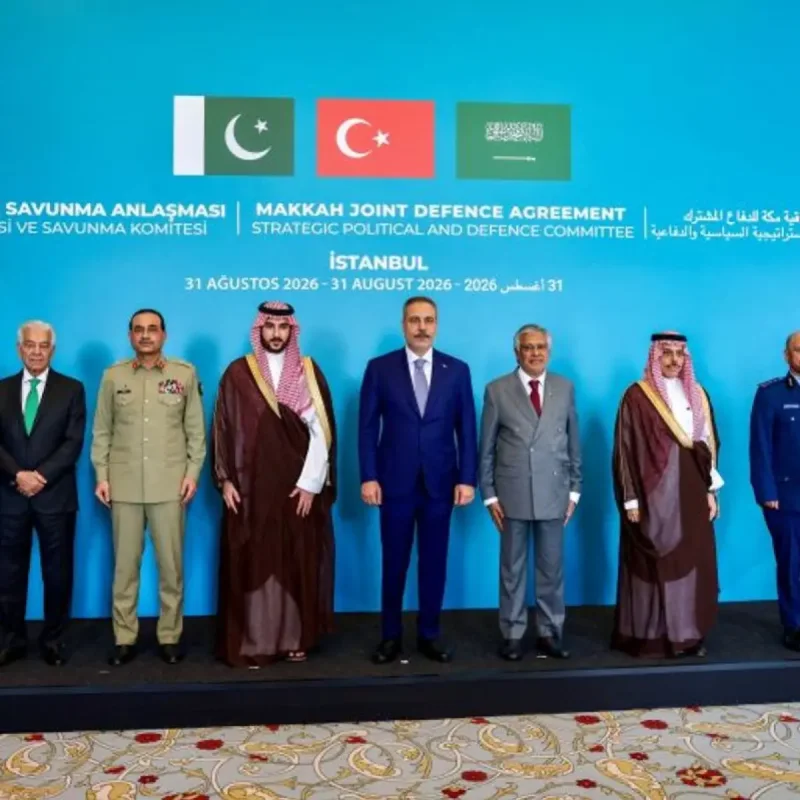
The Mecca Joint Defence Agreement, signed on August 7, establishes a framework for mutual military assistance and regional security cooperation among the three countries.
The pact contains 16 articles.
Article 1 commits the signatories to using all necessary means to address threats to one another's territorial integrity.
Article 2 outlines assistance in response to military aggression, requiring immediate support following an armed attack by another country or group of countries.
However, each government retains authority to determine the scope and nature of its support based on an objective assessment of the assistance required, according to the draft.
The provision resembles Article 5 of NATO's founding treaty, which treats an armed attack against one member as an attack against all.
The agreement also calls for cooperation within the three countries' available resources, including their military capabilities.
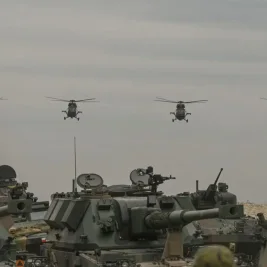
Earlier in October, Turkiye, Pakistan and Saudi Arabia agreed to activate deterrence measures under the pact and rapidly deploy forces to Saudi Arabia to counter attacks by Yemen's Houthis, also known as Ansar Allah.
Articles 3 through 6 address defense industry cooperation, intelligence sharing, logistical support, joint training and efforts to combat terrorism.
Other provisions cover joint research, development and innovation in advanced technology, as well as measures to maintain military readiness.
The draft also proposes a defense committee comprising the foreign and defense ministers of all three countries.
Other states may join the agreement only with the approval of all three founding members.
Under the document, the pact will remain in force for 10 years, after which any signatory may withdraw.
Turkish presidential communications director Burhanettin Duran described the agreement as a step toward closer strategic coordination among the three governments.
"This strategic partnership developed between our countries aims to strengthen collective deterrence, enhance joint capabilities in the defence sector, and safeguard security and stability in our region," Duran said in a statement posted on X.
Duran also said the process represented an important milestone in institutionalizing strategic cooperation among the three countries.
Ratification is expected to require further parliamentary deliberations despite the ruling coalition's simple majority.
Al Jazeera correspondent Resul Serdar said political parties would examine the provisions, potentially leading to heated debate as opposition parties pursue their own objectives.
Serdar also said ratification alone would not result in the deployment of Turkish troops, which would require additional legislative procedures.
Turkish parliamentary speaker Numan Kurtulmus will refer the agreement to the parliament's foreign affairs commission.
A source told Reuters that the commission could begin discussing the pact as early as Friday, after which its provisions are expected to become public.
The agreement comes amid escalating hostilities between Saudi Arabia and Yemen's Houthis.
On Monday, Turkish President Recep Tayyip Erdogan addressed the regional security situation and referenced attacks targeting Riyadh airport.
"As I often say, we are surrounded by a ring of fire. That is exactly the situation we face," Erdogan said.
In recent weeks, the Houthis have launched missile and drone attacks against Saudi Arabia, including strikes targeting oil facilities and Riyadh's main airport.
The Saudi-led coalition supporting Yemen's government has responded with air attacks on Houthi positions.