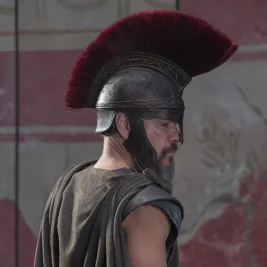
A regular refrain in the film is the lament for the death of “our age of bronze”.
This is a reference to Greece's real bronze age – which preceded that of poets like Homer, which ended in a widespread civilisational collapse (including the real city of Troy), and was part-remembered in oral epics such as Homer's Odyssey.
Odysseus's crime and atonement in Nolan, then, is not only for the loss of his crew, but also for the death of a civilisation.
What's Lost in Translation
Of course, Nolan isn't just trying to replicate the Odyssey, and I'm not expecting him to.
This is not – OK, not entirely – the chagrin of a Homerist missing her favourite scenes (no matter how I felt when I found out that Homer's delightfully bash princess, Nausicaa, Odysseus's key in getting back to Ithaca, had been chopped).
>>> White House Overturns DHS Order Halting ICE Traffic Stops After Fatal Shootings
What I'm pointing out is what is lost, or changed, in a Nolan–Hollywood–Homer crossover, and why that matters.
As Nolan himself has said: “I was intrigued by the idea of a Hollywood studio taking on the biggest of stories.”
So this is about uncovering what, in Nolan's movie, looks like the Odyssey, and what is a product of his own choices.
I'm here to think through what an epic hero and his world looks like to Nolan, and to Hollywood.
And that is a really telling ride.
Because, yes, the Homeric epic is about Odysseus, and it's about his journey home; it's got gods and monsters, a father-fixated teenage son, Telemachus (Tom Holland), and a loyal wife, Penelope (Anne Hathaway).