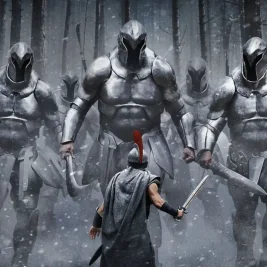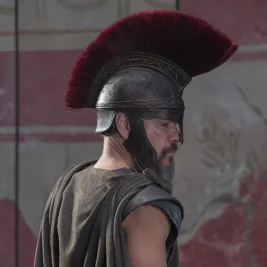
And it's the sum of examples like these, I think, that shows where Nolan's film makes its departure – in the focus that is placed on Odysseus's turmoil, his trauma, his inner voyage as a leader, and the way that ends up taking the air out of other stories.
Yet there's something else to say here.
Turning the Odyssey into Odysseus's troubled journey to become an empathic leader of men and a reluctant agent of the onward march of history isn't just a Hollywood reorientation to the kind of flawed genius we've seen in Oppenheimer – it fundamentally tells us what Nolan sees, and wants us to see, as a hero.
For audiences who are looking for a box-office smash with stunning visual action, epic proportions and a hero at the heart of it all, they will get it.
Every reworking of Homer says what it wants to the people it is speaking to.
In the gap between the sung verses of Homer and Matt Damon declaiming to an Imax camera, what this Odyssey offers us, by way of a hero and the grandiloquent experience of epic cinema, is a man who seeks redemption and solidarity among men, recognition from women, and absolution for a civilisation's fall.
>>> Shakira's Las Mujeres Ya No Lloran Tour Delivers Career-Spanning Spectacle
Make of that, in the current climate, what you will.