Mumbai Indians defeated Rajasthan Royals in a crucial Indian Premier League match at the Wankhede Stadium on Sunday, May 24, 2026, severely denting the visitors' playoff qualifications.
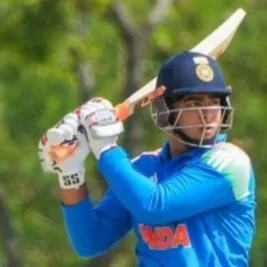
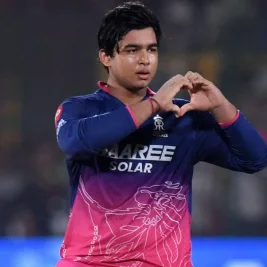
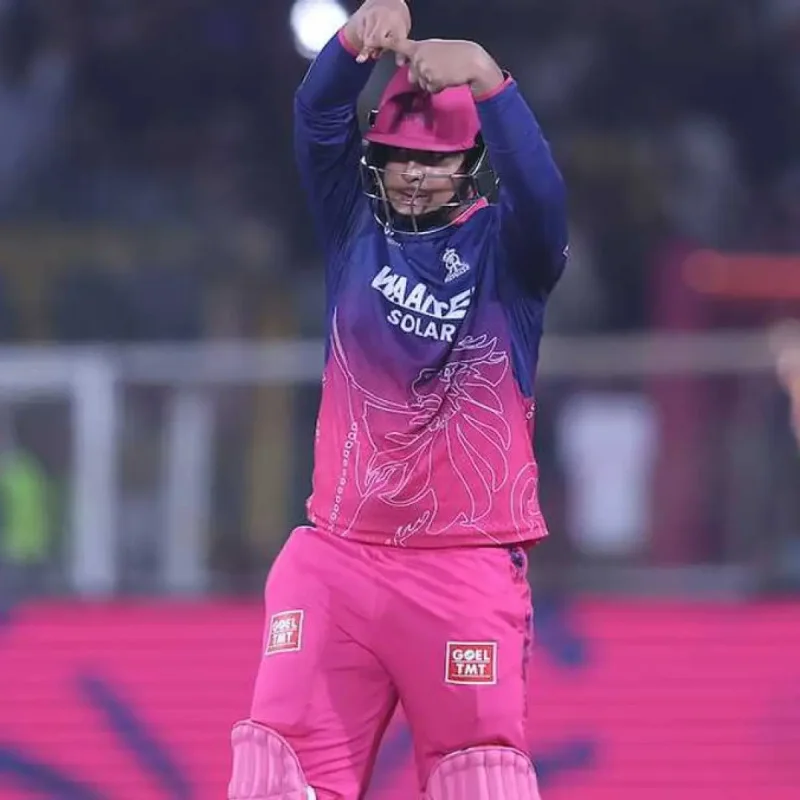
Teenage opener Vaibhav Sooryavanshi was dismissed for just four runs.
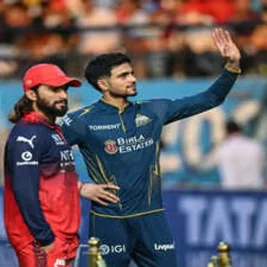
Mumbai Indians won the toss and elected to bowl first under hot and humid afternoon conditions.
The hosts rested veteran fast bowler Jasprit Bumrah, replacing him with Deepak Chahar, while Rajasthan Royals brought in Nandre Burger, Ravindra Jadeja, and skipper Riyan Parag.
Sooryavanshi, who entered the match having scored 579 runs this season at an extraordinary strike rate of 236.32, faced only six deliveries before slicing a Chahar delivery to Naman Dhir at deep point.
His early dismissal left Rajasthan Royals struggling to capitalize on their powerplay opportunities.
Bumrah's Workload Management
Prior to the match, Mumbai Indians bowling coach Mahela Jayawardene revealed that Jasprit Bumrah had been managing a physical issue since the recent T20 World Cup, which limited his performance to just four wickets in 13 matches this season.
"Coming back from the World Cup, he had a slight niggle which he played with through the World Cup, so we gave him adequate rest to come back," said Jayawardene.
He explained that the team deliberately managed the pace bowler's workload during the initial phase of the tournament to allow proper recovery.
"The first 4-5 games, it was a gradual build-up for him to get over that niggle.
You could see the pace was dropped because of that, and now he's back to his pace. The last 4-5 games have been good," Jayawardene added.
The coach noted that the injury caused a minor reduction in tactical execution, though the fast bowler has now achieved full physical recovery.
"Health-wise, it's 100 per cent, but unfortunate that the season is over for us," he said.
Opposing teams regularly adopted defensive strategies when facing Bumrah due to a lack of parallel pressure from the remaining bowling unit.
"Teams have not taken too much risk against him in certain situations. They've played him out because we haven't been able to create pressure around him," Jayawardene explained.
The franchise coordinated extensively with medical specialists to adjust training sessions and modify bowling plans during critical game moments.
"It was a collective conversation with his training staff, like where do we push him and how much he could bowl in nets in preparation," said Jayawardene.
Tactical adjustments were deployed to minimize initial performance stress, though his primary role required execution during high-pressure final overs.
"Initially, we tried to bowl him in situations so that he's not under pressure.
But being the lead bowler, he was always under pressure, like bowling at the death.
But we used him in different ways this season so that it gives him a bit more freedom," Jayawardene said.
Jayawardene expressed complete confidence in the bowler's long-term capabilities. "I wouldn't worry about Booms, I think he's in good spirit and he will come back strong.
We all learn from these kind of seasons," he said.
The veteran bowler successfully regained his standard delivery velocity and trajectory mechanics in recent matches after correcting minor run-up deviations.
"The last few games, he was top notch. He was all back again, bowling that 140 kmph mark, he was nailing the yorkers.
He had a few issues with his run-up, purely because it was with the niggle that he had," Jayawardene said.
Specific practice sessions were allocated during tournament intervals to rectify delivery stride errors that caused illegal no-ball penalties.
"He was bowling quite a few no-balls this season, if you remember — that has to do with the build-up, so that is something that he again went back and worked on," said Jayawardene.
The coaching staff accepted the overall performance outcome while shifting focus toward future operational preparations. "We've had good conversations and we know what we need to do.
We tried, but it didn't work. But we just need to move on from that," Jayawardene concluded.
Sooryavanshi's Impact Player Role
Rajasthan Royals assistant coach Trevor Penney defended the decision to utilize Sooryavanshi strictly as an Impact Player throughout the tournament.
"I think he's definitely never seen a 15-year-old bat like that. Even if he was 25, I think we'd be talking about him.
I think age hasn't come into it," said Penney.
Penney emphasized that the young player had shown significant maturity in reading game situations and modifying his shot selection compared to previous appearances.
"He goes from ball one and he's got all the shots.
This year, compared to last year, he might have matured a bit on what shots he can play, where the bowlers think there's a weakness.
So he's adapting to that and then playing accordingly," Penney said.
The coach stated that the player remains highly focused during preparation and maintains an isolated mindset during high-stakes competitive fixtures.
"He's just in his little bubble. He practices hard.
And then when he goes out to play, he just enjoys himself. So it's pretty rare that I've ever seen that.
I've been in cricket for 40 years and I haven't seen that before. So long may that last," said Penney.
Responding to public calls for the teenager's immediate promotion to the senior national team, Penney urged caution and suggested allowing further developmental time.
"With the international stuff, that's the trick question, everybody thinks he's good enough. Look at the under-19 50-over World Cup, he got 175.
So he plays all formats. But the way he plays...
there have been attacking batsmen in Test cricket before as well. Sehwag, for instance, he just took it down from ball one as well.
So I think that's the trick.
If you want to get him in as a 15-year-old, or you just give him a few more seasons of playing like this and maturing a little bit, off the field, especially, before you throw him in," Penney said.
Penney noted that competing against an unburdened Mumbai Indians squad presented a unique challenge given their highly experienced roster.
"Mumbai, obviously, a World XI. They've got such a good team as well.
So you can never count them out. And as you say, they've got nothing to lose.
So they could come out playing like millionaires, which most of them are already," he said.
The assistant coach acknowledged a mixed middle phase in the tournament but maintained confidence in the team's top-order batting strength.
"Obviously, we started like a train, won our first four.
Then we had a bit of a middle period where we didn't play as well as we would like.
We lost some close games, dropped some catchers, which cost us games.
But we felt that we still played some really good cricket in all those games we lost. This last game gave us a lot of confidence," Penney said.
Addressing criticism regarding the player's lack of fielding appearances, Penney clarified that the management aimed solely to optimize his batting physical state.
"There's no specific reason why, 'oh, he's a bad fielder, we're not playing him in the field.' It's nothing to do with that.
It's just circumstances. And sometimes there was a slightly, maybe better fielder or more experienced fielder.
But generally, it's been to keep him fresh for his batting," said Penney.
The coaching staff pointed out that the opener had shown strong tactical restraint during crucial match situations instead of attempting immediate boundaries.
"He doesn't really have to run between the wickets too much, does it? Just about a break.
I think he can if he has to. You saw in the last game, he had 10 of 11 balls.
And he was so determined to win that game. That's why he didn't go in and just try and hit from Ball One," Penney said.
Penney reiterated his admiration for the player's confidence and unique approach to daily practice routines.
"I'm sure he's very excited to play at the Wankhede Stadium for the first time. We don't have to talk to him much.
He's just such a pleasant boy, he's very confident, he's just so excited every day to go and play and practice.
So, to be honest, we don't really have to talk to him too much.
He's just in his little bubble, he practices hard, and then when he goes out to play, he just enjoys himself.
So, it's pretty rare that I've ever seen that. So, I've been in cricket for 40 years and I haven't seen that before.
So, long may that last, and I certainly hope that it works tomorrow," Penney concluded.