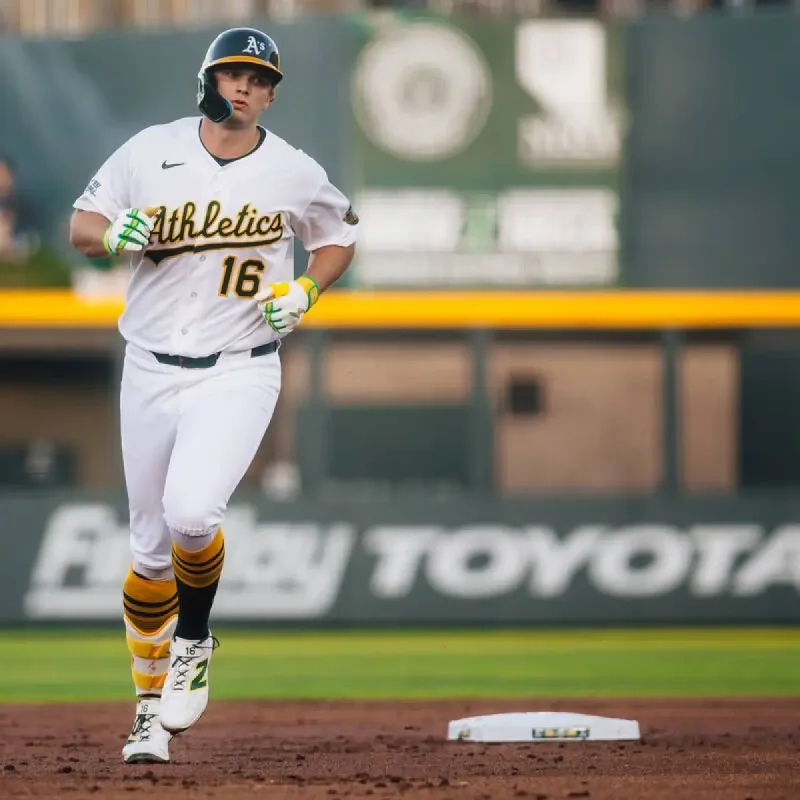
The Oakland Athletics and Colorado Rockies are scheduled to play an outdoor game on Sunday afternoon, June 14, 2026, at Las Vegas Ballpark under extreme weather conditions that could set a Major League Baseball record.
According to the National Weather Service's Las Vegas office, the regional high temperature is expected to reach 106 degrees Fahrenheit, potentially positioning the matchup among the hottest outdoor games in baseball history depending on where official stadium readings are taken.
Official temperatures for Las Vegas are documented daily at Harry Reid International Airport, though the Summerlin area where the ballpark is located sits at a higher elevation.
Players and Manager Weigh In on Desert Heat
Athletics first baseman Nick Kurtz, who has prior experience playing in the local summer climate, noted the physical challenges presented by the severe desert heat wave.
“It’s our job to go out there and play,” said Kurtz.
He mentioned that several teammates who previously played for the local minor league affiliate might possess a slight competitive advantage over the visiting Colorado roster.
“Is it going to always be fun? No. Will it be really hot and really brutal at times?
Yeah.
But our job as players is to go out there and do what we can to win the game,” Kurtz added.
Historical records from the Elias Sports Bureau indicate that consistent game-time temperature data has only been tracked for the past 30 years, with varying recording methods used across different stadiums.
The highest recorded outdoor temperature during this period occurred on September 9, 2020, when the Houston Astros played the Los Angeles Angels in 109-degree weather at Anaheim Stadium, followed by a 108-degree game at the same venue on July 6, 2018.
Sunday's game is scheduled for a 12:05 p. m.
first pitch, whereas peak daily temperatures in the region typically occur between 3 p. m.
and 5 p. m.
according to meteorological data.
Meteorologists expect the local stadium environment to offer minor relief compared to the primary airport tracking station due to the geography of the playing site.
“Since you are in higher elevation in Summerlin where the ballpark is, you could see a few degrees cooler, maybe between 102 to 104 degrees,” said Morgan Stessman, a meteorologist with the National Weather Service.
Athletics catcher Shea Langeliers expressed a preference for the local atmospheric conditions over high-humidity environments found in other professional baseball regions.
“I would prefer the dry heat,” said Langeliers.
He recalled his previous playing experience at the site in 2022, noting that the dry desert air required fewer uniform changes than games played in the Southern League in Mississippi.
“The humidity kind of feels like you’re underwater. You can’t stop sweating.
Obviously, you still sweat out here, but it’s a little bit different,” Langeliers added.
Athletics Manager Mark Kotsay dismissed the idea that the climate would decide the outcome, emphasizing that both teams must navigate the identical environmental conditions.
“Wherever we play our focus is on the game and how we have to go out and perform and be a really good ball club,” said Kotsay.
The current weather challenges precede the franchise's planned relocation to a permanent, climate-controlled stadium facility on the Las Vegas Strip by 2028.