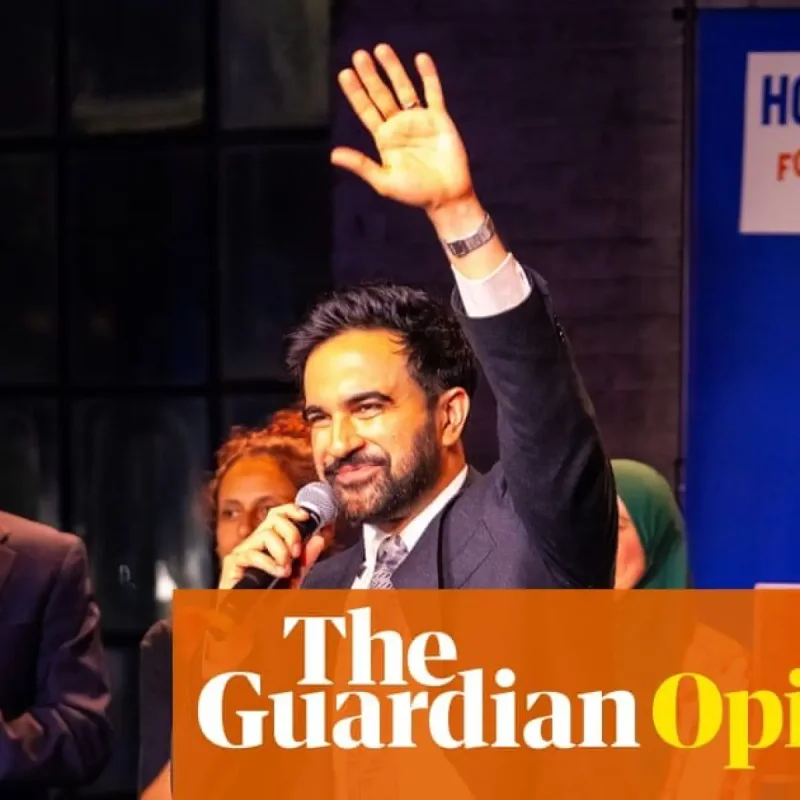
Last week, Democratic Socialists of America (DSA) candidates swept primaries across New York City, including a victory over a five-term incumbent in Harlem and the Bronx.
The movement that helped make Zohran Mamdani mayor now looks like a governing bloc, with at least 15 endorsed candidates heading to Albany.
But centrist commentators quickly pushed back, noting that on the same night, moderates won in a swing district and in Utah.
Andrew Mamo of The Bench, a centrist recruitment group, claimed leftwing candidates have “a ceiling of 30% in swing districts,” even as they clear 50% in New York City.
The easy reply is that DSA now has chapters in 47 states and has won in Trump country.
That’s true, but it’s not enough. The broader progressive movement is struggling across much of the country.
Jared Abbott of the Center for Working Class Politics found that of nearly 100 members of the Congressional Progressive Caucus in 2024, only one represented a mostly rural district.
Rural and rural-suburban districts make up 41% of the House and a larger share of state legislatures.
Rural voters share economic priorities
Democrats have often won a thin majority without rural districts, but they haven’t kept one. The system isn’t built for a party crammed into a dozen metros.
The Senate gives Wyoming as many votes as California, making it impossible to govern without contesting rural America.
Yet Abbott’s research suggests hope.
Rural voters are whiter, older, more likely to own guns and attend church, and hold more conservative views on immigration.
But on economics, they align with Mamdani: majorities support a $15 minimum wage and Medicare for All, and over 80% want background checks on gun sales.
The Race-Class Narrative project found that 89% of rural respondents agreed with the line: “In small towns and rural communities, we believe in looking out for each other, whether we’re white, black, or brown, tenth generation or newcomer.”
Being competitive doesn’t require radical shifts. Abbott estimates 29% of rural Trump voters back a $15 wage and oppose banning abortion.
Those persuadable voters could reshape American politics.
Dan Osborn, a machinist who led the Kellogg’s strike, is running for Senate in Nebraska as an independent.
He polls far ahead of typical Nebraska Democrats.
Osborn wants to protect Social Security, tax the rich, and champion “right to repair” – the idea that if you buy a tractor, you should be able to fix it without manufacturer permission.
Backed by unions like the United Auto Workers, Osborn’s campaign shows that an anti-corporate pitch, delivered plainly by someone voters see as one of their own, can land in Trump country.
A politics aimed at plant closings and capital flight that devastated small towns can win everywhere.
But it will take rhetorical discipline from progressives and a willingness to have hard conversations across the country.