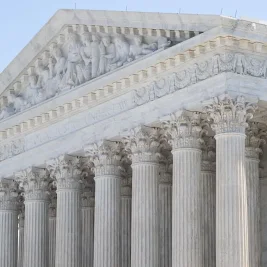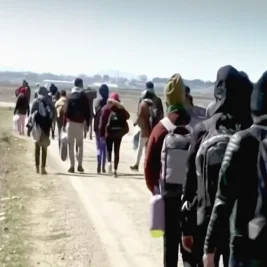
The US Supreme Court has delivered a major ruling affecting approximately 1.3 million immigrants living in the United States.
The conservative majority ruled 6-3 that Temporary Protected Status (TPS) determinations and their selection processes are generally exempt from judicial review.
This decision allows the Trump administration to terminate deportation protections much more easily. Even individuals who have resided legally in the country for decades are affected.
Constitutional claims remain the sole exception to this ruling. These involve fundamental rights like equal protection.
Justice Samuel Alito noted that the specific constitutional claim alleging racial animus against Haitians by the Trump administration appeared unlikely to succeed on the merits.
Justice Elena Kagan issued a sharp warning in her dissent regarding the unchecked power given to the homeland security secretary.
"After today, a Secretary [of homeland security] can announce to the world that she didn't consult with anyone – more, that she didn't evaluate country conditions at all – before making, extending, or terminating a TPS designation.
And the courts will be powerless to intervene," Kagan said.
Kagan cited past derogatory remarks about immigrants of color to argue that racial undertones influenced the decision to remove Haitian residents.
"The references – of filth, disease, and primitiveness – are shot through with racial stereotypes and tropes ...
The statements fairly shout, in their racial undertones and overtones alike, that race entered into the President's resolve to remove Haitians from this country," she wrote.
The specific lawsuit before the court involved TPS protections for over 300,000 individuals from Haiti and several thousand from Syria.
These individuals are now expected to lose both their protected status and their legal work authorizations once the ruling takes effect.
Kagan stated that the government could immediately deport these individuals if they lack alternative legal pathways like asylum.
Homeland Security Secretary Markwayne Mullin stated that current TPS holders should look for permanent residence pathways or prepare to leave the country.
This directive comes despite the fact that TPS provides no direct pathway to obtaining a green card.
The ruling directly impacts individuals like Fritz Emmanuel Lesly Miot, a California-based Haitian Alzheimer's researcher with type 1 diabetes.
Miot faces severe health risks if returned due to limited medical infrastructure in his home country.
Similarly, Laila Doe, a Syrian behavioral technician living in Illinois, expressed severe safety fears regarding a forced return to Syria.
The ruling sets a legal precedent that hampers judicial review for all nationalities holding TPS, simplifying termination efforts by the administration.
Five other nationalities currently maintain their TPS protections solely because of existing court orders that this ruling may influence.
The US State Department currently maintains its highest "do not travel" advisory for both Syria and Haiti due to severe safety risks.
Official warnings for Syria highlight ongoing threats of terrorism, civil unrest, kidnapping, hostage-taking, crime, and active armed conflict.
In Haiti, the department warns of rampant violent crime, expanding gang activity, armed robberies, sexual assaults, carjackings, and random gunfire.
Local law enforcement agencies in Haiti possess extremely limited capabilities to respond to these serious crimes.
Donald Trump previously questioned why the US accepts immigrants from certain nations and falsely claimed during the 2024 campaign that Haitian migrants in Ohio were eating pets.
Active TPS designations currently cover citizens from Myanmar, El Salvador, Ethiopia, Haiti, Lebanon, Somalia, South Sudan, Sudan, Syria, Ukraine, and Yemen.
A limited subset of Venezuelan migrants also retains these protections through the beginning of October.
Since retaking office, the Trump administration has canceled protections for citizens of Afghanistan, Cameroon, Honduras, Nepal, and Nicaragua, while hundreds of thousands of Venezuelans lost status.
Former TPS holders without alternative legal status face immediate risks of arrest, detention, and standard deportation protocols.
These enforcement actions can proceed even if the individuals have pending asylum applications or green card requests.
Some individuals may be placed into immigration court removal proceedings where legal defense options are virtually non-existent without specific qualifications.
While asylum offers an alternative humanitarian pathway, it requires proof of individual persecution rather than the generalized danger covered by TPS.
Furthermore, the administration has introduced stricter asylum rules and previously paused applications for several nations under TPS protection.
Travel advisories for Afghanistan cite civil unrest, terrorism, wrongful detention, and natural disasters as primary dangers for travelers.
Myanmar remains dangerous due to improvised explosive devices, active armed conflicts, and arbitrary detentions affecting citizens and foreigners alike.
In Sudan, severe fighting continues alongside threats of kidnapping, armed robbery, carjacking, sexual assault, and home invasions.
Yemen faces unpredictable terrorist attacks, and local law enforcement is often unable or unwilling to assist with serious crimes.
Data from the Fwd.
us advocacy organization shows that TPS holders contribute $7.8bn in annual taxes and have added $262bn to the US economy since 2001.
Many work in critical industries facing labor shortages, including healthcare, construction, leisure, and hospitality services.
Haitian TPS holders include 13,000 nursing assistants, 3,000 school assistants, and 22,000 cooks and servers nationwide.
The elder care industry faces staff shortages, as TPS holders comprise over 8% of caregiving staff in certain regions.
On the same day, the Supreme Court legalized the previously rescinded "metering" policy used to limit asylum processing at the southern border.
The court also upheld birthright citizenship for children born in the US to immigrant parents on June 30, blocking an executive order.
Sirine Shebaya, executive director of the National Immigration Project, noted that four justices refused to explicitly state that the executive order violated the constitution.