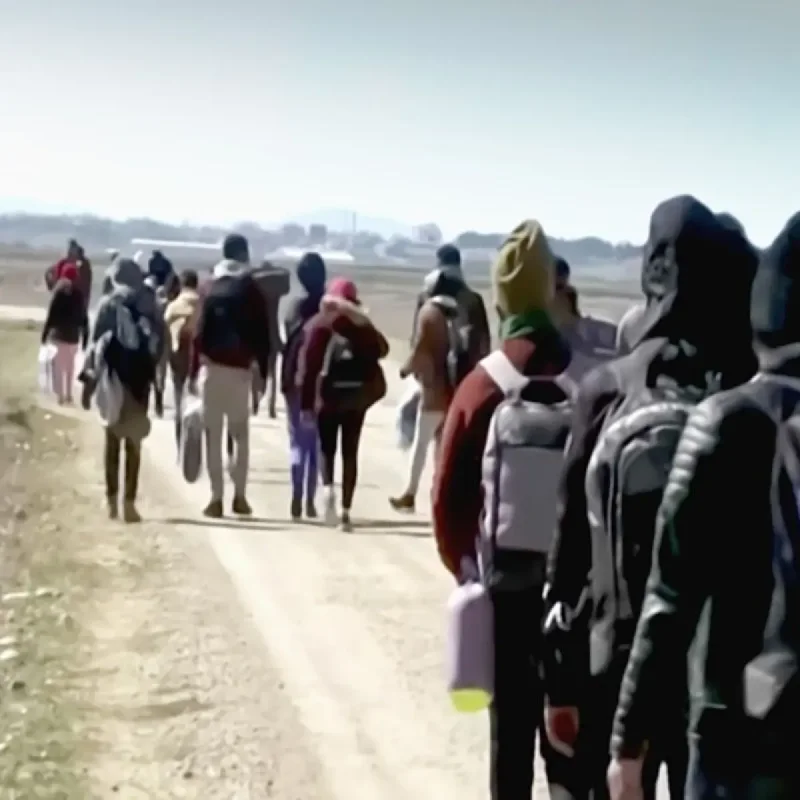
The Netherlands has ordered around 3,500 rejected Syrian asylum seekers to leave the country, according to the Repatriation and Departure Service (DT&V).
The departure orders follow formal rejections of their asylum applications.
Syrians have been the largest group of asylum applicants in the Netherlands for a decade.
However, last year the Immigration and Naturalization Service (IND) rejected 72 percent of processed Syrian applications after the collapse of the Assad regime in late 2024 improved safety conditions in large parts of Syria.
DT&V data shows that 640 rejected applicants had left the country by June. The current whereabouts and intentions of a much larger group remain unconfirmed.
Under Dutch regulations, individuals subject to a departure decision receive a 28-day window to leave independently.
The government states that those residing without authorization bear personal responsibility for arranging their departure.
Limited enforcement options
Migration expert Marlou Schrover noted that immediate enforcement action is limited following a departure ruling.
"You are not immediately detained and little action is taken on it, although COA shelter stops after those 28 days," she said.
Immigration authorities can use administrative detention after four weeks, but only as a last resort.
For Syrian nationals, detention applies only when another EU member state holds legal responsibility for the application and quick transfer is feasible.
Direct forced returns to Syria are not occurring due to a lack of formal diplomatic agreements.
Some individuals cross borders into neighboring nations or vanish from official oversight, according to Schrover.
"Some leave for Belgium or Germany. Others apply for asylum again or disappear into illegality," she said.
Schrover emphasized the lack of official tracking regarding individuals who slip into undocumented status. "How many people go into illegality, we simply do not know."
To encourage voluntary departures, Dutch authorities host informational meetings at the Zoetermeer asylum reception center.
They offer help with travel documents, flight tickets, and a financial stipend of 2,450 euros per person for education or starting a business in Syria.
The DT&V outlines available departure assistance in promotional materials.
"You can get help to leave the Netherlands and make a new start in Syria," reads a flyer.
The material highlights case studies, including an applicant who used financial support to buy home appliances upon returning.
Schrover noted such incentive programs can assist returnees, but cautioned that stricter enforcement measures risk pushing undocumented migrants further out of public view.