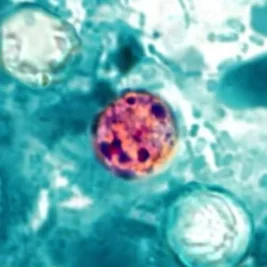
A fast-moving gastrointestinal illness caused by the cyclospora parasite has infected more than 1,000 people across 18 U.
S. states since May 1, 2026, forcing health officials to investigate contaminated fresh produce as the likely source.
Data compiled from the Centers for Disease Control and Prevention and local health departments indicate that Michigan is the hardest-hit state, recording over 700 cases between June 22 and July 6, which resulted in 36 hospitalizations.
The rapid influx of patients suffering from severe diarrhea and abdominal cramps has overwhelmed medical testing laboratories, causing diagnostic turnaround times to slow from 24 hours to nearly three days in some regions.
Federal and local authorities are currently auditing grocery shopping histories and restaurant menus to pinpoint the origin of the infections, though no specific grower or product has been identified.
Regional Breakdown and Expert Concerns
New York City reported 301 cases this year, while New York State tracked 120 separate cases, followed by Ohio with 177 cases, North Carolina with 145 cases, and Illinois with 141 infections.
Dr. Anurag Malani, vice chief of staff at Trinity Health Ann Arbor, warned that the outbreak in Michigan is far from over as medical facilities brace for more infections.
"There are many more cases that are yet to come," said Dr. Anurag Malani.
Health workers are putting in extra hours to manage the spike, as the state typically logs only dozens of cases annually.
"We're pulling people's grocery shopping lists," said Dr. Natasha Bagdasarian, chief medical executive for the state of Michigan, noting the sudden influx was highly irregular for the area.
"Highly unusual," said Dr. Natasha Bagdasarian.
The Food and Drug Administration stated that federal teams are actively monitoring the situation alongside local departments to evaluate the full scope of the spread.
"We are not in a position at this time to characterize the current numbers as definitively unusual pending the completion of that investigation," said an FDA spokesperson.
Federal health agencies emphasized that the current spike does not yet point to a centralized national point of contamination.
"CDC has no evidence of a single, multistate Cyclospora outbreak linking cases happening right now and being reported in the press," said a CDC spokesperson.
A medical executive representing health systems across the Michigan and Ohio borders stated that the ongoing local trends show a clear pattern of regional clustering.
"When we started seeing cases of persistent diarrhea showing up, we knew there's something going on," said Dr. Brian Kaminski, vice president of medical affairs at ProMedica Health System, adding that the influx of symptomatic patients has not slowed down.
"I would say that trend continues," said Dr. Brian Kaminski.
Infectious disease experts noted that the lengthy incubation period of the parasite complicates tracking efforts, as symptoms can take up to two weeks to manifest after ingestion.
"The question is, where is it coming from, and are all the states connected, or are there multiple outbreaks happening?"
said Dr. Matthew Sims, director of infectious diseases research at Corewell Health in Royal Oak, Michigan.
State health representatives continue to issue warnings regarding food preparation safety, urging citizens to take preventative measures against summer infections.
"Anyone experiencing gastrointestinal illness, such as sudden and ongoing diarrhea, should contact their health care provider and their local health department," said Lynn Sutfin, Michigan Department of Health and Human Services spokesperson.
New York health authorities clarified that the infection does not transmit directly between individuals and is manageable with proper care.
"While cyclosporiasis is not likely to spread directly from one person to another, and is generally not life-threatening, as many people with healthy immune systems recover without treatment, the Department encourages all New Yorkers to be aware of the best practices to prevent Cyclospora and other infections common in the summer months," said Marissa Crary, New York State Department of Health spokesperson.
Illinois health representatives confirmed they are collaborating with federal networks to analyze the unusual caseload trends.
"IDPH is seeing a higher-than-average number of reported cases of cyclosporiasis, consistent with what is being seen in several other states," said Matthew Mata, Illinois Department of Public Health spokesperson, noting that investigations into local transmissions remain ongoing.
"At this point, no single source or cause of this increase has been identified, and there is no evidence of a large outbreak accounting for all or most of these cases.
IDPH continues to work with the CDC and other public health partners to look for trends," said Matthew Mata.
Public health guidelines recommend scrubbing firm produce, keeping prepared items refrigerated, and cooking food to at least 158 degrees Fahrenheit to successfully kill the parasite.