Eleven Republican members of the House Republican Study Committee sent a letter to WNBA Commissioner Cathy Engelbert on July 9, 2026, demanding answers by July 24 regarding the physical play and alleged hostility directed at Indiana Fever guard Caitlin Clark.
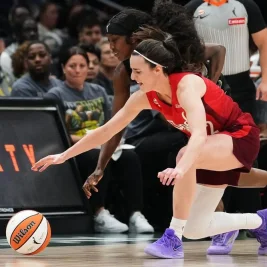
The lawmakers expressed deep concern over officiating and player safety following recent on-court altercations, including a June 24 incident where Phoenix Mercury forward Alyssa Thomas made contact with Clark's throat.
The league later upgraded that play to a flagrant foul and suspended Thomas for one game.
Pattern of Aggression Cited
In the letter, the congressional members highlighted a pattern of aggressive behavior that they argue transcends standard athletic competition.
"Millions of casual fans now tune in to watch her play," they wrote.
The lawmakers detailed specific physical actions Clark has endured on the court and criticized the league's response.
"Unfortunately, what they too often witness is not simply aggressive competition, but repeated acts of physical hostility and violence.
Clark has been hip-checked, poked in the eye and struck in the throat during games," the letter stated.
The committee members further asserted that the basketball league has not done enough to penalize individuals involved in these disruptions.
"These incidents go far beyond routine physical play, yet the WNBA and its officiating have too often failed to address these unacceptable incidents and hold players accountable," they wrote.
Fever and Clark Respond
The Indiana Fever organization and Clark stated they had no prior knowledge of the congressional inquiry, emphasizing their focus remains on internal league dialogue regarding player safety standards.
"We have been clear in our public comments and in our ongoing dialogue with the league about the priority of player safety," the Indiana Fever stated in an official release.
The franchise reaffirmed its commitment to defending its roster and supporting elevated operational benchmarks across the sport.
"Our players and our fans know where we stand on those issues, and we will continue to stick up for our team and a standard of excellence across the league," the Fever stated.
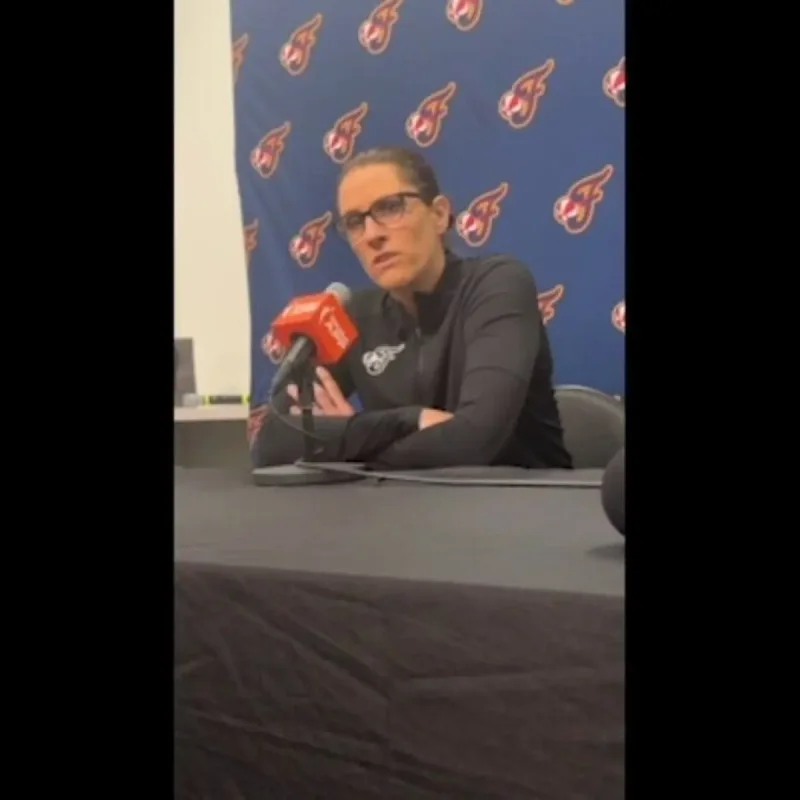
Fever Head Coach Stephanie White declined to comment directly on the political developments during a pregame press conference in Phoenix, redirecting inquiries to the organization's published remarks.
"Our team made a statement yesterday so you can find that statement," White said.
When pressed on how she handles congressional involvement regarding one of her players, White reiterated that external political commentary is beyond the team's sphere of influence.
"Again, that's not something we can control," she said.
White emphasized that the coaching staff and roster remain concentrated entirely on basketball operations rather than political statements.
"We're not affiliated with those groups.
We try to keep the main thing the main thing and focus on the things we can control," White said.
Amidst the external discourse, Clark reflected on the personal challenges of navigating high-profile scrutiny and intense media focus during her breakout professional career.
"I think sometimes people think I'm a robot. I'm not a robot," Clark said.
The 24-year-old rookie noted that the adjustment to the professional spotlight has occasionally brought personal frustration despite her appreciation for her current position.
"It can be really frustrating to me at times. I'm 24 years old trying to navigate a lot.
I've been in this world for four years now — and you would never change any of it — but there are times that it is hard.
And there are times when it affects me a little bit more than I do put on.
I think it's important that people remember that part of it, too," Clark said.
Former players and collegiate coaches have also weighed in on the fan dynamics and voting metrics surrounding Clark's rapid rise in professional basketball prominence.
"If you're sitting down and putting Caitlin Clark as the 11th best guard … y'all need to go to a therapist and figure out what childhood issues you have," wrote Hall of Famer Candace Parker on social media.
UConn head coach Geno Auriemma observed that the intense fan narrative surrounding Clark has transformed standard athletic competition into a broader cultural talking point.
"Because the bandwagon and the fandom became so obsessed with the whole thing, it turned into a cause," Auriemma said.
Auriemma stated that the surrounding discourse has hyper-analyzed standard physical basketball plays through the lenses of race and endorsement opportunities.
"Became the reason why white players get beat up in the WNBA and she became the reason why Black players don't get the endorsements and don't get the adulation that white players get," he said.
The collegiate coach concluded that while severe physical contact must be penalized appropriately, the infractions themselves remain an inherent part of the sport.
"Not every foul is a good foul.
Not every foul's a bad foul, but there are fouls that are flagrant — but that's all they are," Auriemma said.
The WNBA has not yet released an official statement regarding the congressional letter, while Clark was held out of Thursday night's game against the Phoenix Mercury as a physical precaution.