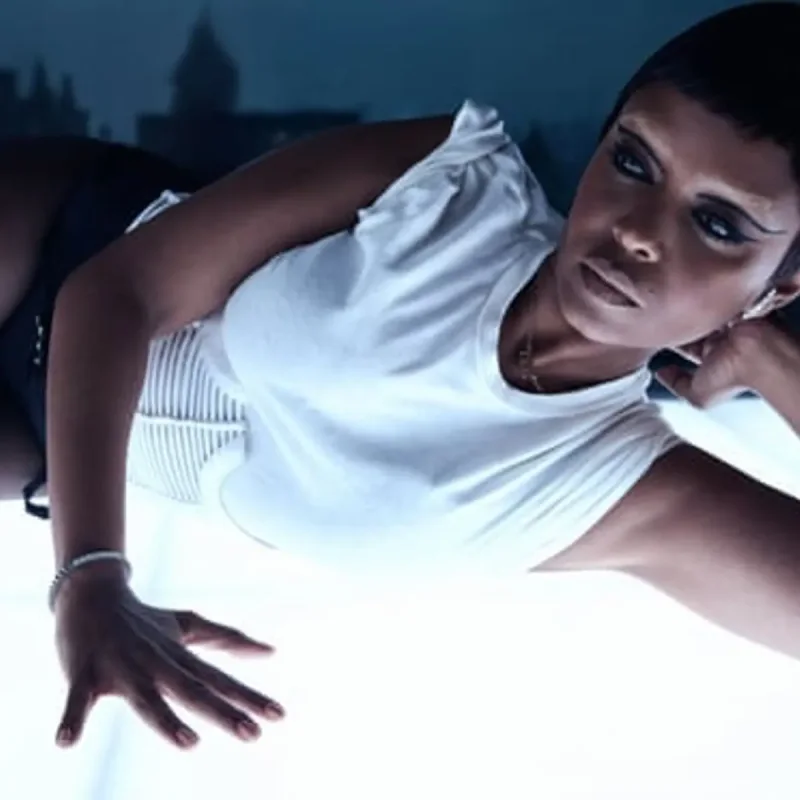
Washington DC-raised musician Kelela has released her third studio album, New Avatar, blending heavy shoegaze elements with driving rock instrumentation.
The album marks a significant stylistic pivot from her established electronic sound.
According to The Guardian, the album represents one of her most daring transformations, leaning into experimental territories while capturing a rapidly expanding digital audience.
Viral Promotion and Artistic Vision
Prior to the release, Kelela shared unconventional promotional clips across online platforms.
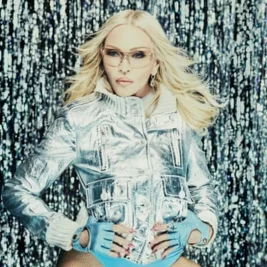
She interacted with crowds in Soho New York, stood in foggy landscapes evoking survival horror, and channeled silver-haired superhero visuals for the music video of "Idea 1."
A widely shared parody synced a classic RuPaul dance routine to her guitar tracks.
During an interview at a recording studio in east Williamsburg, New York, she acknowledged her engaged fanbase.
"If there were a fan competition amongst artists, I feel like I would win," she said. "No shade to nobody!
But the humor and the read are co-existing in my audience in a way that I could never have written."
Playfully embodying a rebellious persona, she added: "I'm like an angsty teenager. I'm like … 'fuck everythinggg.'"
Career Trajectory and Influences
Following her 2013 mixtape Cut 4 Me, Kelela established herself as a vital architect bridging atmospheric club rhythms with accessible hooks.
She has collaborated with Solange, Danny Brown, and Gorillaz.
British singer PinkPantheress, who contributed to the single "The Bridge," praised Kelela's influence via email.
"I think her consistent talent to push the boundaries of music and continue to dive into the more experimental sides of electronic sounds often pushes me to think out of the box when producing my own songs," she wrote.
"Her work has easily widened the market and opened doors for other Black female electronic/pop artists.
I truly believe that because of her we have more room to experiment and not stick to the status quo."
Kelela's musical roots trace back to the indie rock scene. She performed with Washington DC-based group Dizzy Spells and recorded an unreleased EP.
"It was my first time really getting into songwriting and feeling loose and free enough to kind of fuck up," she recalled.
Collaborating with her former partner Tosin Abasi, lead guitarist of progressive metal outfit Animals as Leaders, shaped her complex harmonic preferences.
"He was writing proggy, jazzy music with odd time signatures with really left-of-center harmonics," she said.
"I really fell in love with trying to find my way in these, you know, seemingly unkind sonic landscapes."
Crafting the New Avatar Experience
A guitar-centric project had been brewing for years, surfacing during live sets or recordings like her 2019 mixtape Aquaphoria and 2024 appearances at New York's Blue Note jazz club.
The path after her 2017 debut Take Me Apart was complex; the subsequent record Raven emerged slowly, reflecting a period of ideological navigation.
"I never made Raven as a bring-in [record]," she said.
"That was for people who were already here… It was way more subtle, there were not a lot of big singles."
Transitioning away from that creative friction, New Avatar radiates confidence. She reunited with producers Oscar Scheller and Asma Maroof, alongside visual architects Mischa Notcutt and Janiva Ellis.
The sonic foundation was inspired by a curated selection known as the White Bag playlist, aiming for an instrumental balance of two-thirds guitar and one-third dance music.
Tracks like "Linknb" weave relentless drum machines with vocal samples from Memphis hip-hop figures La Chat and the Gimisum Family.
The album concludes with the emotionally devastating synth progression on "If We Meet Again."
Painter Janiva Ellis co-wrote "Idea 1," drawing conceptual inspiration from Octavia Butler's dystopian novel The Parable of the Sower.
"She articulates the sort of read of the world that we're living through and having to navigate," Kelela said.
"Our ethics line the fuck up.
We're wanting to challenge the systems that are at play that make us suffer so it feels like our own humanity is preserved."
Despite heavy themes, moments of sharp wit appear.
On "Point Blank," she sings: "But catch me in the dark, babe/Can you slut me out/I'm taking what I want, babe/But you can't stay — don't start."
Activism and Artistic Integrity
Last year, Kelela aligned with the No Music For Genocide campaign, withdrawing her catalog from Israeli streaming services alongside over 400 artists.
Maintaining a Black queer feminist stance has occasionally led to professional friction, including pushback from corporate sponsors.
Recounting a situation where a brand threatened to cancel a partnership shoot, she noted their retreat after she stood her ground.
"After I said something they were like, actually, don't worry about it. I didn't even have to pay the money back.
They were just like, we don't want to fuck with the [bottom] line."
Navigating these dynamics has sharpened her focus.
"The intersections that I have to deal with actually provide me with more mental fortitude and stability and clarity around what's happening," she said.
"I feel like part of my talent is my ability to hone in on a nuanced reality… I think the poetry comes in what I'm saying, how specific I'm being about a feeling."
Reflecting on whether mainstream popularity was ever a temptation, she said: "In the beginning that was like what I thought I was doing, but then I was like, 'Oh, I guess I just actually really want to make avant-garde music.'
That is more important to me than like getting the numbers on the board and having the biggest career because that's actually the delicious thing, that's the juicy thing."