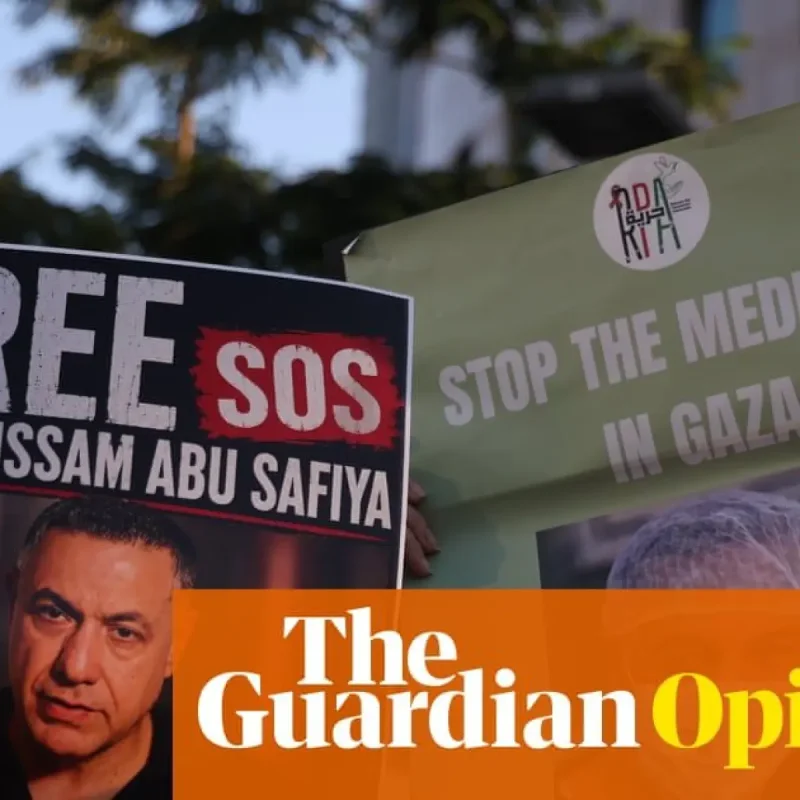
The suffering of Dr. Hussam Abu Safiya is not an isolated incident. The abuse of Palestinian detainees occurs openly, with little change.
Dr. Abu Safiya, director of Kamal Adwan Hospital in northern Gaza, was seized by Israeli forces 18 months ago and held without charge.
He reports being beaten with hammers and batons, daily assaults, and loss of consciousness. Recent images show him gaunt and unrecognizable.
In June, he was transferred to Rakefet prison, an underground facility deemed inhumane and closed, but reopened in late 2023 by far-right minister Itamar Ben-Gvir.
Prisoners there never see daylight, violating the Geneva Conventions.
Across Palestinian territories and Israel, about 3,500 prisoners are held under administrative detention, renewable every six months indefinitely.
Nearly 200 are children. Once detained, they are essentially abducted by the state.
Ali al-Samoudi, a Palestinian journalist released earlier this year, lost 60 kg—half his body weight.
He described prison as “hell in every sense of the word,” saying, “Everything they practised with us was punishment and revenge.”
The scale of abuse, torture, and death in Israeli prisons is well documented.
A recent photo posted by an Israeli soldier shows a Palestinian man face down, stripped to his underwear, bound to a plank with ropes and an iron rod.
The caption read “good morning” in Hebrew, echoing Abu Ghraib.
These are not isolated incidents but part of a longstanding system that denies Palestinians human rights, aiming to terrorize, break morale, and collectively punish.
For decades, Israel has kept bodies of Palestinians, refusing to return them for burial.
Some are buried in numbered graves in sealed military zones; others are held in freezers.
Among them are 100 Palestinians who died in custody, with no information on their deaths.
There are also the missing—those in Gaza detained but never recorded. HaMoked, an Israeli human rights organization, is tracing almost 2,000 people, calling these “enforced disappearances.”
The abuse has a psychological dimension: a continuous smothering of Palestinian autonomy. Detainees include journalists, doctors, and civil society members—those who form the network of a society.
Their targeting aims to shatter the idea of Palestine.
What is remarkable is how much of this happens in plain sight, documented by rights groups, posted by soldiers, and bragged about by politicians.
Yet it is rarely protested within Israel or moves Western allies to demand action.
In the UK, focus on settler violence and sanctions seems to locate the problem away from the Israeli state.
As Palestinian prisoners fade in dungeons, the world watches.
The Abu Ghraib scandal defined an era of unbridled power and cruelty because media and political classes pushed for accountability.
Where is that now?
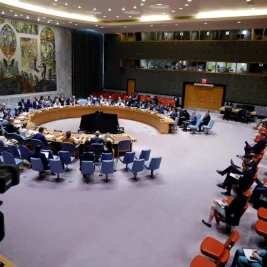
The UK deputy permanent representative to the UN recently expressed concern about “documented sexual violence by Israeli forces against Palestinian detainees” and called for investigation.
But many suspect nothing will happen, because this is not an aberration but a norm blessed by Israeli politicians and society.
Until that fact is confronted, Palestinians will continue to be detained, disappeared, tortured, and sexually abused, while abusers are asked politely to investigate themselves.