
More than 1,000 feet below the surface of the Labrador Sea, the bow of Ernest Shackleton's final ship emerged from the darkness and silt.
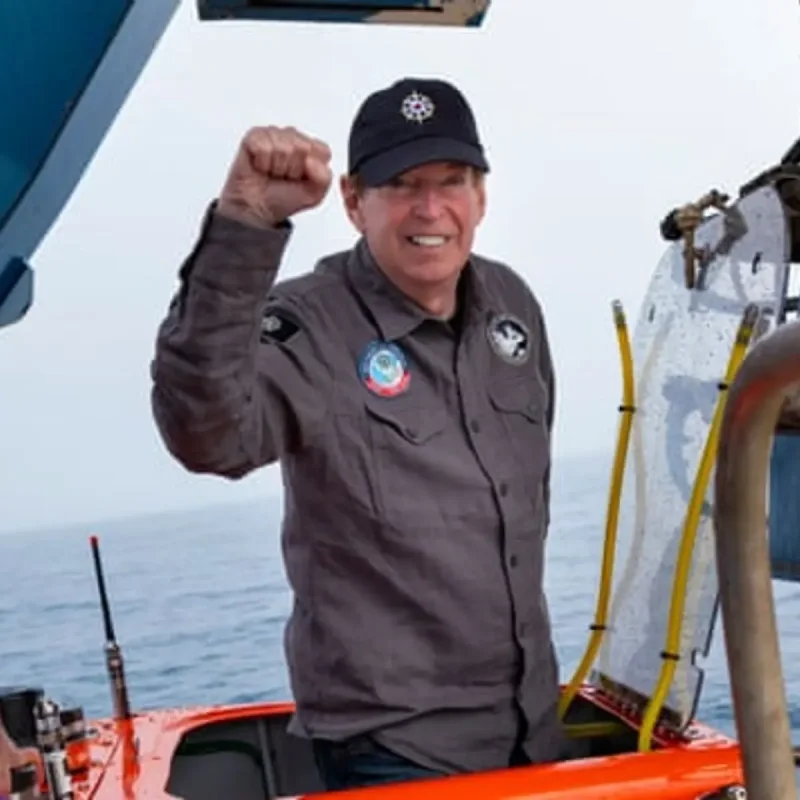
“To see a very large ship in the abyss, and to realize you are among the first humans to see it, and to realize that it is largely intact is a powerful experience,” said John Geiger, head of the Royal Canadian Geographical Society (RCGS).
Days later, Geiger was again inside the submersible Alvin, staring at the remains of the Terra Nova – the ship used by Robert Falcon Scott on his ill-fated Antarctic expedition.
Digital Twins of the Deep
The expedition, which began in early July and was funded by the RCGS, used underwater imaging technology from Canadian company Voyis to build detailed three-dimensional models of the wrecks.
“We’re scanning these wrecks and collecting thousands of high-resolution 3D images that are then kind of knitted together on the spot,” Geiger said.
The team hopes these “digital twins” will define future expeditions to the fringes of the planet.
Geiger described the project as a “golden era for shipwreck hunting and investigating,” as technological leaps allow researchers to better map and model the final resting sites of famed ships.
Shackleton was among the titans of the “heroic age” of Antarctic exploration. His 1914 expedition on the Endurance ended when the ship was trapped in ice and crushed.
The crew survived on ice floes and eventually made it to Elephant Island.
In 1922, Shackleton died of a heart attack at age 47 while on the Quest, a ship he had outfitted for Arctic exploration.
The Quest sank in 1962 and was discovered in 2024 in an expedition also led by Geiger.
The Terra Nova carried Scott and his crew in their 1910 bid to reach the South Pole.
Scott arrived on January 17, 1912, only to find that Roald Amundsen had beaten him by a month.
Scott and his entire polar party died on the return journey.
The Terra Nova later sank in 1943.
Expanding the Frontier
Neither ship experienced casualties prior to sinking, so the expedition aimed to inspire a new generation of explorers rather than solve mysteries.
“There’s so little of the ocean that’s mapped,” Geiger said, noting that Canada’s Arctic territorial waters remain largely unmapped.
Marine biologists were excited about the chance to study wildlife around the wrecks and the forces reclaiming the wood hulls.
The crews also observed the effects of deep-sea fishing trawlers, with heavy nets partly covering the wrecks.
Recent advances in submersible technology have expanded exploration frontiers.
Five years ago, the Alvin was approved to extend its depth range from 14,700 feet to 21,300 feet.
“This opens up a lot of new territory for us,” said Alvin pilot Benen ElShakhs.
Geiger emphasized the human role in exploration, saying, “Future expeditions will surely use robots and automated vehicles.
But I don’t think we can ever abandon, when possible, the human role in exploration. Because what is lost is poetry, romance and wonder.”