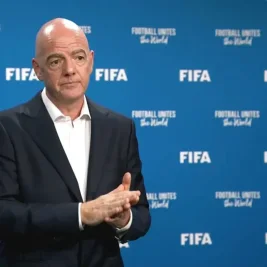
One week before the World Cup final, FIFA President Gianni Infantino attended a funeral in Qatar, while Donald Trump visited his Virginia golf club.
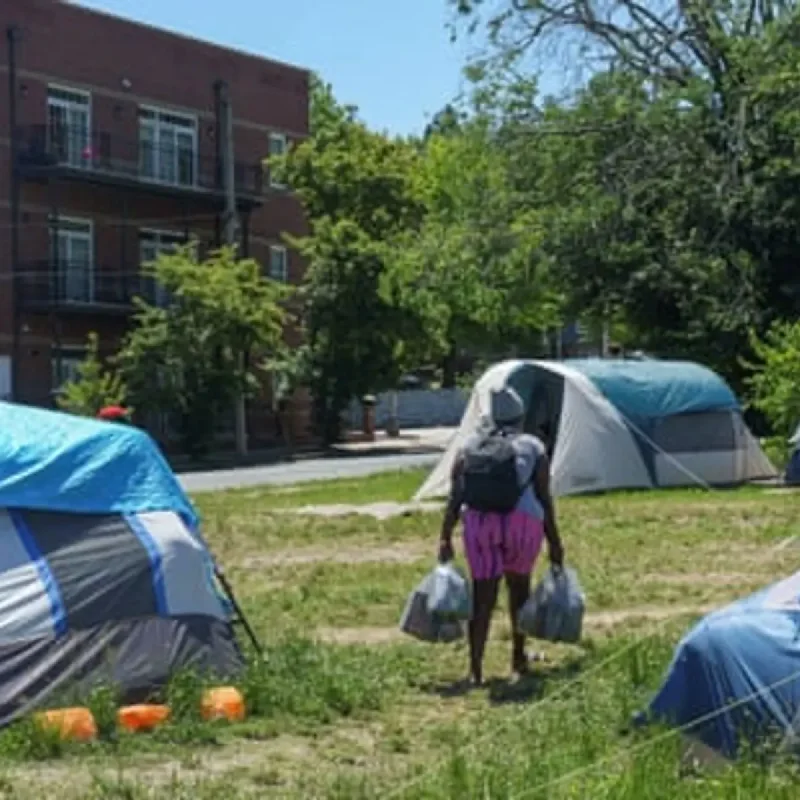
On the same day, The Guardian reported that Atlanta city employees had cleared a homeless encampment at Freedom Park, less than a mile from a World Cup fan zone.
Workers removed tents, personal ID, medication, and other belongings without warning.
A city official called the sweep "routine park maintenance," noting that Freedom Park was not an official encampment.
Mayor's Policy and a Tragic Death
Mayor Andre Dickens has been clear about the city's stance: "We want to make sure those unsheltered individuals don't come anywhere near downtown and throughout the city of Atlanta, not just during the World Cup but now."
The city's Downtown Rising plan aims to remove homeless camps before the tournament. It claims to have housed 500 people, but critics point to heavy-handed actions.
In January last year, Cornelius Taylor was crushed to death by a five-tonne bulldozer while sleeping in his tent during a street clearance.
His fiancée later described finding blood and body parts among his possessions. The incident led to promises of new protocols.
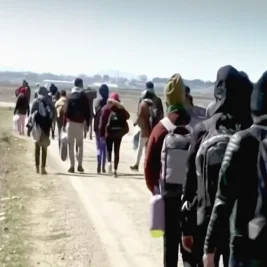
Displacement and Uncertainty
A care worker at the Centre for Health and Rehabilitation near Freedom Park noted a drop in homeless numbers during the World Cup but had no idea where they were taken.
"I haven't seen evidence of what has occurred, but we do know the people are gone. So where did they go?"
she said.
Sirius, a homeless man, described being dropped off at a center beyond the city's West End in the middle of the night.
"They call them Mormon centres or whatever, but it ain't nothing but a warehouse of cops. It looked like a Fema camp," he said.
He walked back to the city center, believing the sweeps are meant to make the city look good for tourists.
Drayvon Clark, another homeless man, expressed frustration: "A lot of our community has been pushed out by the World Cup.
We're not just dollar signs, we're more than that. We're people and we're frustrated that they've chosen to treat us less than human."
Clark noted that third-party park rangers were brought in to push people out.
"Not saying that we don't love soccer, we do love soccer, but it is traumatic," he said.
Nationwide, homelessness is a profound issue, with at least 770,000 unhoused people. The World Cup has accelerated clearance efforts in host cities.
Similar patterns occurred during the 1996 Atlanta Olympics and the 2024 Paris Olympics.
In Los Angeles, homeless people were placed in block-booked motels. In Dallas, an encampment of up to 200 tents near city hall was cleared.
Seattle's mayor pledged to build 500 new homes but only 50 were completed by the World Cup.
Sirius summed up the feeling of many: "This country is bred that way. We're a war country.
All the people here are indoctrinated from their youth to be very aggressive, to be numb to it."
He added that the sport itself excludes local communities: "Black people in Atlanta don't play football.
So when you invited the world here, you invited the world to participate in a sport that these people are not even included in."
The financial influx from the tournament does little to alleviate structural poverty. "The thing about this sport is it makes so much money, but we don't.
Are we going to unite the world? Are we going to fix the city?"
Sirius asked.
For those living on the margins, the World Cup is a distraction. "You've seen Gladiator, it's like the Games.
That's what it's for. It's a distraction.
They treat us like trash and trampled over us. But that's America for you, isn't it?"
Sirius said.