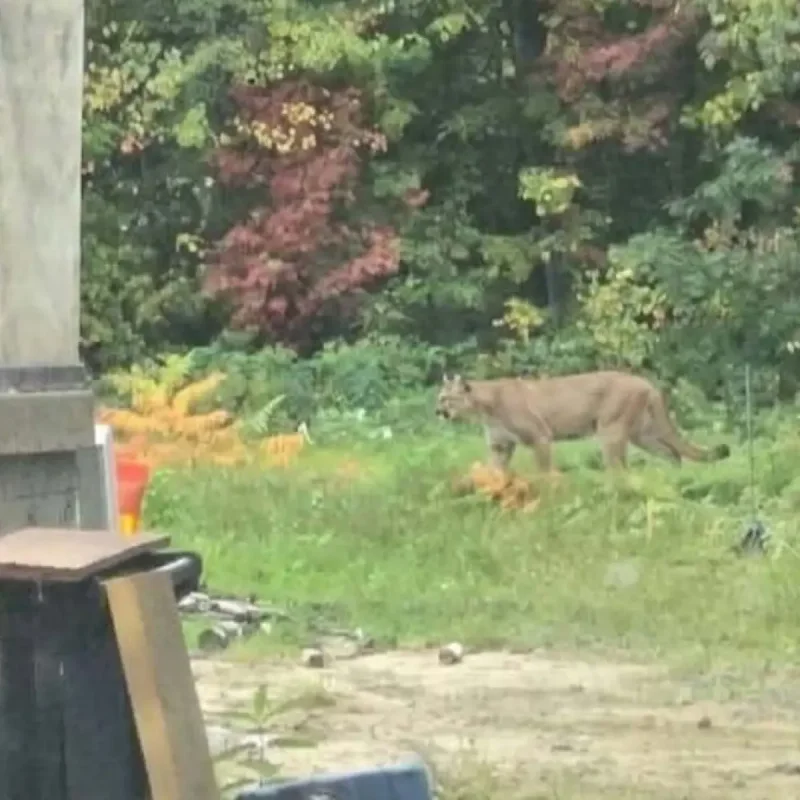
Authorities placed the Abenaki reserve of Wôlinak in Quebec on high alert after residents spotted a suspected cougar roaming community streets on Monday, September 28, 2026, prompting wildlife officials and local police to launch search operations.
The Abenakis Police Corps warned residents to stay indoors and keep domestic animals inside after the animal was reported within a perimeter of roughly ten residences between Tomakawa, Mikowa, and des Pins streets, located behind the Grand Royal Wôlinak casino.
Emergency measures were immediately activated by the council as provincial wildlife officers mobilized on Tuesday morning to track the feline, utilizing thermal camera-equipped drones to survey the area.
Local authorities broadcasted emergency announcements through street loudspeakers to warn the public of potential danger, advising residents to exercise extreme caution if motor travel is necessary while minimizing outdoor movement.
Police emphasized that cougars are nocturnal hunters and warned that the likelihood of an attack increases significantly after dark, urging pet owners to keep animals indoors to avoid attracting the predator.
According to Quebec's Ministry of Wildlife, cougar populations have never been abundant in the province, as the species is primarily established in western Canada, with no scientific proof of a viable breeding population in Quebec.
The last officially confirmed cougar presence in the province occurred in 1992 in Abitibi-Témiscamingue when an animal threatening human safety was shot, with DNA testing revealing it originated from South America and likely escaped from captivity.
Ministry officials noted that native wildlife, such as the bobcat, or even large domestic cats, are frequently mistaken for cougars due to deceptive visual perspectives in photos.
Wildlife experts advise anyone encountering a wild big cat to remain standing, maintain direct eye contact, make loud noises, raise their arms to appear larger, and back away slowly without turning their back.