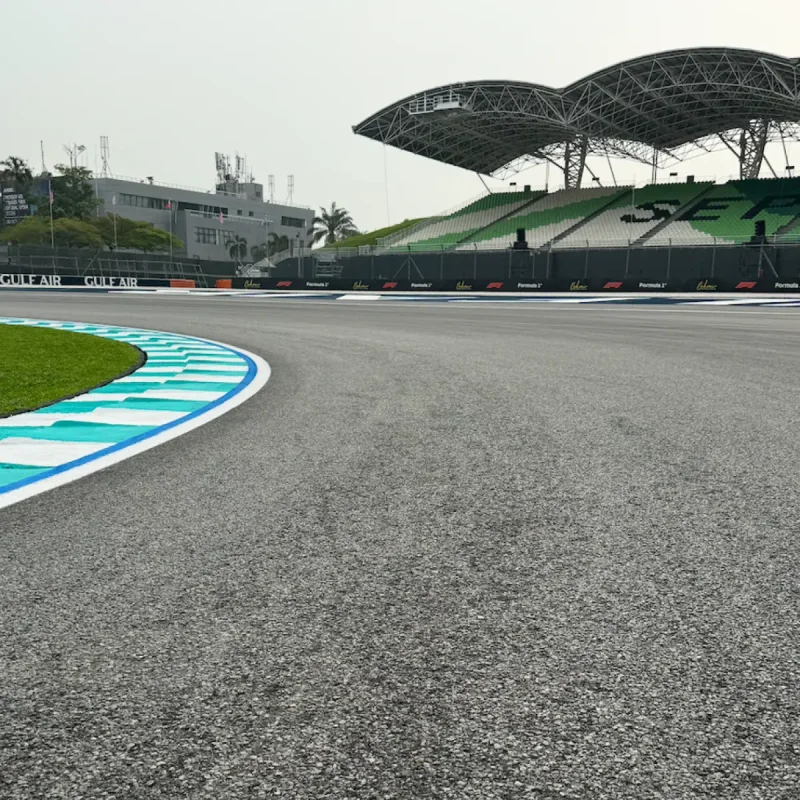
Formula 1 teams are preparing for severe tyre degradation at the Sepang circuit, where extreme asphalt roughness could force multi-stop race strategies.
Track walks by drivers and engineers revealed significant surface weathering and bumps, with original asphalt sections showing worn upper layers since F1 last raced there in 2017.
Pirelli's surface analysis confirmed that Sepang's track roughness has increased and now ranks as the highest on the current F1 calendar, surpassing Barcelona.
In response, Pirelli has selected aggressive C2, C3, and C4 compound allocations for the race weekend.
Drivers Describe Extreme Surface Conditions
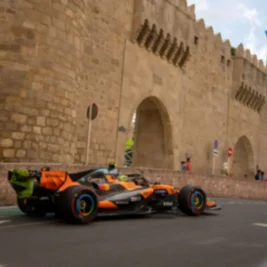
McLaren driver Oscar Piastri described the track surface bluntly after initial inspections.
"It looks like sandpaper out there. I definitely think it's going to be challenging with tyre deg," Piastri said.
The high degradation marks a sharp contrast to recent races in Italy, Spain, and Azerbaijan, where low surface wear allowed easy single-stop strategies.
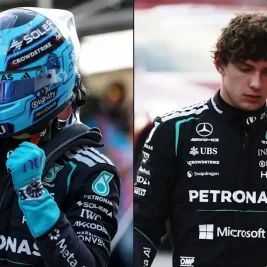
Mercedes driver Kimi Antonelli highlighted the strategic shift during his track preparation.
"They were all new tarmac, no deg," Antonelli said. "Baku was a funny one because the more you pushed, the better it was for the tyres.
This one is going to be completely different."
Antonelli noted that elevated track temperatures combined with surface abrasiveness will play a crucial role in race execution.
"I just did the track walk and it's the roughest track tarmac that I've seen. It's similar to Bahrain in some places, maybe even more.
So it might be a scenario where we see two or three stops in the race also because it's so hot.
It's going to be interesting," he said.
Williams driver Carlos Sainz welcomed the returning strategic complexity brought on by tyre wear.
"Good.
Maybe finally we see some deg, because it's been a few weekends now in a row where there has been zero deg and it makes the racing a bit less driver-dependent; it's just about pushing flat out and the car you have.
You cannot manipulate the strategy or anything, so I wouldn't mind seeing a bit of deg," Sainz said.
Sainz pointed to historical races where fluctuating tyre life created varied strategic approaches and increased overtaking opportunities.
"I've always said the best races in Formula 1 have been the races where there is a bit of deg and it's always between a one and a two-stop strategy," he said.
"When there is no strategy flexibility, always the show takes a hit because then there's nothing you can do apart from overtaking on track, and we all know overtaking on track is difficult."
Mercedes driver George Russell warned that high wear could affect qualifying preparation and close following during the race.
"You'll be overheating the tyres even on the outlap of a qualifying session, which may make it more challenging to follow closer and to re-attack [in the race] once you've been overtaken.
But that's the total unknown currently," Russell said.
Off the track, Ferrari Team Principal Fred Vasseur faced growing media attention regarding his future following a five-race podium drought for the Scuderia.
Official track running begins on Friday, where teams will gather initial long-run data to finalize pit stop strategies ahead of Sunday's race.