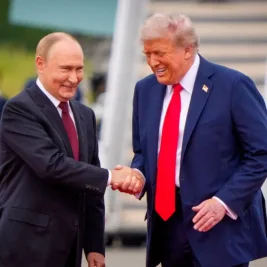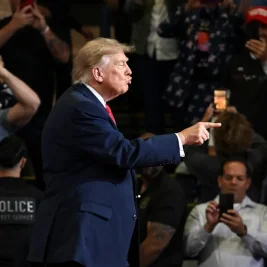
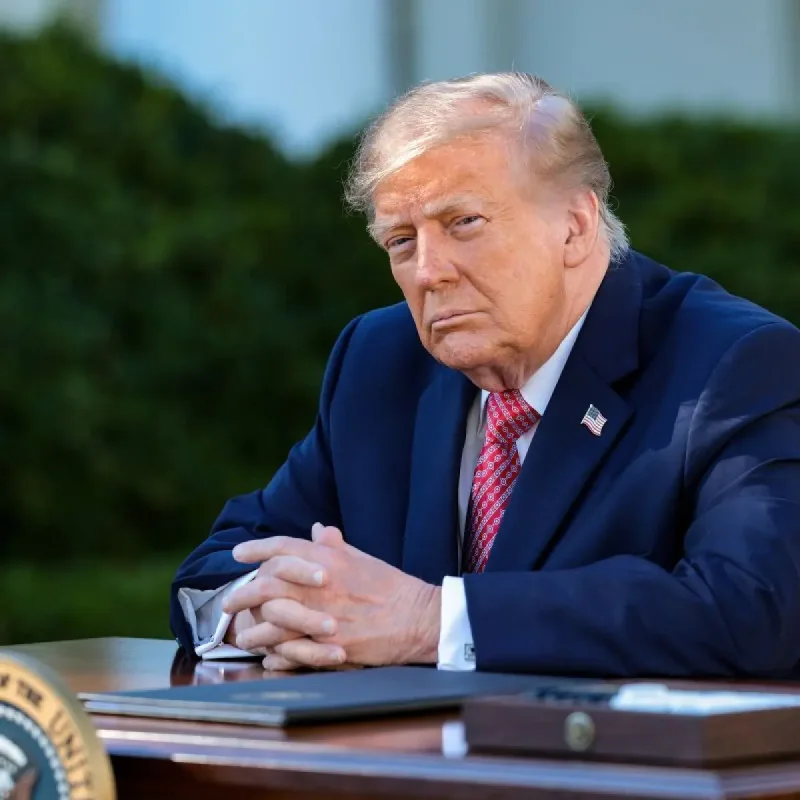
President Donald Trump signed an executive order on Friday suspending planned economic penalties against Russia, pausing sanctions and tariffs just before they were set to take effect.
The move, made in Washington, drew criticism from Republican lawmakers and raised questions about enforcing legislation designed to pressure Moscow over its war in Ukraine.
The order suspends tariffs of up to 500% on US imports from Russia and 100% on the five largest importers of Russian oil and natural gas.
Those penalties were included in legislation signed into law in September and named after Lindsey Graham, the late Republican senator from South Carolina.
A Departure from Trump's Tariff Strategy
During his first term, Trump nicknamed himself “Tariff Man” and expanded his use of tariffs in his second term.
He previously described himself in social media posts as “Mister Tariff” and “The Tariff King.”
His latest decision to suspend the Russia-related measures marks a departure from that aggressive trade approach.
Ed Mills, a Washington policy analyst at financial firm Raymond James, said the suspension undermines the legislation's enforcement.
“This eviscerates any real enforcement of the Lindsey Graham sanctions act,” Mills said.
Mills said the decision follows a broader pattern in Trump's trade policy, noting that Russia was also excluded from the list of countries facing sweeping tariffs in April 2025.
He described the timing of the announcement as politically significant.
“The timing of the announcement is telling.
Friday news dumps are done for the actions you don’t want noticed and politically you don’t want to defend,” Mills said.
He added that the decision could create difficulties for Republicans ahead of the midterm elections.
“This is certainly not the closing argument the GOP wanted weeks before the midterms,” Mills said.
The suspension also affected energy-market expectations. Oil futures dipped Monday morning as traders anticipated that fewer restrictions on Russia could increase available supplies.
By early Monday afternoon, Brent crude, the global benchmark, was approaching five-month highs near $110 a barrel.
Andy Lipow, president of Lipow Oil Associates, said Russia was already exporting crude oil to China, India, Turkey and other destinations while limiting shipments of refined fuels.
He cautioned that easing restrictions would not necessarily translate into greater market supply.
“The waiver may make it easier to sell oil to a wider range of customers, but whether it leads to additional supplies reaching the market is another question,” Lipow said.
Kirill Dmitriev, head of Russia's sovereign wealth fund, welcomed Trump's decision, describing it on X as “an important and truly historic moment.”
Republican Criticism and Administration Defense
Several Republicans criticized the suspension, including Sen.
Darline Graham of South Carolina, who is filling her late brother's Senate seat and running for a full term.
She argued that maintaining pressure on Moscow was important for ending the war and addressing energy costs.
“I would choose to keep the pressure on Russia to end the war and get the gas prices down because I don’t trust (Russian President Vladimir) Putin and I don’t trust Russia,” Graham said.
Outgoing Republican Sen. Thom Tillis also condemned the decision, calling it “beyond irresponsible.”
He accused Trump of “capitulating to a Russian dictator who illegally invaded Ukraine and butchers innocent civilians every single day.”
Secretary of State Marco Rubio defended the suspension over the weekend, telling reporters that the order gives the administration time to assess the potential economic consequences.
He said the measures could affect countries beyond Russia, including India.
“The problem is that these sanctions were not just sanctions on Russia. They include tariffs on a number of countries — India, for example, and others,” Rubio said.
Rubio said Trump wanted to use a 60-day period to examine the effects of the proposed measures on international markets and the US economy.
“I think the president wants to take the 60-day period of time to sort of analyze what imposing both sanctions and tariffs will mean to the global economy and even to the US economy,” Rubio said.
According to John Iselin, associate director of economic analysis at The Budget Lab at Yale University, US tariffs reached their highest level since the 1930s last year.
Although subsequent pauses involving China, a Supreme Court ruling against Trump's global tariffs and other developments have reduced tariff levels, they remain higher than at any point between the 1940s and 2024.