"People are starting to come back very slowly, but during these months we had to take different jobs, getting only 30% of what we were making before."
Unanswered Questions and Toxic Suspicions
Scientists and local environmental organisations had warned for years that untreated sewage, agricultural runoff and weak water-quality enforcement were pushing the lake towards collapse.
Gabriel Cerén, a biologist, says the nutrient overload in the water was severe.
"What facilitates the reproduction [of the water lettuce] is the high amount of nutrients that the Lempa River gets from fertilisers that end up in the lake and concentrates a high amount of nitrogen and sulphates," he said.
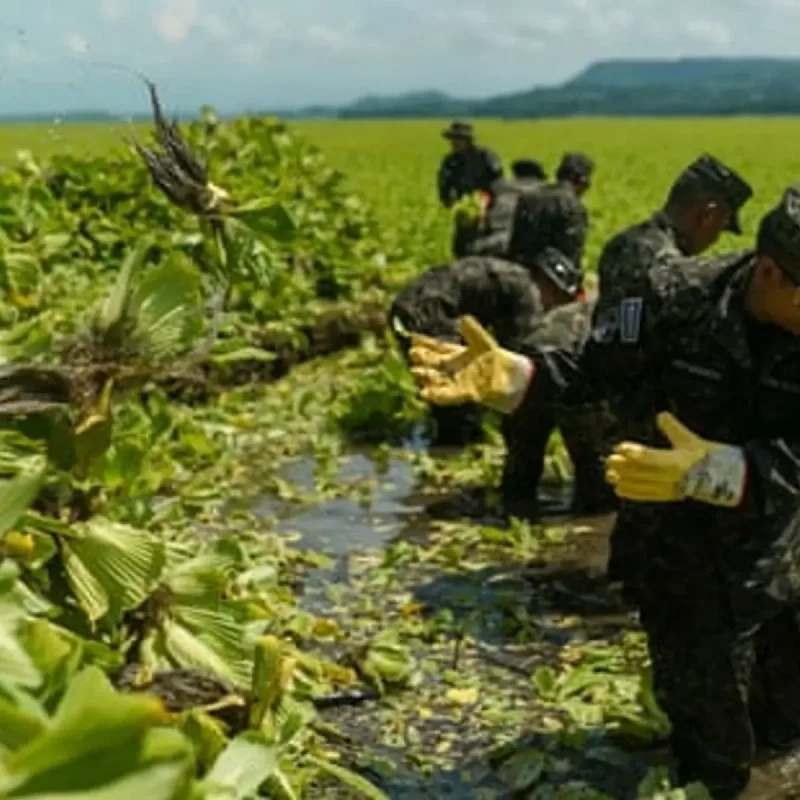
Under such conditions, invasive plants such as water lettuce flourish, depleting the oxygen that fish and other aquatic life need to survive.
Fish died, mosquito numbers surged, and persistent foul smells rose from the water.
If there was an official explanation for what happened, it never reached the communities that depend on the lake.
In the weeks after the die-off, researchers from the University of El Salvador's toxicology laboratory (Labtox) were asked to analyse the water.
According to the researchers, the request came through institutional channels linked to the courts – an arrangement under which the lab provides technical support without publishing public reports.
Labtox is one of the few institutions in the country equipped to monitor cyanobacteria, organisms that thrive in nutrient-rich water and can release toxins harmful to humans and wildlife.
Their work at Suchitlán focused on measuring nitrogen and phosphorus, key indicators of eutrophication.