Yet they do not test for pesticides or herbicides, including paraquat, the extremely poisonous chemical widely known in the region by the trade name Gramoxone.
By the time sampling was carried out, several weeks after the fish had washed ashore, results showed no anomalies.
Nutrient levels were within expected ranges, and no active cyanobacterial bloom was detected.
The researchers cautioned against drawing conclusions. During the die-off itself, monitoring was impossible.
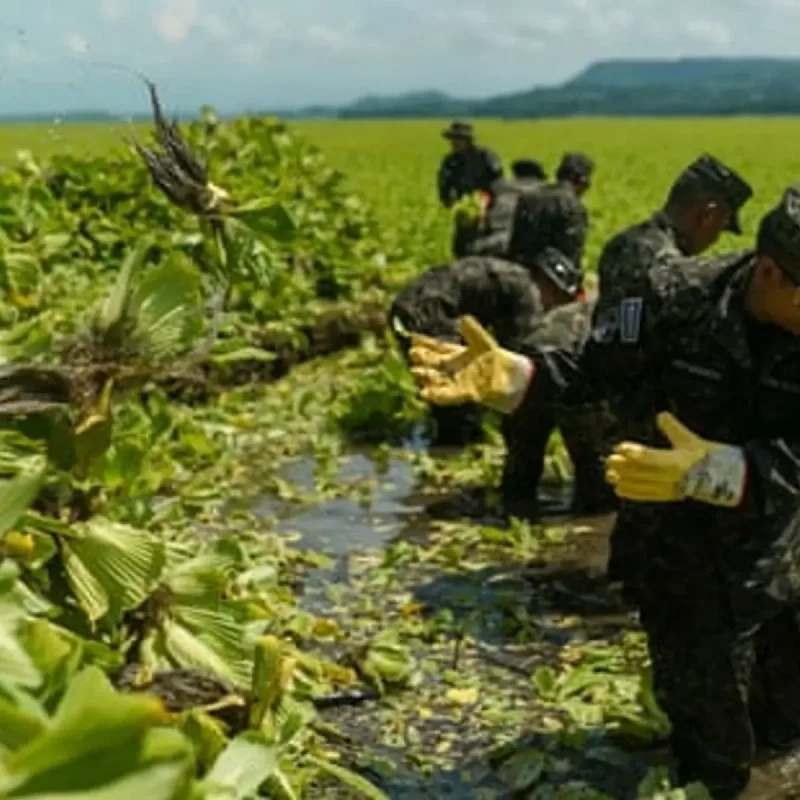
Dense mats of water lettuce covered the surface, blocking access to sampling points and disrupting standard measurements, they alleged.
For residents, the gap between what they witnessed and what could be proven has deepened mistrust.
Fishers and local leaders say the water lettuce appeared suddenly and was cleared just as abruptly.
Videos recorded by residents show agriculture-use drones flying low over the lake in the days before the die-off.
>>> EU President Proposes Social Media Ban for Children Under 13
No authority has acknowledged deploying drones or using chemicals on the water.
A local newspaper reported that residents travelling by boat across the reservoir were told by fishers and community members that poison or some kind of chemical had been sprayed from the air to eliminate the aquatic plants.
Others speculated that a vein of sulphur beneath the lake had been disturbed.
None of these claims has been confirmed.
What remains consistent is the silence in a country where, according to campaigners, human rights have been ignored by a steadily more repressive regime, and environmental activism is becoming increasingly dangerous.