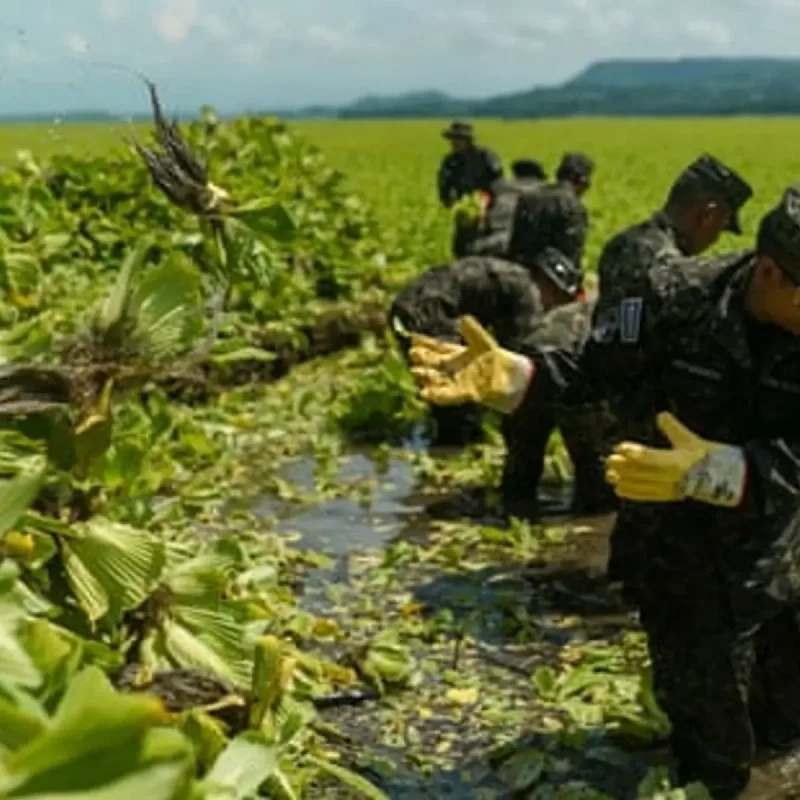
Suchitlán offers a particularly human-scale view of that crisis. Tourists have reported skin rashes after swimming in the lake.
In Copapayo, residents say mosquito populations exploded after the die-off, making it difficult to sleep at night.
Public health reports list gastrointestinal and acute respiratory infections among the most common illnesses in communities around the lake.
Residents have been left with a lake that appears normal again; the fish have returned and the water lettuce is gone.
But for those who live along the lakeshore, the crisis has exposed years of structural neglect.
El Salvador treats only a fraction of its wastewater, and municipalities upstream discharge effluent directly into rivers that feed the reservoir.
Environmental regulations rarely translate into enforcement, and agencies responsible for monitoring water quality remain chronically underfunded.
"The lake needs an urgent study," said Castillo. "We've had fish die before, but nothing like this.
First the water lettuce, then the plastic, now the fish – it demands attention."
For residents such as Avalos, the concern is not only what happened in 2025, but whether the conditions that created the crisis remain today.
He steers his boat through narrow channels cut into the vegetation. "This has become the perfect breeding ground for it to happen again and again," he said.
>>> South Bow Faces $26.9 Million Penalty Over Keystone Pipeline Spill
"It's pure contamination."