By 1986 Jimmy Greaves was cracking Falklands jokes on ITV's World Cup coverage and proudly waving a German flag before the final against West Germany.
“Just no class at all,” said Sol Campbell, a defender of the 1998 England team.
“Whirling their shirts around, banging on the window. Just a bunch of idiots,” said Sol Campbell.
Yet whereas most sporting rivalries eventually become commodified and crushed by the capitalist machinery of Big Sport, somehow this one has remained pure through scarcity.
The two countries have not played competitively since 2002, and for such a consequential footballing culture, Argentinian influence on English football remains modest.
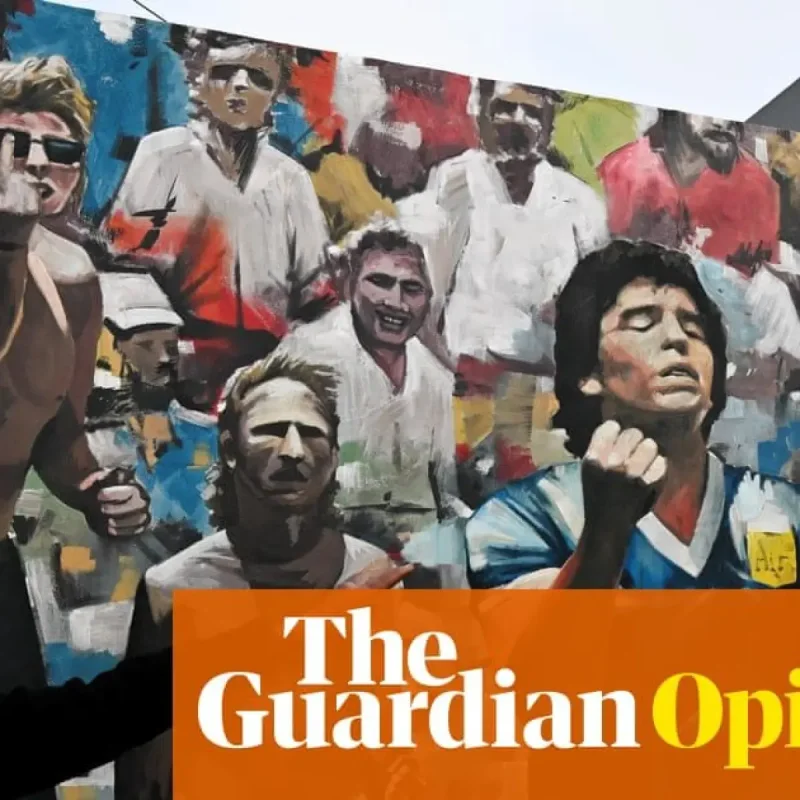
We got Ossie Ardiles and Sergio Agüero but never Gabriel Batistuta or Juan Román Riquelme, Mauricio Pochettino but never Diego Simeone, and of course never the two greatest of all, Lionel Messi and Diego Maradona, who even in the age of saturation still feel somehow remote and mysterious, a secret on which the footballing world was never quite let in.
Too different and distant to be friends; too entwined and alike to be purely enemies; neither a clash of pure equals nor a simple parable of coloniser versus colonised.
Perhaps this is why Argentina v England has a fair claim to be the greatest and most romantic of the footballing rivalries, less a blood feud and more a messy, century-long break-up.
Look beyond the flashpoints and flare-ups and there is something more profound at work here.
>>> Calvinball Comes to Life: How Constant Rule Changes Are Ruining Sport
The teeth-baring may as well be a mark of respect: a shared and illicit admiration, perhaps even a love that dare not speak its name.