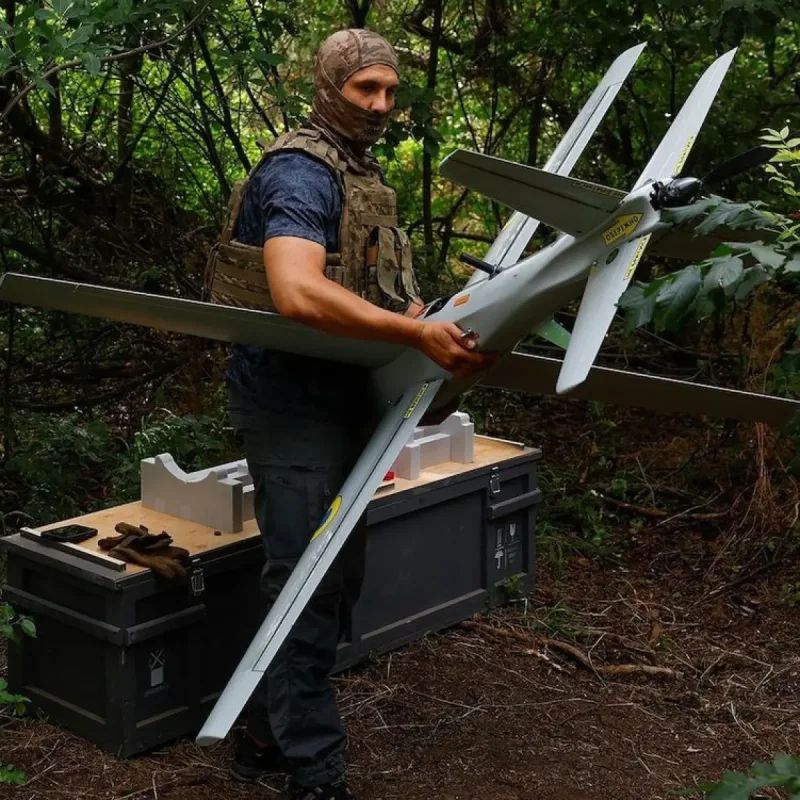
Ukraine's targeted mid-range aerial campaign has systematically choked crucial supply lines feeding Moscow's southern forces by isolating the occupied Crimea peninsula by air, land, and sea, according to a report by The Telegraph on July 11, 2026.
Drone strikes damaged the land corridor, rail links, refineries, power stations, and air-defense towers connecting Crimea to Russia.
The Unmanned Systems Forces reported that long-range strikes jumped by 1,150 percent in 2026, forcing a state of emergency.
Ukrainian forces hit 76 shadow-fleet tankers attempting to transport fuel across the Sea of Azov.
The resulting fuel crunch affected 78 of Russia's 83 federal regions, according to analysis by the Institute for the Study of War.
The offensive prompted the closure of Russian businesses due to fuel shortages and expensive overheads.
Tourism plummeted as nearly 79 percent of hotel bookings were canceled, compared to seven million Russian tourists generating 45 million pounds last year.
Ukraine targeted six choke-point bridges, including the Chonhar bridge and Henichesk crossing, alongside the 390-mile R-280 Novorossiya highway.
Satellite imagery showed extensive damage to the onshore oil-loading facility at Kerch port, halting private fuel sales.
Strategic Intent and Local Impact
The primary political and military leadership detailed the strategic intent behind the ongoing blockades, which aim to isolate the region and neutralize its utility as an operational stronghold.
"Crimea is being isolated by drones. In the near future, the peninsula will become an island.
For the Russians, the real hell is just beginning," pledged Mykhailo Fedorov, the Ukrainian defense minister.
Local inhabitants described severe daily disruptions to basic utilities, transportation infrastructure, and commerce as the region-wide parallel economy expanded via online e-commerce platforms and messaging applications.
"The lights are turned off and on, basically, whenever they feel like it, but a long time can go by with almost nothing," stated a female resident of Sevastopol.
The closure of shops due to power outages forced citizens to seek alternative means of travel and commerce under continuous security pressures.
"We all try to help each other and share information," she said.
Other citizens highlighted the forced transition to non-motorized transport due to the ongoing civilian gasoline depletion.
"Everyone moves around on foot here.
There are far fewer cars; a lot of people started riding bikes and scooters," told another Sevastopol resident.
Online public forums showed growing citizen dissatisfaction regarding the lack of state media coverage on local damage.
"Every night, there is shelling and damage to homes in Kerch, but the news doesn't even mention it.
Fear has become part of everyday life," commented another disgruntled resident.
Strategic defense experts verified that asymmetric military tactics successfully constrained Russia's frontline tactical capabilities and reduced historical artillery advantages.
"Affecting the Russians' ability to use Crimea as the main outpost of the occupation and their primary military base in the south," said Anton Zemlianyi, a senior analyst at the Ukrainian Security and Cooperation Centre.
Zemlianyi noted that these logistical disruptions directly reduced the Russian military's ability to sustain offensive push rates.
"At the operational-strategic level, all this affects Russia's ability to conduct offensive operations directly along the line of contact," he said.
Recent data indicates that the direct fire ratio shifted closer toward parity over the last six months of combat operations.
"For example, a narrowing of the gap in artillery fire rates can be observed.
Six months ago, the ratio was 2.4 to one in favour of the Russians; now it stands at 1.6 to one," he said.
Amunition delivery disruptions occurred alongside shifts in domestic public opinion, with Russian presidential approval ratings dropping to 66 percent from a historical high of 86 percent in 2014.