The Federal Communications Commission has granted California-based startup Reflect Orbital permission to launch a controversial sunlight-reflecting satellite, overriding more than 1,800 public complaints.
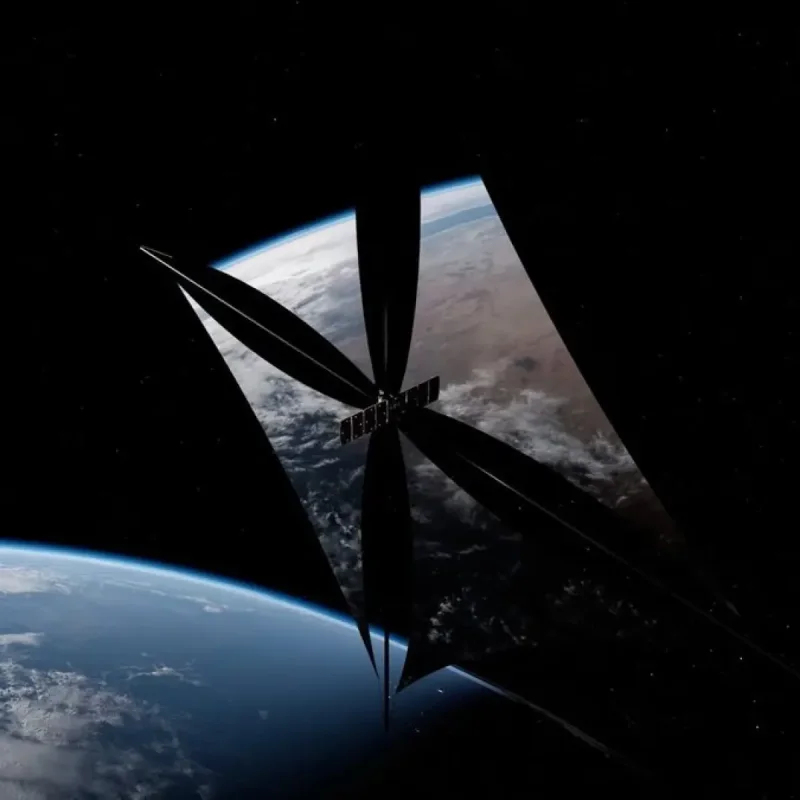
The license, approved on Thursday, authorizes a single demonstration satellite named Earendil-1.
It will test a 60-foot by 60-foot steerable thin-film mirror designed to project a three-mile-wide beam of sunlight to Earth at night.
Reflect Orbital plans to use the technology to illuminate disaster zones for rescue operations and power solar energy farms after dark.
The company's long-term goal involves deploying up to 50,000 satellites by 2035.
Safety and Environmental Concerns
Opponents, including the American Astronomical Society, warned of risks such as eye damage to amateur astronomers, flash blinding of drivers and pilots, and negative impacts on federally funded astronomical research.
The FCC defended its decision by citing the Communications Act, which encourages the provision of new technologies and services to the public.
The agency stated that the demonstration satellite represents a potentially groundbreaking technology in the public interest.
Regarding visual pollution, the FCC clarified that evaluating optical reflection risks falls outside its authority over radio frequencies.
It added that any potential harms are unlikely to occur and are outweighed by the public interest benefits of testing the technology in a limited, short-duration manner.
The commission noted that opponents failed to prove immediate ecological damage from a single test unit, as most comments focused on a hypothetical large-scale deployment.
Advocacy groups argue the decision exposes loopholes in how international aerospace operations are managed.
James Verner, a director at Dark Sky UK, questioned which regulator has the mandate to examine what satellites actually do to the sky or Earth.
Reflect Orbital confirmed plans to launch Earendil-1 later this year to gather operational telemetry.
The company reported substantial interest from global emergency response teams, including requests to assist search-and-rescue efforts after the earthquake in Venezuela.
To mitigate concerns, the startup is collaborating on third-party research and intends to establish a coordination framework with the National Science Foundation to protect sensitive observatory zones.