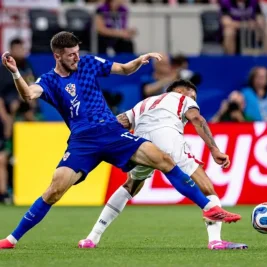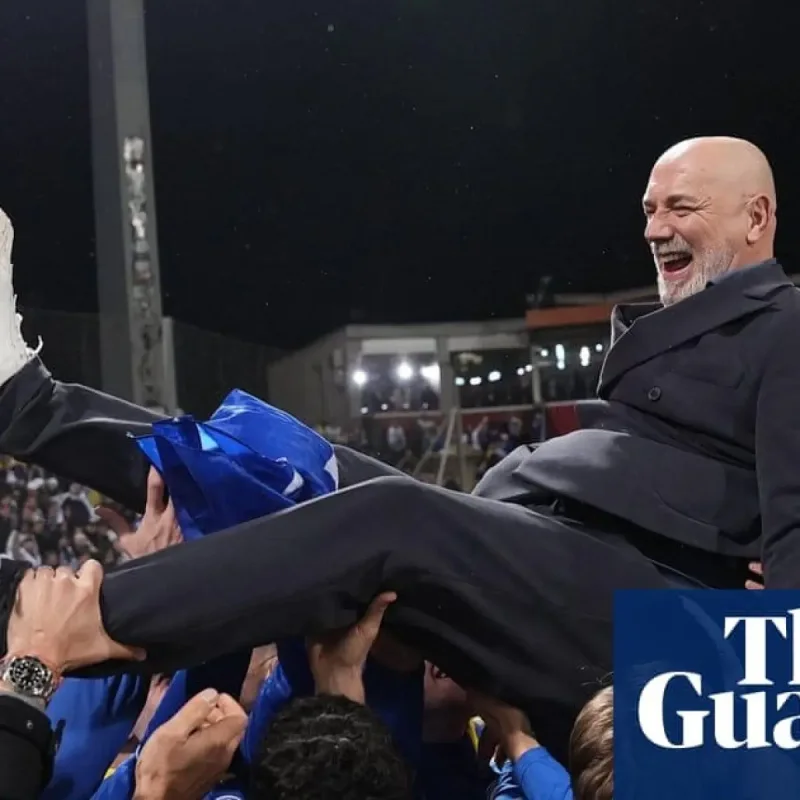
Bosnia and Herzegovina have secured a spot in the 2026 World Cup after overcoming turbulent qualification cycles, as reported by The Guardian.
The national team previously managed only four victories in 19 games across two qualification phases before manager Sergej Barbarez took charge in 2024.
The selection process saw immediate transformation when Barbarez guided his team through high-stakes playoff matches, eliminating both Wales and Italy to reach the World Cup for the second time in the nation's history.
The former national team captain accepted the managerial role after a lengthy hiatus from coaching, during which he spent time playing professional poker.
Barbarez quickly established his backroom staff by appointing former teammates, including Emir Spahic as sporting director alongside coaches Sasa Papac and Zlatan Bajramovic.
During his opening year, the manager introduced 16 debutants to the squad, sourcing talent developed across international systems in Sweden, Germany, Austria, and the United States.
Although Barbarez faced initial scrutiny during an eight-match winless streak, he prioritized reshaping the squad's psychological resilience over tactical aesthetics.
The tactical framework alternates primarily between 4-2-3-1 and 4-4-2 formations, emphasizing intensive defensive work, direct passing, and rapid transition play.
Emerging prospects Kerim Alajbegovic, Esmir Bajraktarevic, Tarik Muharemovic, and Amar Dedic provide physical stamina to a team anchored by veteran striker Edin Dzeko.
The competitive schedule places Bosnia and Herzegovina in Group B, where they will face group stage opponents Canada, Switzerland, and Qatar.
Barbarez stepped into his first managerial position at age 52 against England, having originally expressed interest in leading the national team back in 2009.
The manager focused his philosophy on accountability, national pride, and emotional investment, a message that resonated with the younger player demographic.
The squad continues to rely heavily on the leadership of 40-year-old captain Edin Dzeko, who remains the all-time top scorer for the nation.
Dzeko relies on tactical positioning and spatial awareness to impact critical moments rather than the raw physical dominance seen during his tenures at Wolfsburg and Manchester City.
"As long as I feel I can help, I'll be here," Dzeko said recently.
Midfield talent Kerim Alajbegovic, who moved to Bayer Leverkusen after a stint at Red Bull Salzburg, represents the creative future of the national pool at just 18 years old.
Barbarez demonstrated immense confidence in Alajbegovic by assigning him penalty duties during both competitive playoff penalty shootouts.
Defensive stability has found a new profile in left-footed centre-back Tarik Muharemovic, who developed through Austrian football before moving to Juventus and Sassuolo.
Muharemovic brings a calm, ball-carrying composure to the backline that contrasts with the traditional aggressive style historically found in Balkan defenders.
Supporters are preparing massive travel plans from local towns and diaspora hubs in Germany, Austria, Sweden, Switzerland, and the United States.
The organized supporter group BHFanaticos will orchestrate stadium atmospheres using traditional symbols, including medieval Bosnian fleur-de-lis emblems.
Political ties with the United States remain positive, linked historically to the diplomatic resolutions of the 1990s and sustained by the dense diaspora population in St. Louis.
Traveling fans have directed logistical complaints toward FIFA rather than political entities, citing massive transit distances between host cities and high ticket costs.