A public transit tram came to a sudden halt on Duinstraat in The Hague after being struck by lightning on Saturday afternoon, June 27, 2026, amid severe regional storms.
The disabled vehicle blocked the roadway and triggered significant delays across multiple transit lines during a nationwide weather emergency.
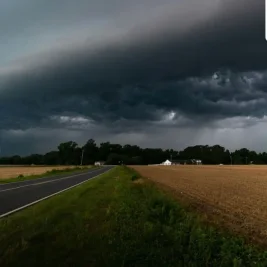
The Royal Netherlands Meteorological Institute (KNMI) elevated its weather warning to code orange on Saturday evening, forecasting intense thunderstorms across all provinces.
The weather agency warned that the system could produce large hail measuring two to five centimeters, torrential rainfall up to 40 millimeters in a short period, and severe wind gusts reaching 100 kilometers per hour.
National forecasters noted that the extreme conditions are expected to persist, keeping the code orange alert active in South Holland until 4:00 AM on Sunday, while a code yellow heat warning remains effective until 18:00 PM Sunday.
"Dit kan op meerdere plaatsen voor overlast en schade zorgen," stated the KNMI.
The lightning strike occurred at approximately 4:30 PM on Saturday, hitting a Line 1 tram that had been rerouted through Duinstraat due to earlier municipal diversions for Veterans Day.
The impact completely disabled the vehicle's electrical and propulsion systems, necessitating emergency recovery services to tow the vessel from the active roadway.
Transit operator HTM confirmed that all passengers and staff evacuated the vehicle safely without any reported injuries.
Because the disabled vehicle blocked a shared track section, it simultaneously halted operations for Line 11 until emergency crews successfully cleared the scene and restored standard scheduling.
Community Events Adapt to Extreme Weather
Despite the severe weather disruptions and intense atmospheric shifts along the western coast, local community events and public markets continued operating with modified safety arrangements.
"Goed nieuws," posted Dorpsfeest Zoeterwoude on Facebook.
Organizers for the Zoeterwoude festival implemented enhanced safety protocols, including specialized medical staff, cooling fans, and hydration stations, to ensure operations could safely resume following earlier heat-related cancellations.
"Er worden extra EHBO'ers en beveiligers ingezet en er zijn gratis waterpunten en douches.
In de tent staan ventilatoren en de achterkant van de tent wordt gedeeltelijk opengezet," the organization wrote.
Local market vendors in nearby Voorburg reported unusually high consumer demand for hydrating produce as residents attempted to cope with the oppressive humidity before the storm front arrived.
"Niet klagen, maar dragen," said Piet, a vendor from the Pieter Casper van Vliet greengrocer stall.
The merchant noted that hot temperatures rarely deter local shoppers, who were actively seeking out fresh options to combat the dense seasonal heat.
"Zo krijg je ze niet in de supermarkt," laughed Piet. He expressed satisfaction with the busy marketplace atmosphere despite the unpredictable weather changes.
"echt scoren," noted Piet. He added that many residents were eager to enjoy local outdoor spaces before traveling for summer vacations.
"Dadelijk zit iedereen in Spanje, nu kunnen we hier nog genieten," said Piet.
In Leiden, severe heat forced the cancellation of mainstream outdoor traditions like the dragon boat races, prompting organizers to relocate the regional Beer and Wine Festival inside the historic Hooglandse Kerk.
"Tuurlijk is het jammer dat de feesten niet doorgaan. De peurbakkentocht is elk jaar echt fantastisch," explained an attending family.
Visitors noted that indoor cooling measures made the historic venue an acceptable alternative for the restricted celebrations.
"Maar hier is het ook goed vertoeven, er staat een grote ventilator," remarked the family.
The festival attendees remained in high spirits despite the major changes to the city's traditional summer programming.
"Nog meer bier halen!" said the family.
Extreme temperatures also caused structural failures at multiple regional supermarkets, where cooling units failed under the intense thermal load, forcing locations in Wateringen, Nootdorp, and Boskoop to empty shelves to comply with food safety regulations.
"Vanwege de warmte is de kip verplaatst, dit ligt nu tussen de koelingen van de sushi en sappen," read a notice posted for customers at a Jumbo supermarket in Wateringen.
Disgruntled shoppers expressed frustration as standard grocery items were pulled from availability due to the cooling breakdowns.
"Wij kunnen helaas niet het volledige assortiment aanbieden," stated a notice from an impacted store in Nootdorp.
Consumers were forced to alter their shopping routines across different chains due to the widespread refrigeration issues.
"Nou, dan ga ik maar naar de Jumbo en anders de Lidl," said a grumbling customer.
Recreational areas like the Delftse Hout holiday park also saw visitors adjusting to the sudden transition from extreme heat to intense coastal thunderstorms.
"De afgelopen dagen was het echt niet te doen onder dit platte dak. Binnen is ook geen airco," said vacationers Bob and Ineke.
The traveling couple welcomed the cooler storm front after experiencing sleepless nights under the intense heat wave.
"Vanochtend hebben we een lekker stuk gefietst. Maar bij terugkomst ging Ineke zitten dan had ze ineens een natte kont," said Bob, laughing.
Local emergency services remain on high alert across South Holland as the storm front continues to move through the coastal corridor.