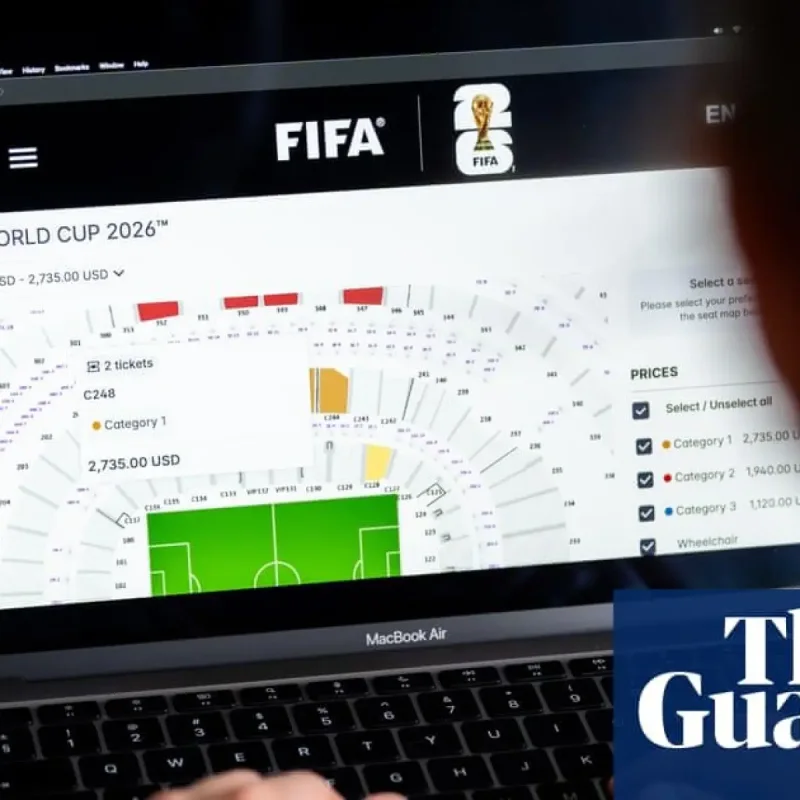
Government regulators in British Columbia launched an official investigation on June 26, 2026, into online ticket reseller StubHub following thousands of sudden FIFA World Cup ticket cancellations across North American host cities.
The probe, spearheaded by Consumer Protection B. C.
under the province's Ticket Sales Act, follows widespread reports of soccer fans arriving at venues empty-handed despite receiving repeated assurances from the secondary marketplace platform.
British Columbia Attorney General Niki Sharma expressed serious concern regarding the platform's failure to deliver valid event entry to consumers who purchased tickets months in advance.
"Major events like the FIFA World Cup 2026 should be an exciting experience and people should not have to worry about whether the tickets they purchased on StubHub will be honoured," said Niki Sharma, British Columbia Attorney General.
The minister confirmed that an independent enforcement agency is actively determining whether the platform breached provincial consumer regulations during the tournament.
"I understand Consumer Protection B. C.
, which independently administers B. C.'
s Ticket Sales Act, is currently investigating these complaints to see if the law has been broken," said Niki Sharma.
While provincial legislation strictly prohibits businesses from selling tickets they do not legally own or control, regulatory authorities are advising affected individuals to explore alternative recovery remedies.
"While I cannot comment on this investigation directly, and StubHub has publicly committed to honouring its refund guarantees to fans, I want people to know they may have options available to them if they have been affected," said Niki Sharma.
StubHub Cites Technical Issues
In response to the mounting regulatory scrutiny, representatives from the ticket marketplace blamed external infrastructure failures rather than internal distribution practices.
"The issues fans have experienced at this World Cup are largely transfer problems, not ticket problems," said a StubHub spokesperson.
Company officials asserted that a newly deployed application from the tournament organizers disrupted standard ticket delivery systems across the entire secondary market industry.
"The event organizer's own ticketing infrastructure, including a new app launched right before the tournament began, has had significant performance issues that have affected transfers across all resale platforms.
We've responded by standing up a dedicated World Cup support team and expanding our capacity to source replacement tickets for affected customers," said the spokesperson.
In contrast to the platform's technical explanations, industry analysts point to the widespread commercial practice of unverified short-selling by professional scalpers.
"It's that they allow speculative ticketing," said Scott Friedman, host of the Ticket Talk Network podcast.
The long-time ticketing executive noted that the controversial practice regularly causes severe inventory deficits during high-profile international entertainment tours.
"Basically sellers selling tickets they don't have," said Scott Friedman.
Disgruntled buyers detailed spending extensive hours contacting customer service lines without receiving timely financial resolutions or replacement accommodations.
"I have spent over 10 hours on the phone with them for tickets I purchased more than six months before the match," said Kirat Malik, a Vancouver soccer fan.
The affected consumer emphasized that the sudden cancellation completely erased a rare experiential opportunity without offering immediate restitution.
"StubHub took my money, and my time and still have not refunded us.
Also taking away the experience we were supposed to have of a lifetime without any compensation, it's nonsense," said Kirat Malik.
Meanwhile, neighboring provincial regulators in Ontario warned that all digital marketplaces operating within their jurisdiction face severe statutory penalties for non-compliance.
"All ticket sellers in Ontario must comply with our legislation," said a spokesperson for the Ontario Ministry of Public and Business Service Delivery.
The ministry reiterated that substantial financial assessments remain available to penalize entities that fall short of legislative mandates.
"Any seller who breaks those rules could face fines of up to $250,000 and be publicly identified on the consumer beware list.
Platforms like StubHub and SeatGeek have been identified as not meeting expectations under Ontario law," said the spokesperson.
Consumer Advocates Call for Reform
Advocacy groups argue that systemic structural deficiencies within the broader domestic ticketing landscape leave buyers uniquely vulnerable to corporate mismanagement.
"The system is deeply broken and flawed at all levels," said Brian Hess, executive director of the Sports Fans Coalition.
The advocacy representative urged buyers to maintain strict demands for actual seats instead of quickly settling for baseline financial remediation.
"Consumers should not have to fight like this," said Brian Hess.
Legal experts representing hundreds of shortchanged purchasers noted that identical fulfillment failures happen consistently across multiple sports and entertainment sectors.
"This happens over and over," said Bradford Clements, a consumer attorney.
The former prosecutor advised future event attendees to entirely bypass secondary brokers to minimize the risk of transaction cancellations.
"Don't trust StubHub to begin with.
Buy tickets directly from Fifa for the World Cup or directly from the venue for other events," said Bradford Clements.
Conversely, the international soccer governing body clarified that it only maintains oversight and verification protocols for purchases completed inside its own digital ecosystem.
"FIFA is the official ticket sales channel for the FIFA World Cup 2026.
FIFA can guarantee the validity and delivery of tickets purchased through its official platforms," said an official statement from FIFA.
Consumer rights federations continue to demand formal legislative bans on ghost ticketing practices to ensure buyers can pursue clear legal remedies in court.
"The practice of ghost ticketing should be outlawed," said Emily Peterson-Cassin, director of competition and market fairness at the Consumer Federation of America.
The organization stated that robust consumer statutes must prioritize direct judicial access for defrauded individuals seeking comprehensive financial recovery.
"What we like to see in any consumer protection law is ways people can go to court to get their money back," said Emily Peterson-Cassin.